
Species Details
- Species name
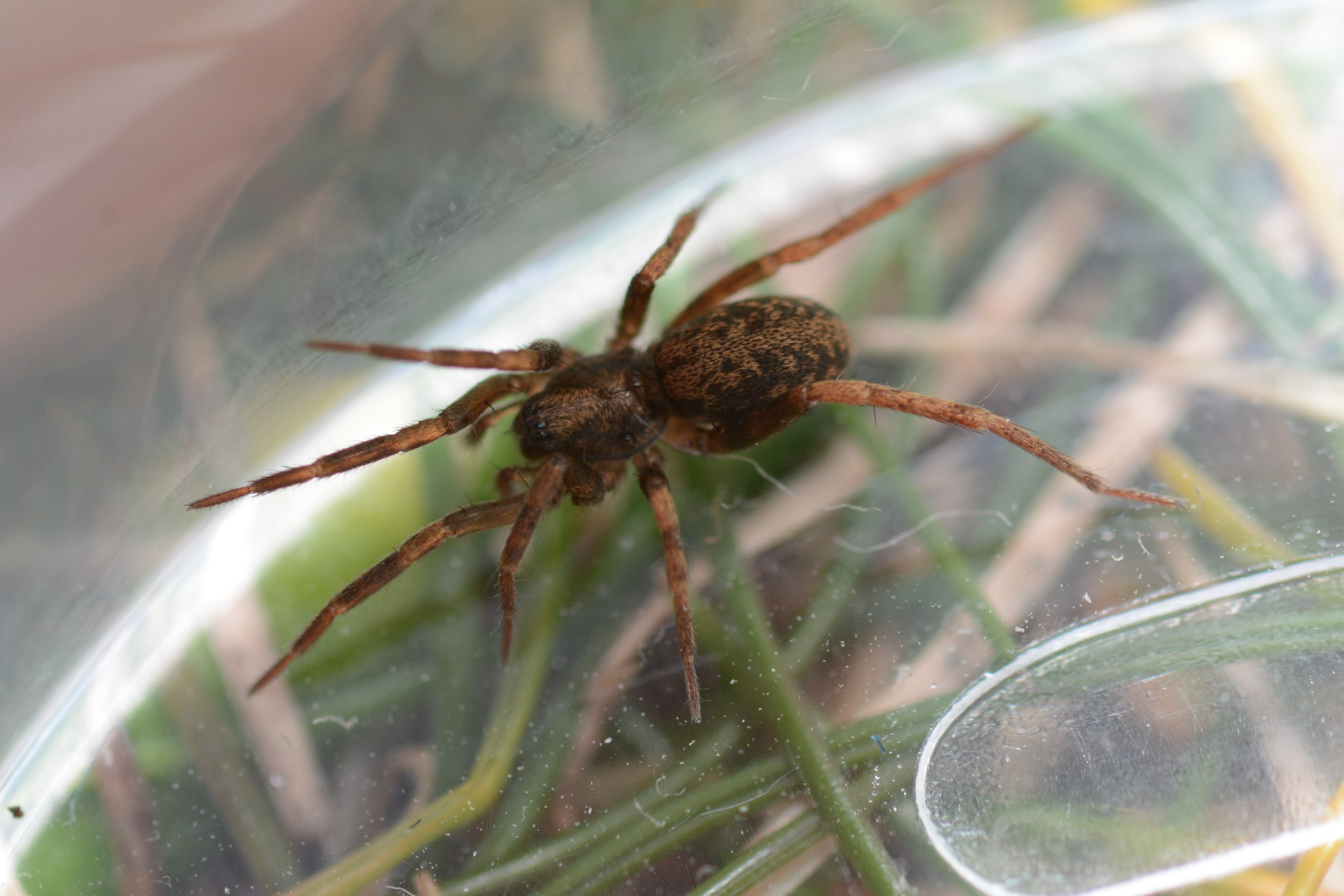
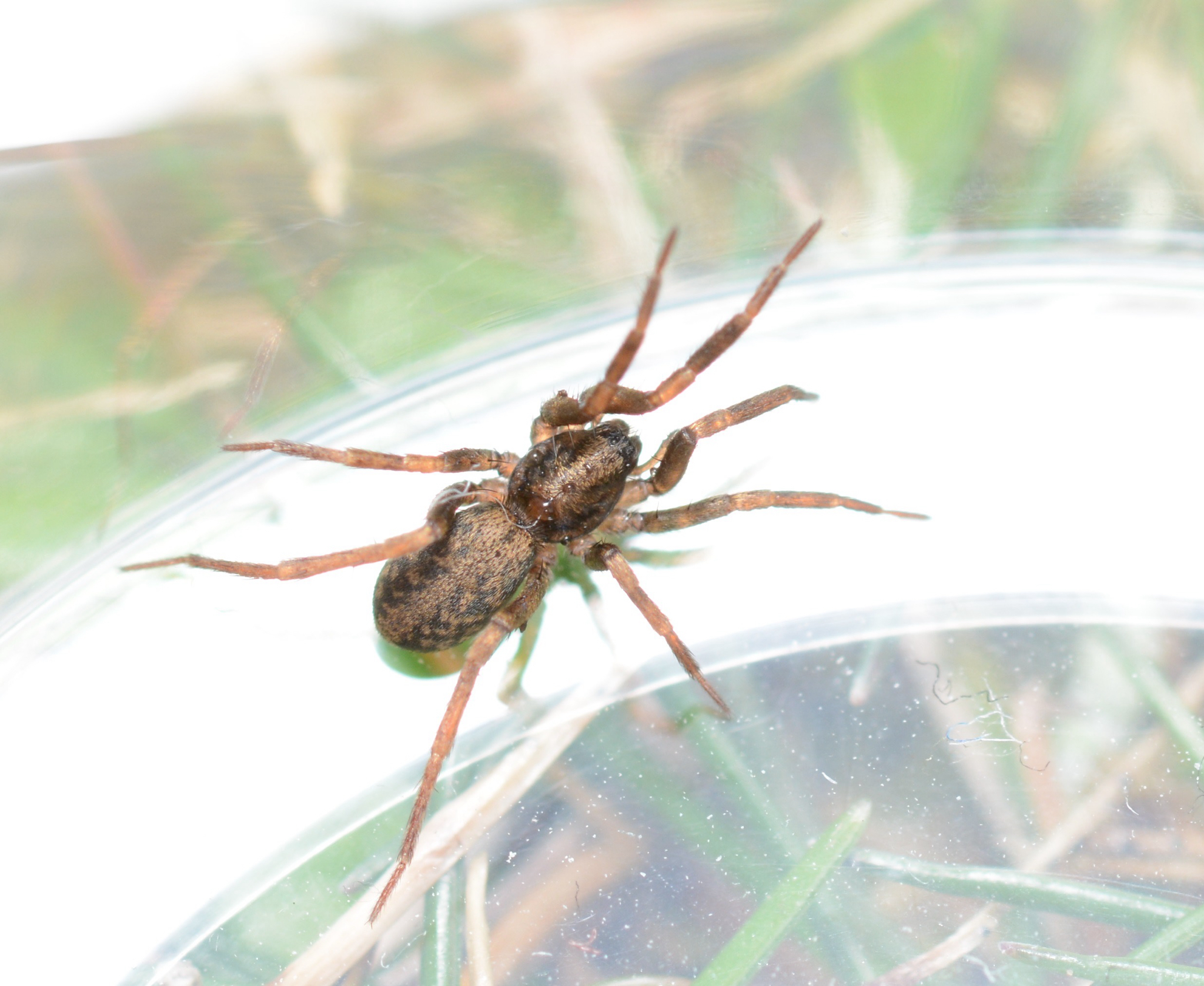
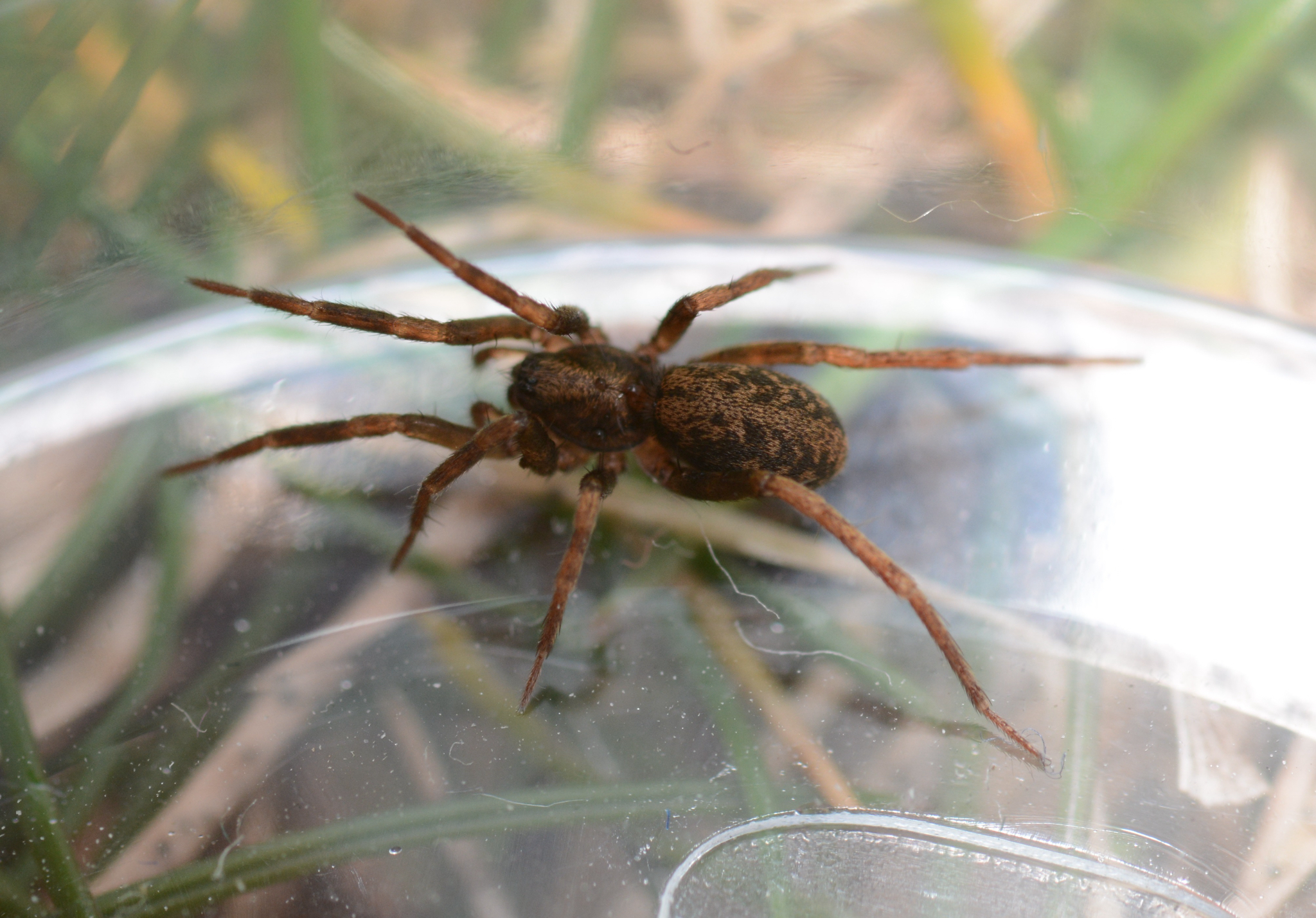
- Agroeca cuprea Menge, 1873
- Common name
- Golden Lantern-spider
- Synonyms
- Agroeca chrysea, Agroeca notata Thorell, 1875, Agroeca pullata
- Taxonomy
- Animalia :: Araneae :: Liocranidae
- short sward & bare ground
Distribution
There are widely scattered records from the south coast, especially in Kent, and inland in the Norfolk Brecks, and it has recently (2007) been recorded from Humphrey Head at the head of Morecambe Bay, Lancashire. Its continued presence at its only known Scottish site, in Kincardineshire, was confirmed in 2009. It is widespread in north-western and central Europe, but has not been recorded from Ireland, Denmark or Finland.Habitat and ecology
Heathland, coastal grassland, dunes. A. cuprea is found in a variety of dry sandy habitats e.g. heathland at Kynance Cove, Cornwall, sand dunes at Rye and Camber, Sussex, and Sandwich, Kent, dry grassland near Folkestone, Kent, in Devon and on Breckland heaths. All sites are coastal apart from the Breckland. Both sexes have been found in September, females also in April and May. A male has also been taken in October in Breckland. The phenology is possibly similar to that of most other Agroeca species, males of which are mature in September and October, with females persisting for most of the year.Status
UK Biodiversity Action Plan priority species. The spider may be fairly numerous where found, but apparently very local. It is known from three locations since 1992. It appears to have suffered major decline in area of occupancy, but as its records are scattered over a wide area, it may possibly occur in other dry coastal sites as shown by its recent discovery in Lancashire.Threats
There is possibly little threat to its coastal cliff-top sites, but its sand dune sites are likely to be threatened by holiday development, golf courses, etc, and its Breckland sites by afforestation.Management and conservation
Ensure that coastal sites for the species are protected from further development or recreational pressures. Protect Breckland sites from uneccessary afforestation. Text based on Dawson, I.K., Harvey, P.R., Merrett, P. & Russell-Smith, A.R. (in prep.).Stats
- First recorded
- 1900
- Last recorded
- 2025
- Total records
- 78
- Total visits
- 78
Conservation status
Agroeca cuprea
| Source | Reporting category | Designation | Date designated | Comments |
|---|---|---|---|---|
| Scottish Biodiversity List (incorporating 2007 updates and 2012 categorisation) | Biodiversity Lists - Scotland | Scottish Biodiversity List | 01/06/2007 | Terrestrial/Freshwater Species. Added to UK BAP list in 2007. Criteria: Decline |
| A Review of the scarce and threatened spiders (Araneae) of Great Britain: Species Status No. 22 (Sep 2017) | Rare and scarce species | Nationally Rare. Includes Red Listed taxa | 01/09/2017 | |
| A Review of the scarce and threatened spiders (Araneae) of Great Britain: Species Status No. 22 (Sep 2017) | Red listing based on 2001 IUCN guidelines | Near Threatened | 01/09/2017 | Recent data suggests no or little decline, and so there is no evidence of significant threat of extinction at the present time. Threats: There is possibly little threat to its coastal cliff-top sites, but its sand dune sites are likely to be threatened by holiday development, golf courses, etc, and its Breckland sites by afforestation. |
| Natural Environment and Rural Communities Act 2006 - Species of Principal Importance in England (section 41) | Biodiversity Lists - England | England NERC S.41 | 01/11/2008 | |
| UK list of Priority Habitats and Species | Biodiversity Action Plan UK list of priority species | Priority Species | 28/08/2007 | not on former UK BAP list |
Photos and media
Spatial distribution - hectad map
Click on one of the date ranges in the key to highlight that particular range. Click anywhere else on the map to go back to all three date ranges.
Thresholds:
Move mouse cursor over dot for info
Rejected records are excluded from this map. Unverified records are included.
Temporal distribution - records by year
Records that span more than one year are not included in this chart.
Temporal distribution - records by week
__