
Species Details
- Species name
- Anelasmocephalus cambridgei (Westwood, 1874)
- Synonyms
- Anelasma sorenseni Koch, 1877, Trogulus cambridgii Westwood, 1874, Anelasmocephalus cambridgei Simon, 1879
- Taxonomy
- Animalia :: Opiliones :: Trogulidae
- tall sward & scrub
Distribution
Anelasmocephalus cambridgei was first recorded in Britain at Bloxworth, Dorset, by O. Pickard-Cambridge (1890). It is now reported from Cumbria, north and south Wales and across south-east England. The distribution is closely linked to its snail prey. Its European distribution includes northern Spain, France, Switzerland, Belgium, Holland and Germany.
Habitat and ecology
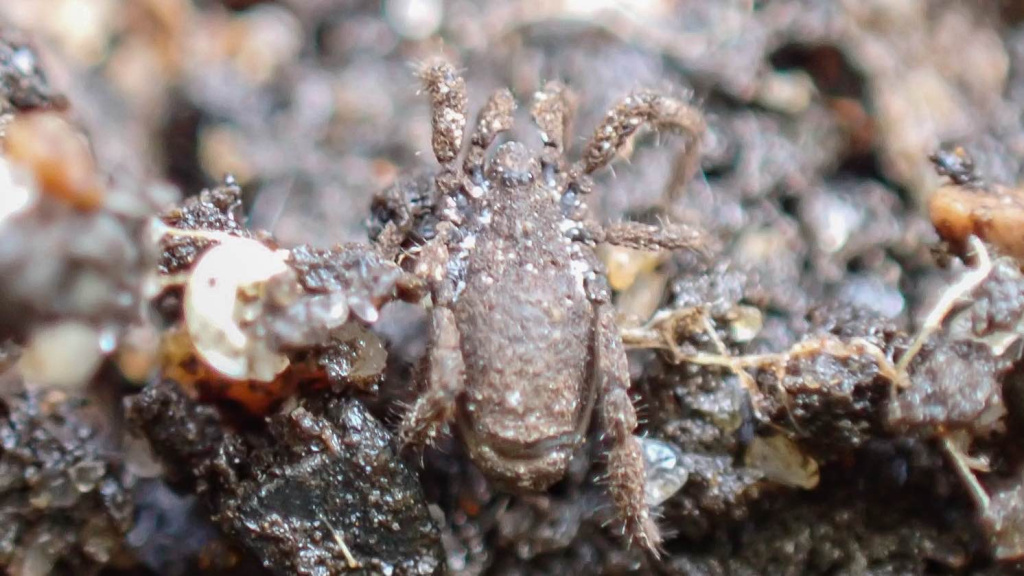
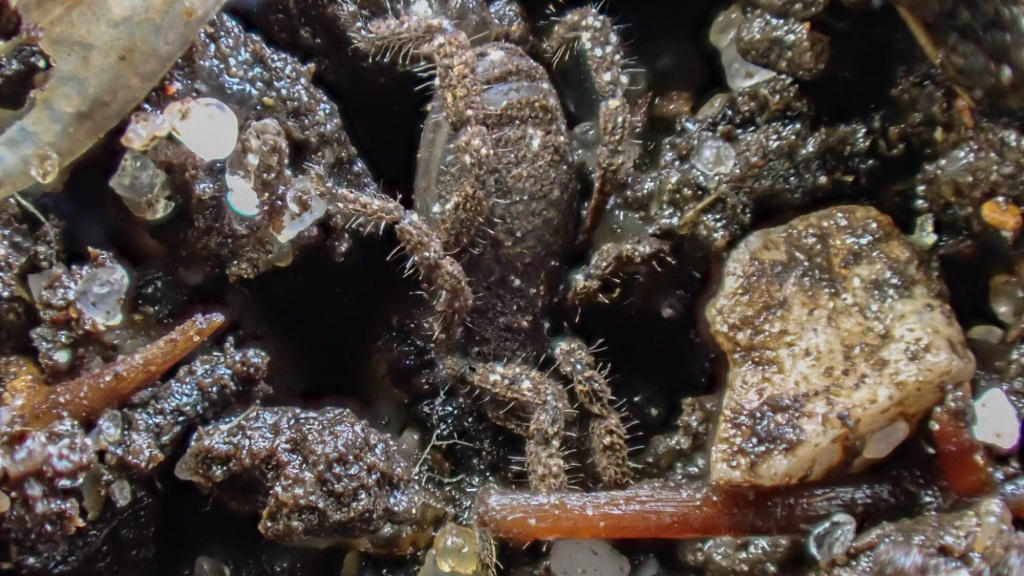
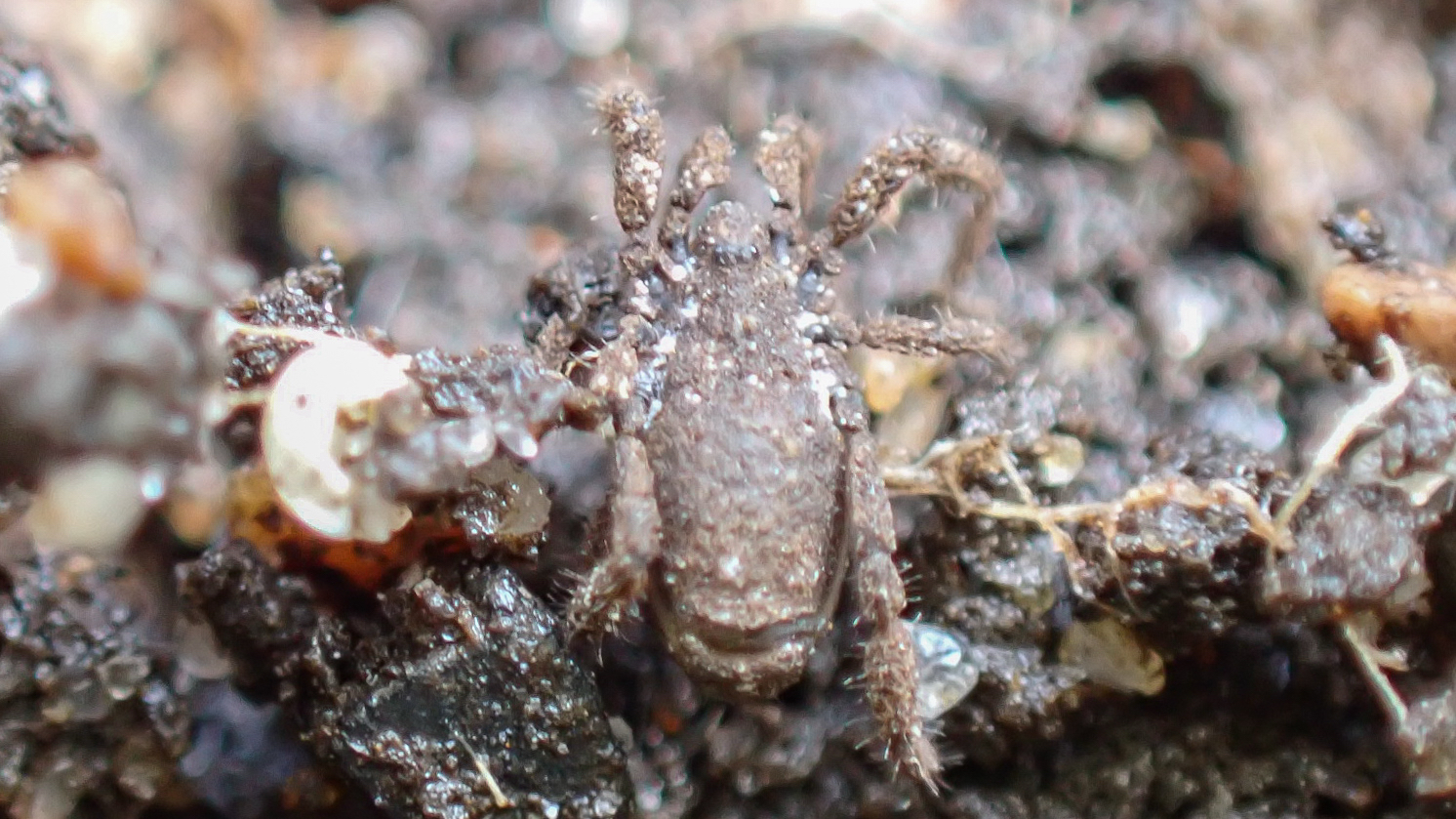
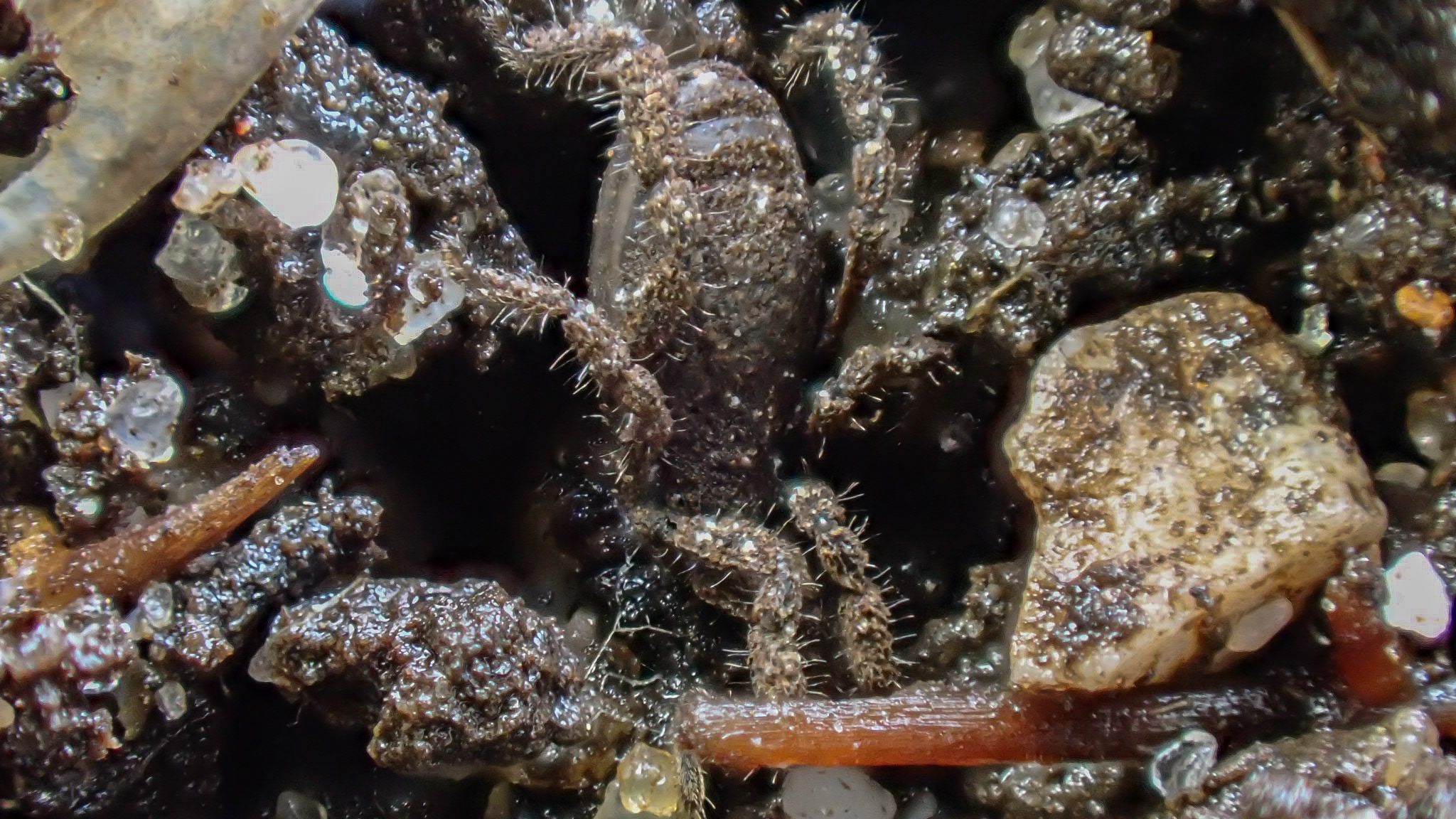
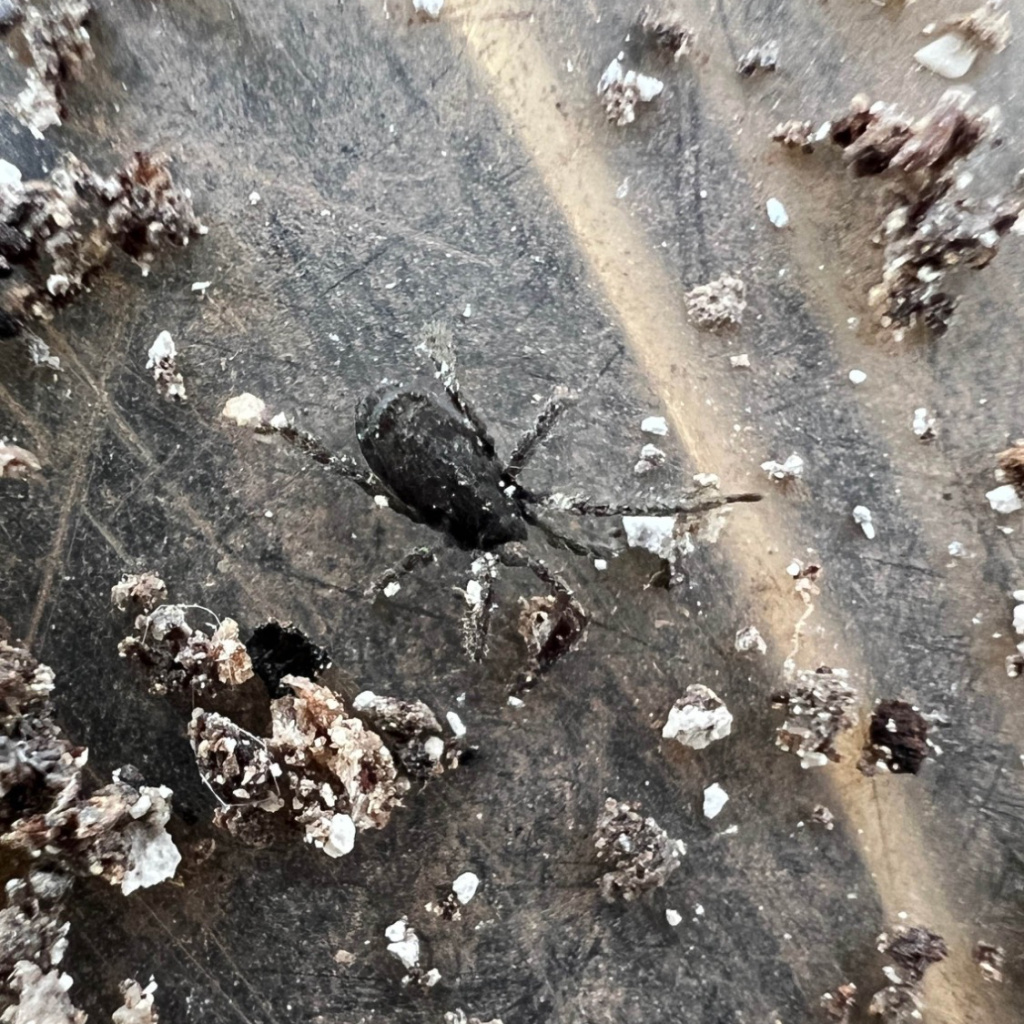
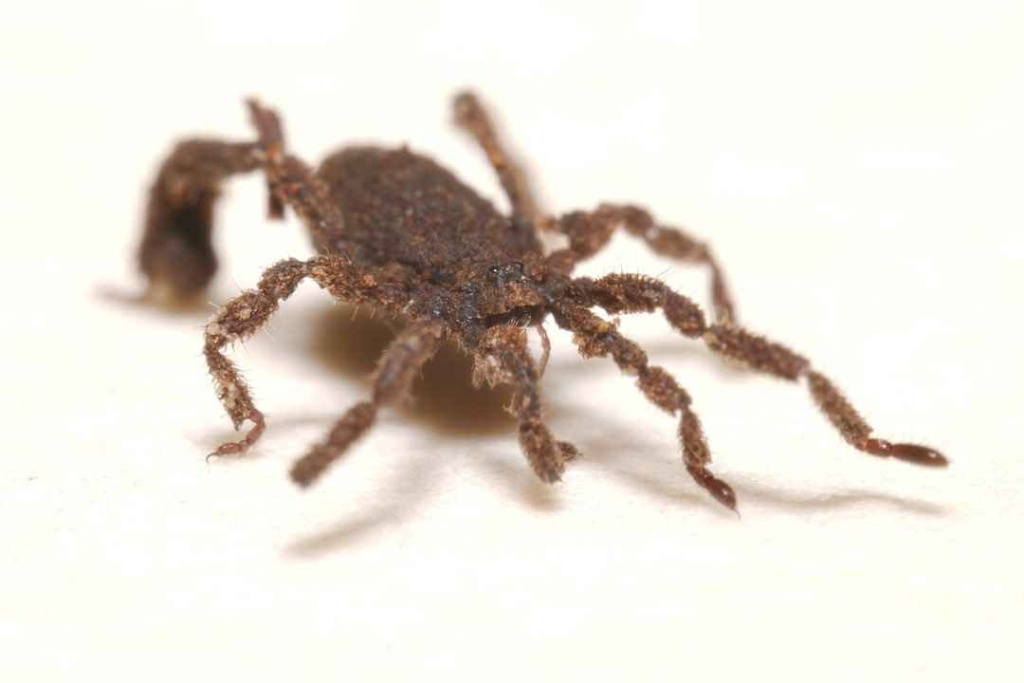
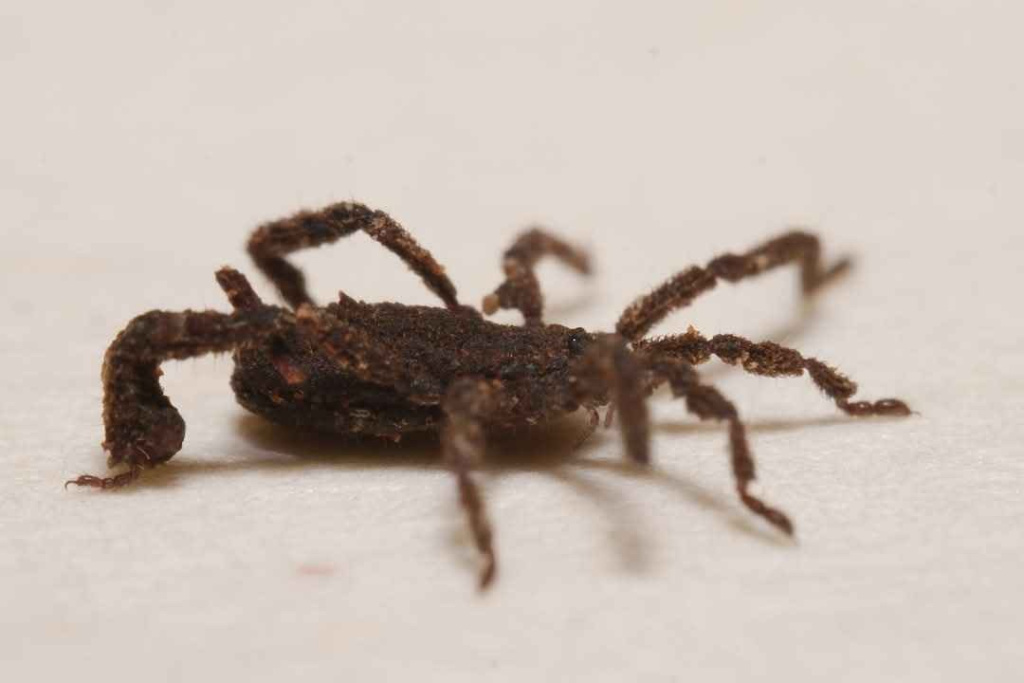
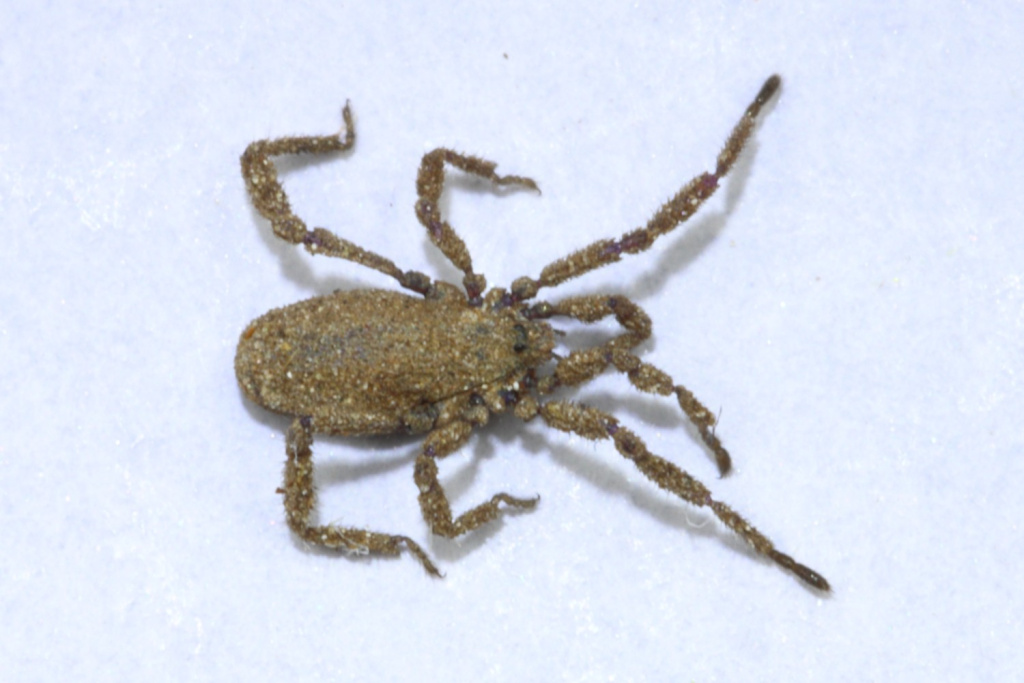
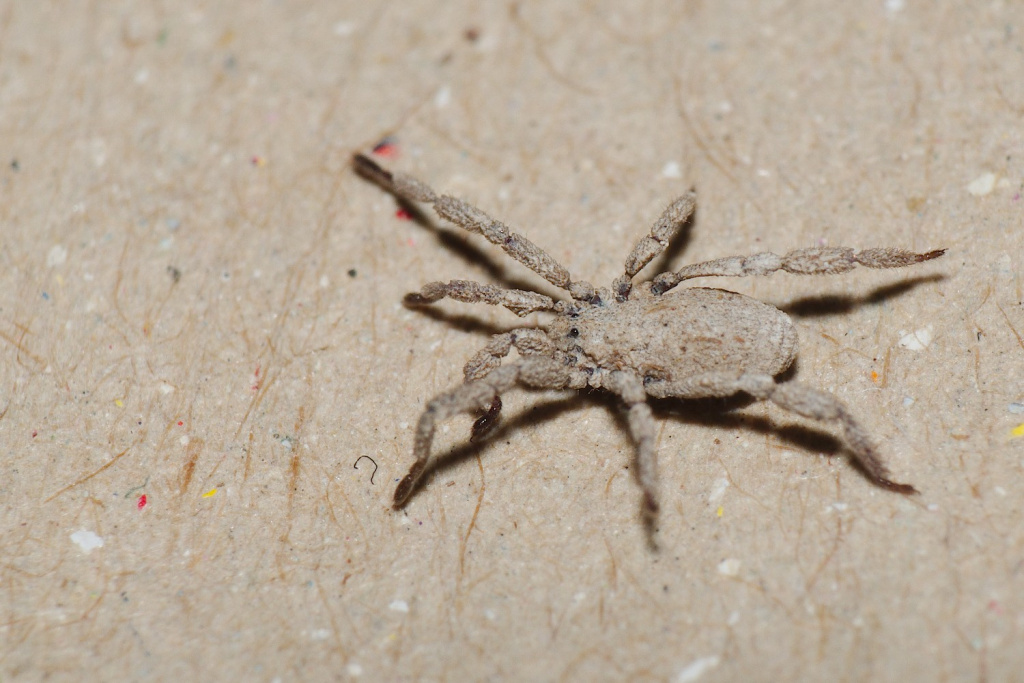
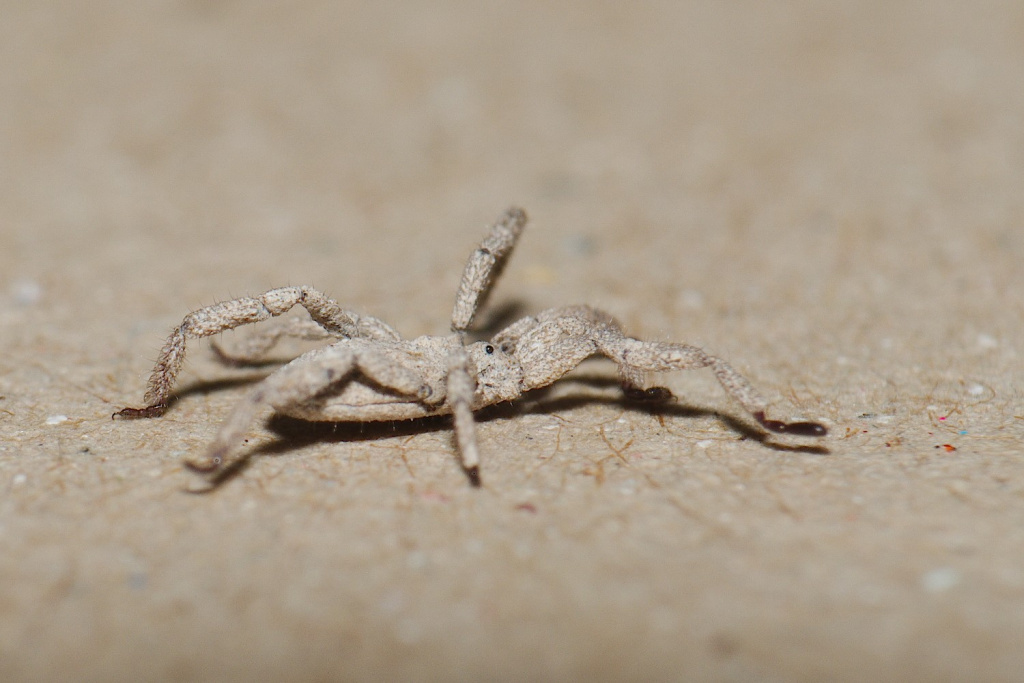
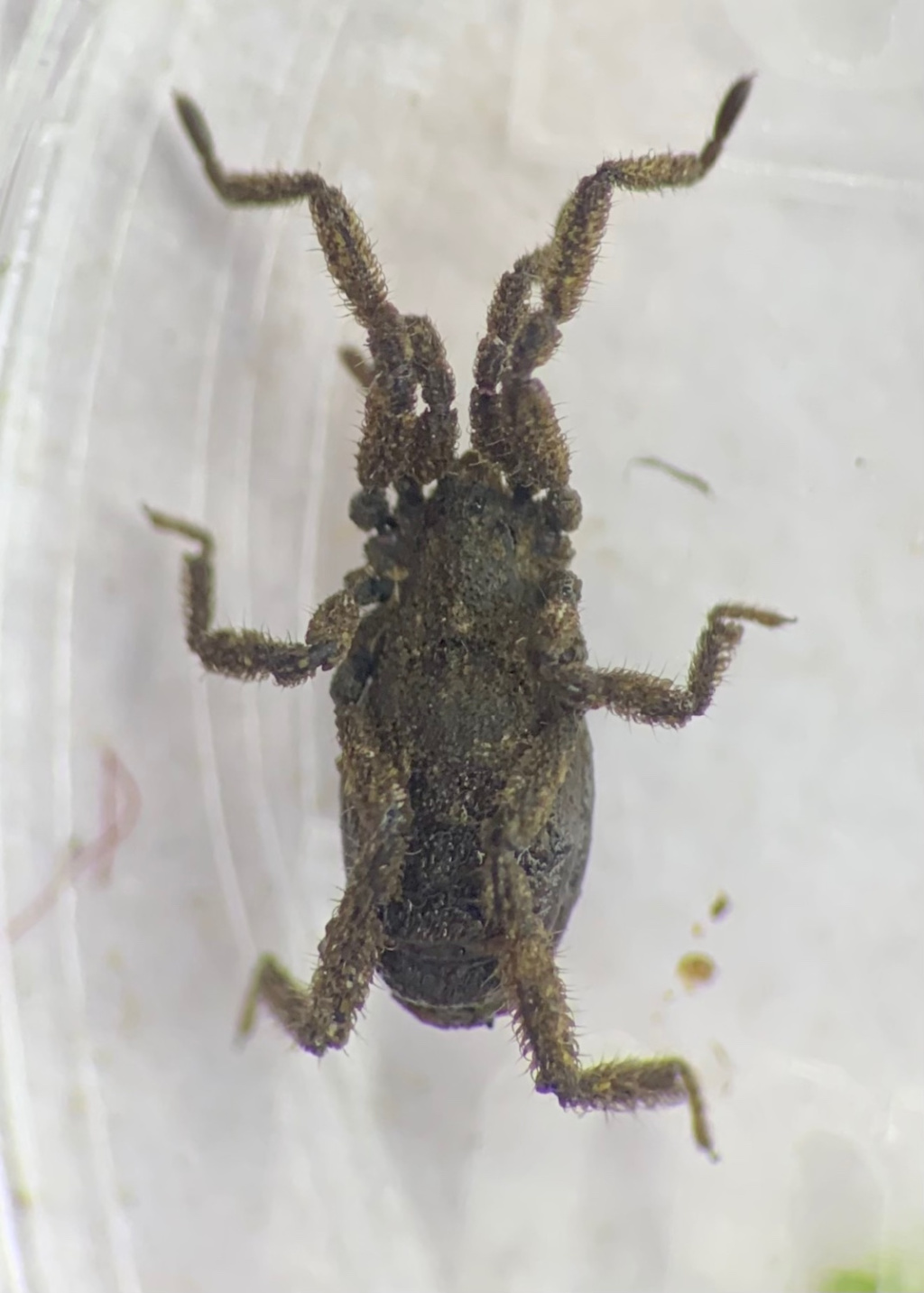
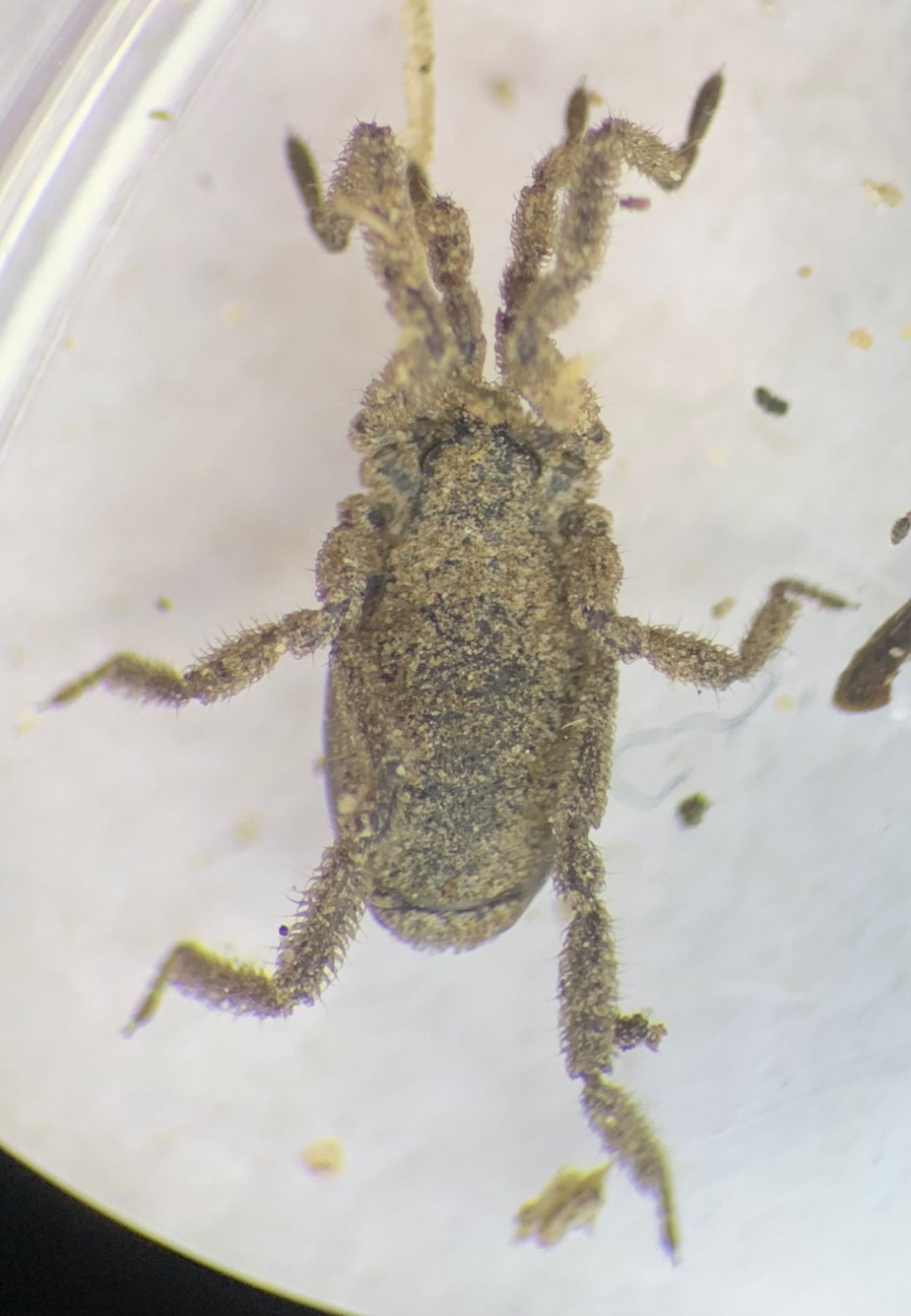
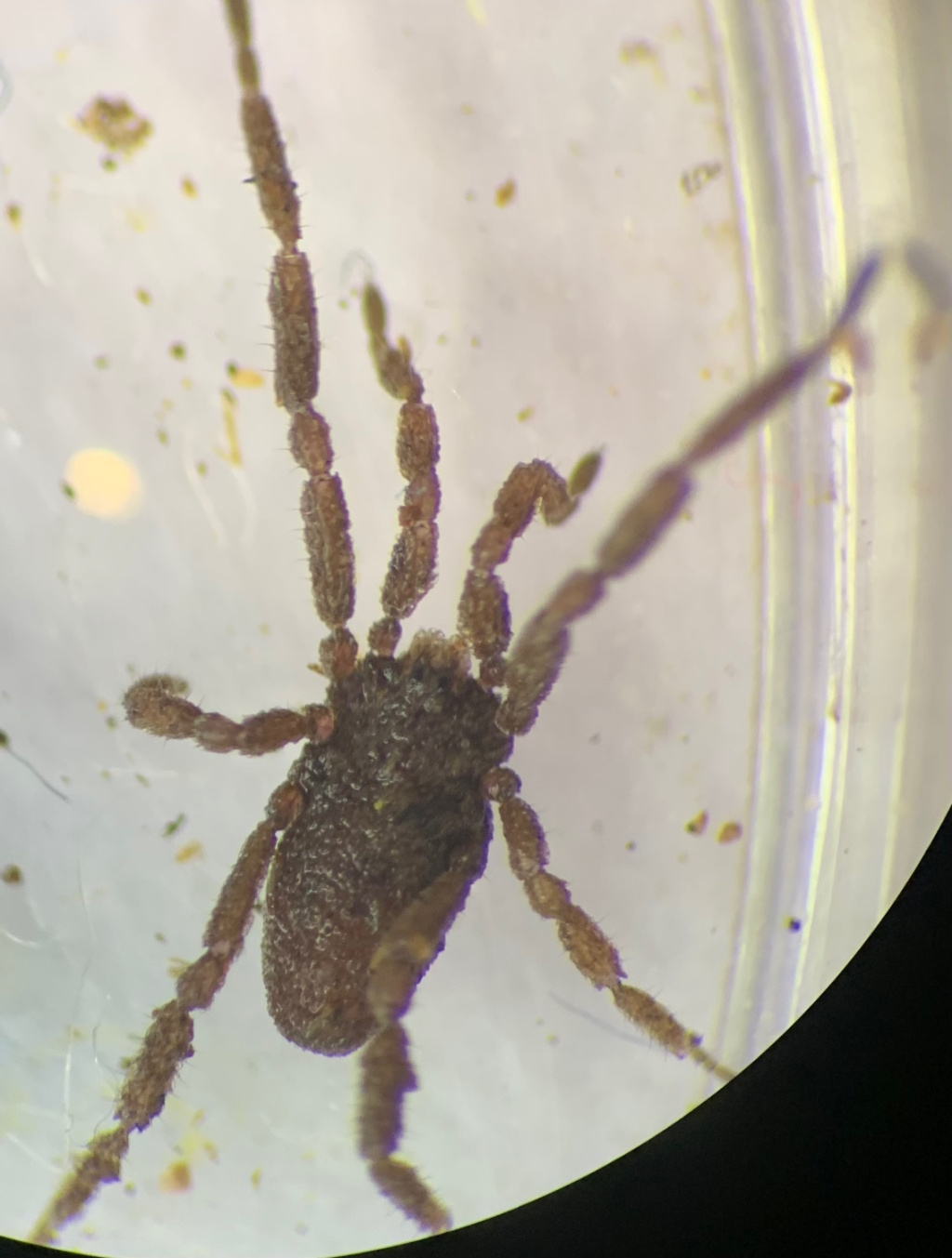
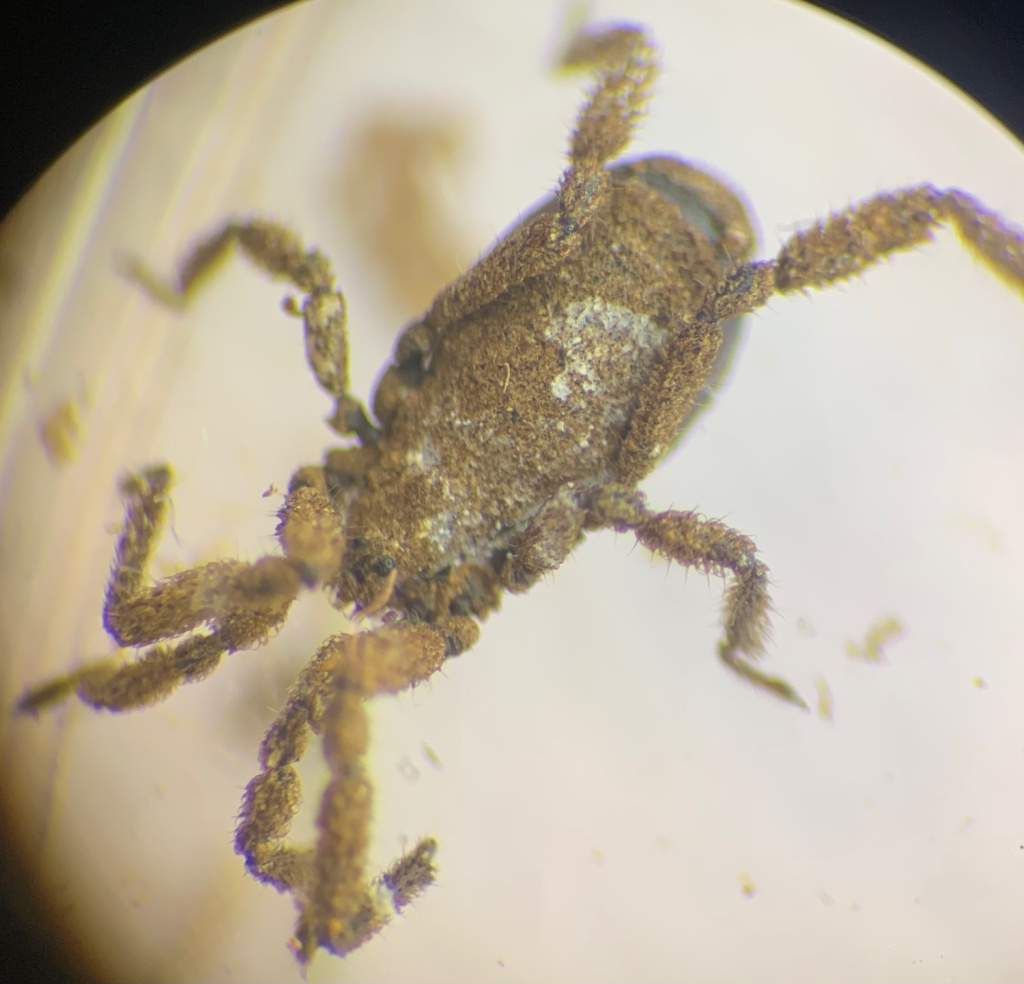
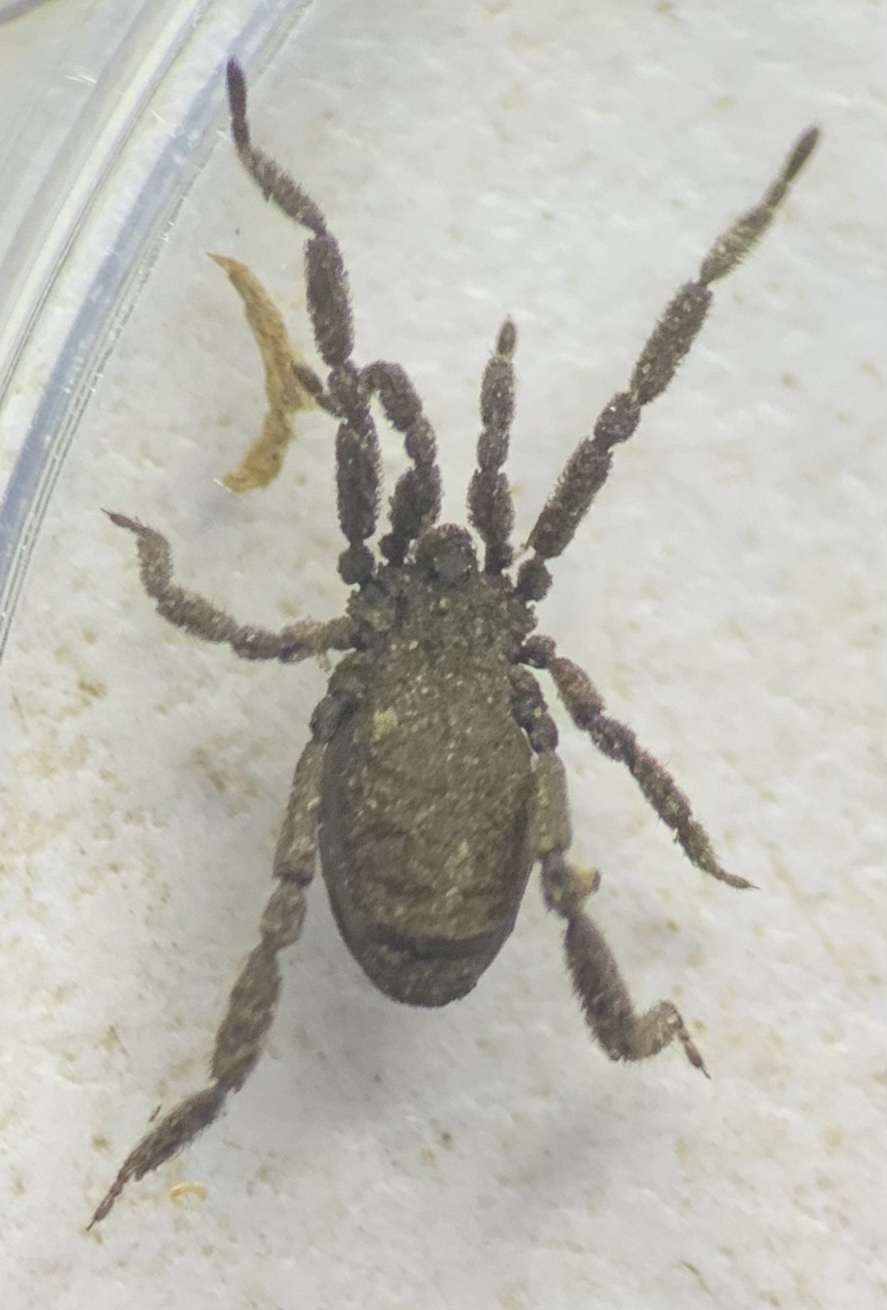
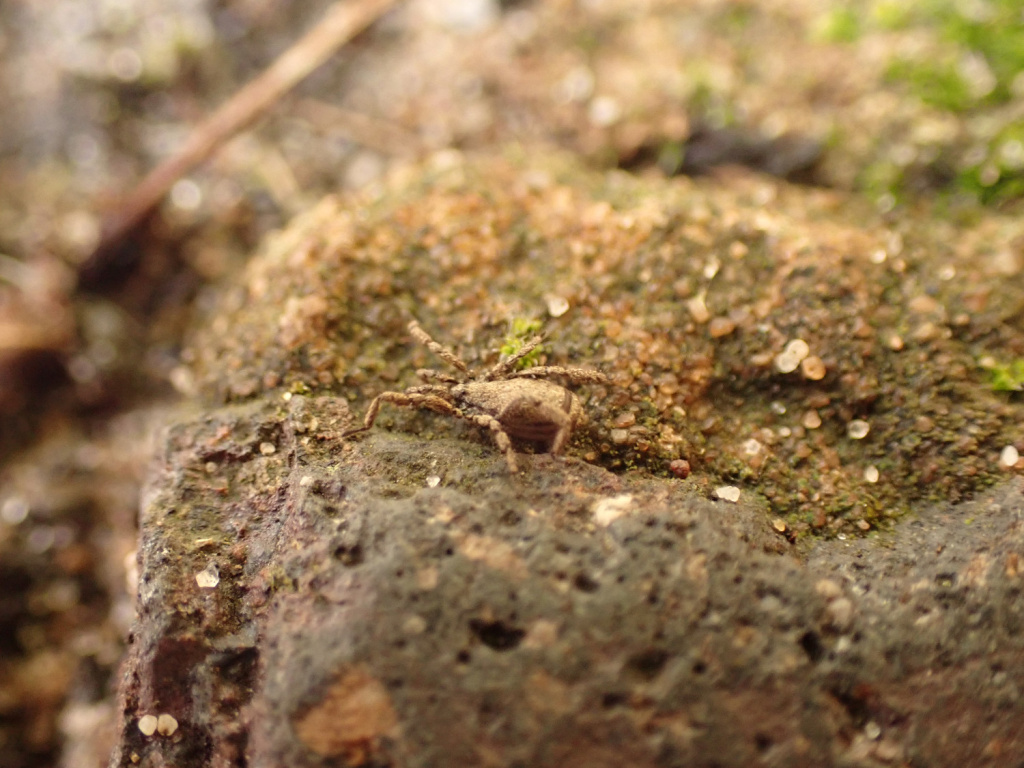
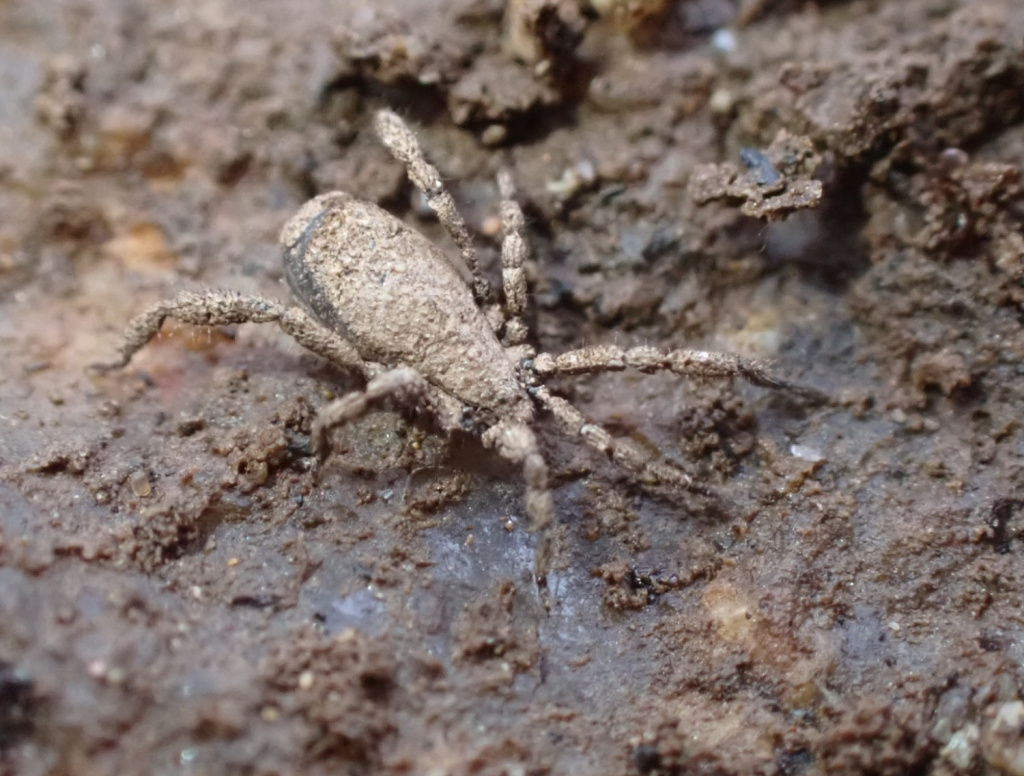
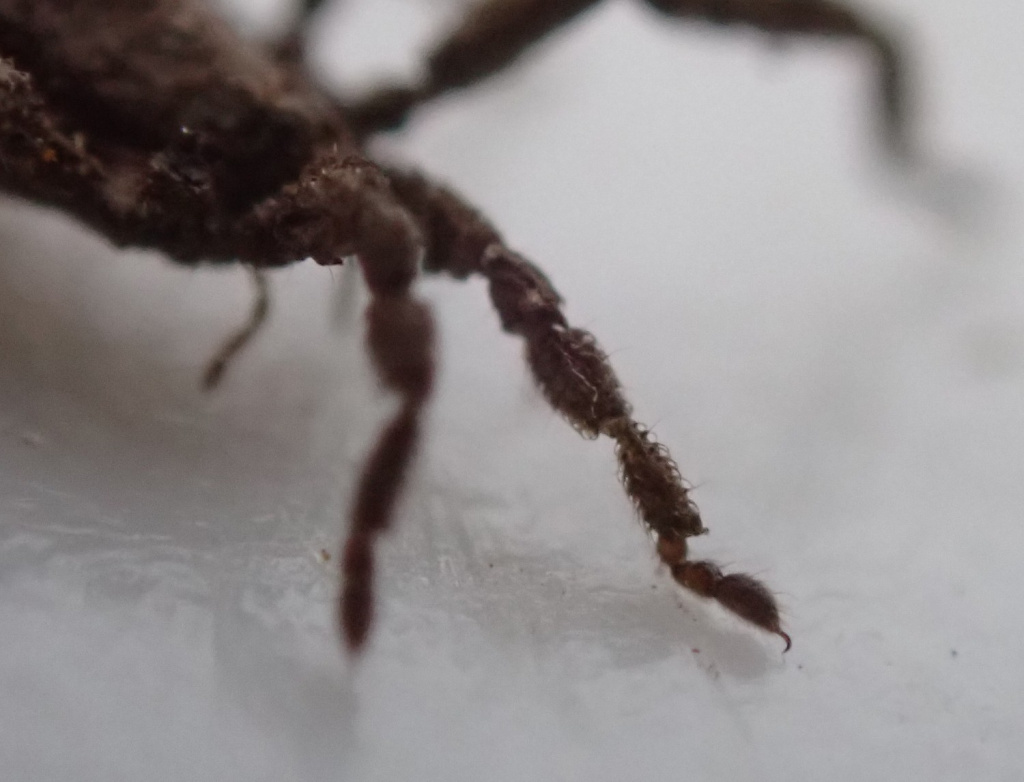
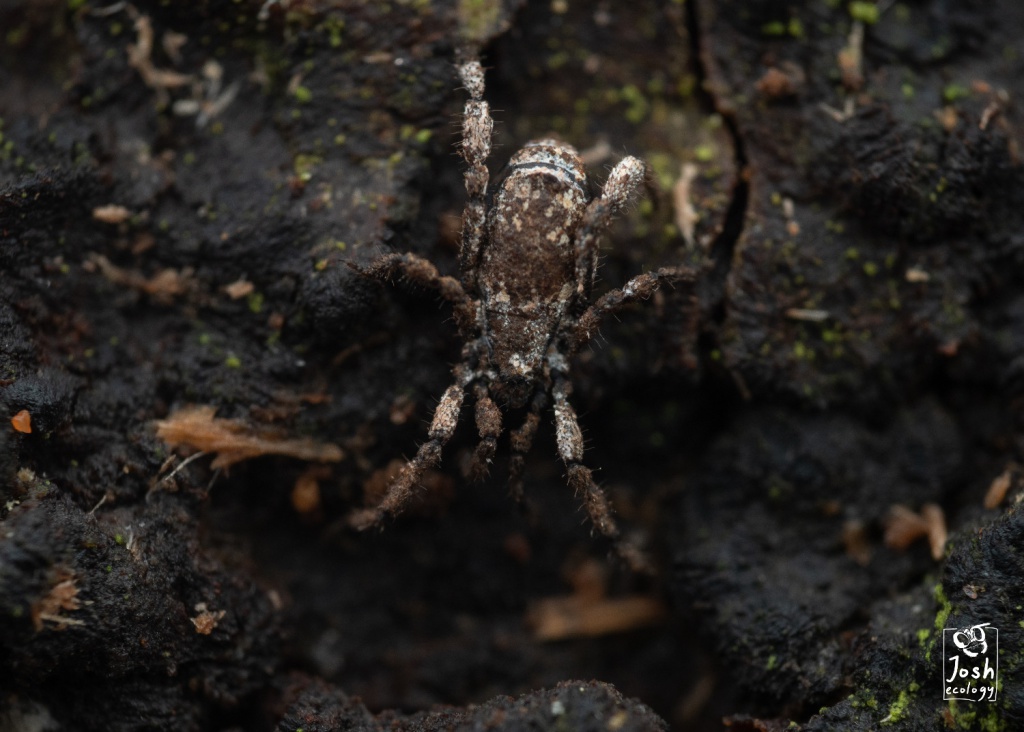
Like Trogulus tricarinatus, this flattened, short-legged species is restricted to the ground layer in calcareous soils and is a specialist (but not obligate) snail-feeder. It is most easily found by sieving soil and pitfall trapping but has been collected from under stones and logs, and in leaf-litter, grass and moss, preferring rough grassland and semi-open woodland. Both Trogulus and Anelasmocephalus secrete glue by which soil particles adhere to their bodies - presumably providing them with visual camouflage against predators and possibly also allowing them to blend chemically and physically with their soil environment. Anelasmocephalus hooded mouth-parts may reduce the problems of dealing with snail mucus and soil. Its habit of playing dead (catalepsy) and its colour, blending with soil particles, makes it difficult to spot for birds and other visual predators (and humans). Juveniles are generally free of soil and a lovely purple colour. Adults are present throughout the year and may live for up to three years. Eggs are laid in empty snail shells and protected with a web-like secretion from the ovipositor (Pabst 1953). Juveniles are found mostly between May to October. HRS records show this species occurring at altitudes over 200m in the Malham area of Yorkshire.
Status
Uncommon.
Threats
The main threat is decline in abundance of their snail prey. This may be occurring in less calcareous areas because of soil acidification, and in arable agricultural areas as a result of use of molluscicides.
Text based on: Hillyard, P. D. 2005. Harvestmen: keys and notes for the identification of British species. Synopses of the British Fauna 4 (3rd edn). Field Studies Council, Shrewsbury.
References
Pabst, W. 1953. Zur Biologie der mittleeuropaischen Troguliden. Zoologische Jahrbucher, (Systematik, Okologie und Geographie der Tiere) ### 82: 1-46.
Pickard-Cambridge, O. 1890. Monograph of the British Phalangidea or harvestmen. Proceedings of the Dorset Natural History and Antiquarian Field Club, Sherborne/Dorchester ### 11: 163-216.
Stats
- First recorded
- 1900
- Last recorded
- 2024
- Total records
- 680
- Total visits
- 662
Photos and media
Spatial distribution - hectad map
Click on one of the date ranges in the key to highlight that particular range. Click anywhere else on the map to go back to all three date ranges.
Thresholds:
Move mouse cursor over dot for info
Rejected records are excluded from this map. Unverified records are included.
Temporal distribution - records by year
Records that span more than one year are not included in this chart.
Temporal distribution - records by week
__