
Species Details
- Species name
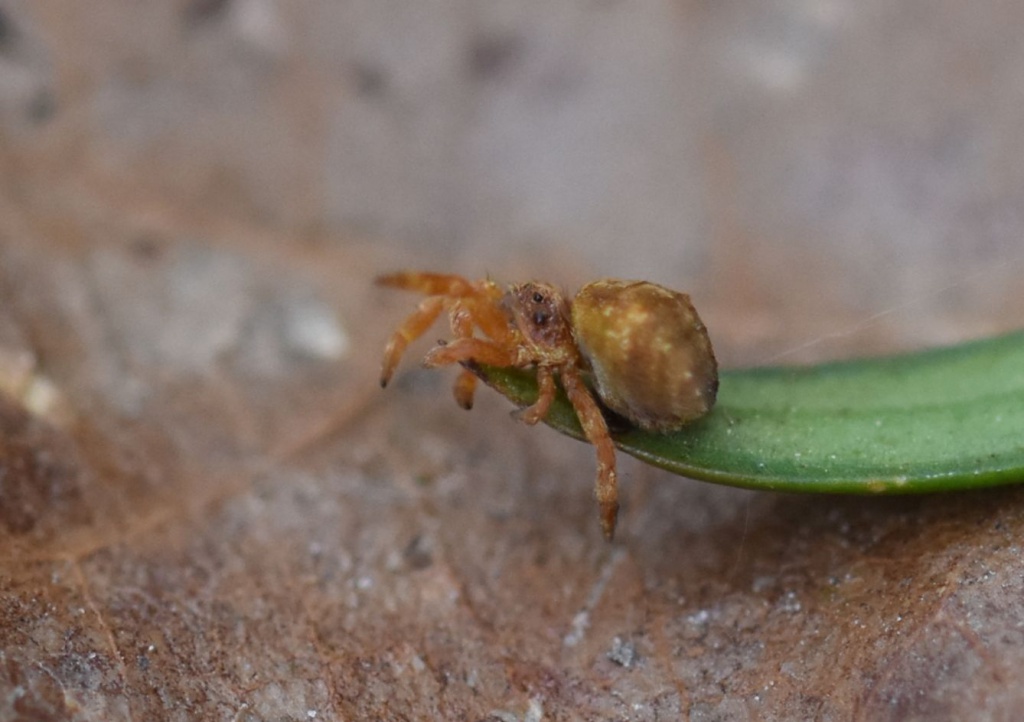
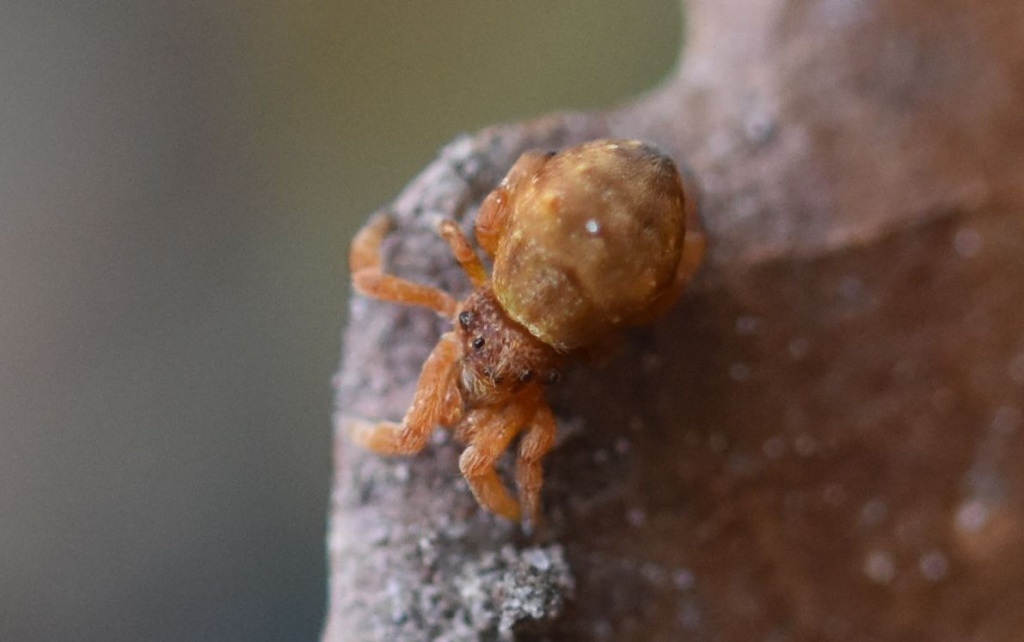
- Hyptiotes paradoxus (C.L. Koch, 1834)
- Common name
- Triangle Spider
- Taxonomy
- Animalia :: Araneae :: Uloboridae
- arboreal
Distribution
The species was first recorded in Britain in Borrowdale, Cumbria in the 1860s. There are records from various locations in the New Forest, South Hampshire; Box Hill and Wallis Wood, Surrey; Bagley Wood, Oxfordshire; Butler's Hangings and Hearnton Wood, Buckinghamshire and Grubbins Wood, Westmorland. Recent (1990s) surveys have recorded the spider in the Forest of Dean, Gloucestershire and in the Wye Valley and at Queen's Wood near Ross, Herefordshire (Askins 1990; Farr-Cox 1990; Merrett in Bratton 1991; Rixom 1998). Merrett (1995, 2000) also gives new county records for Kent, Staffordshire and Dorset. The spider is widespread in western and central Europe but not common.Habitat and ecology
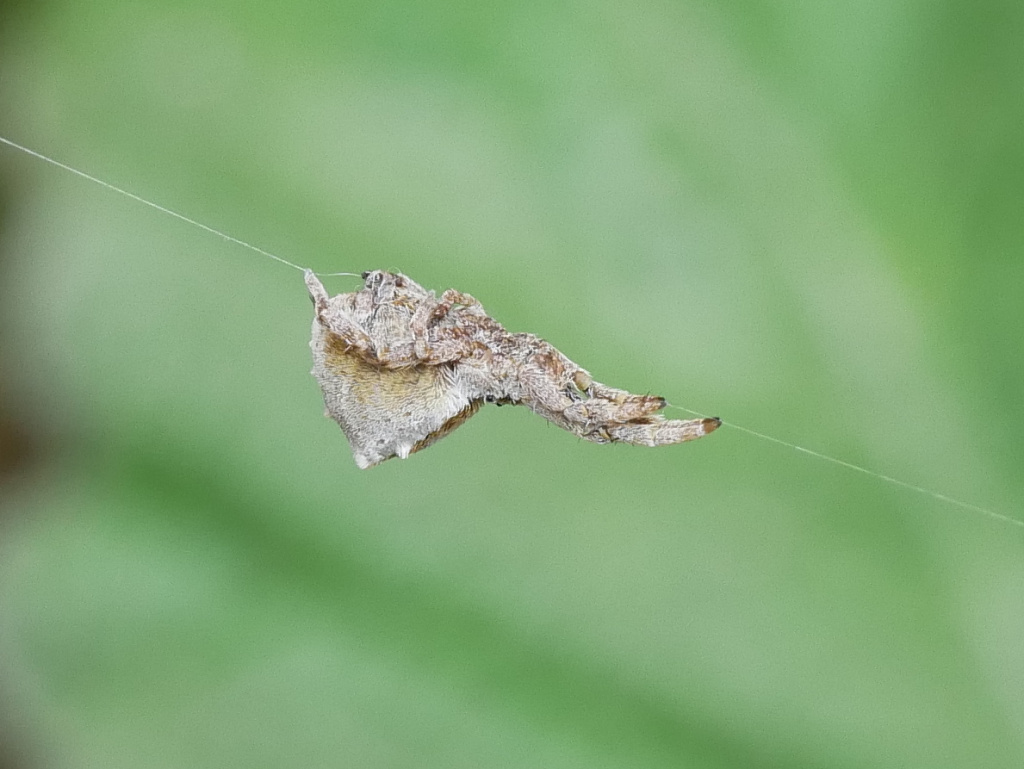
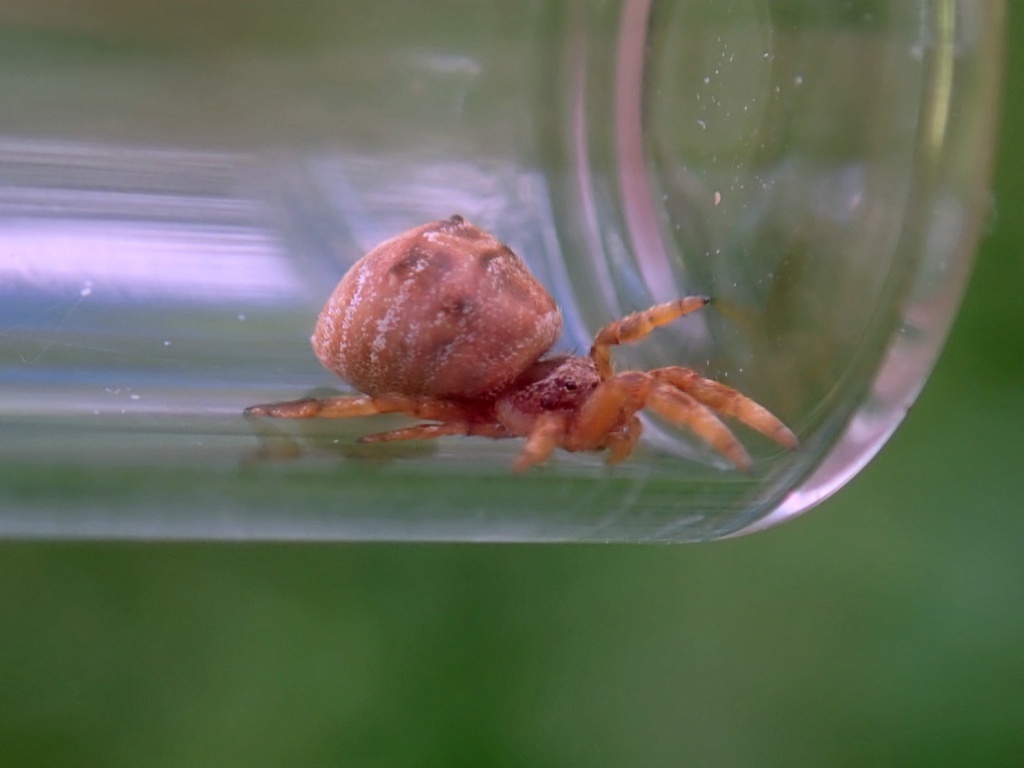
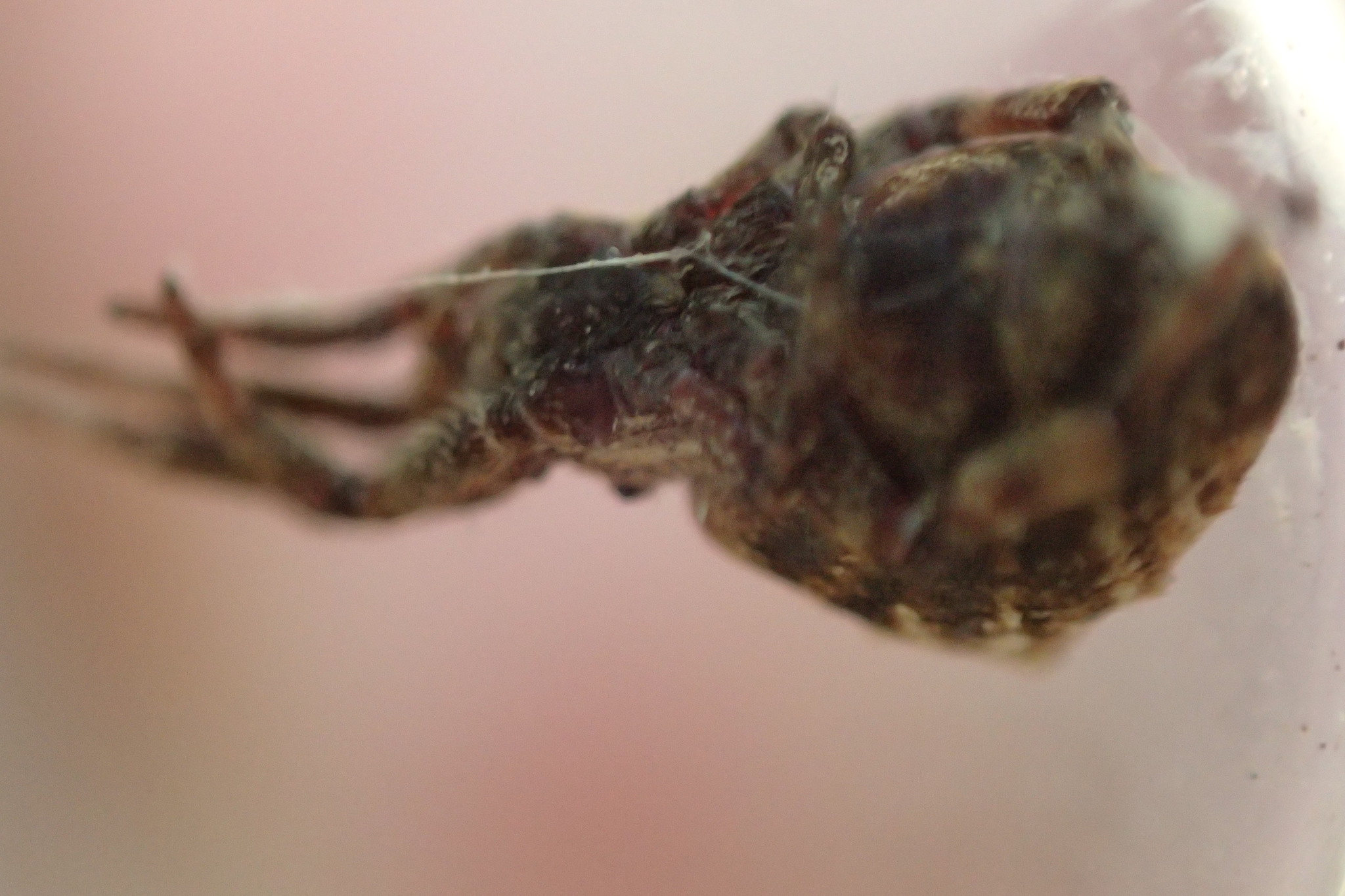
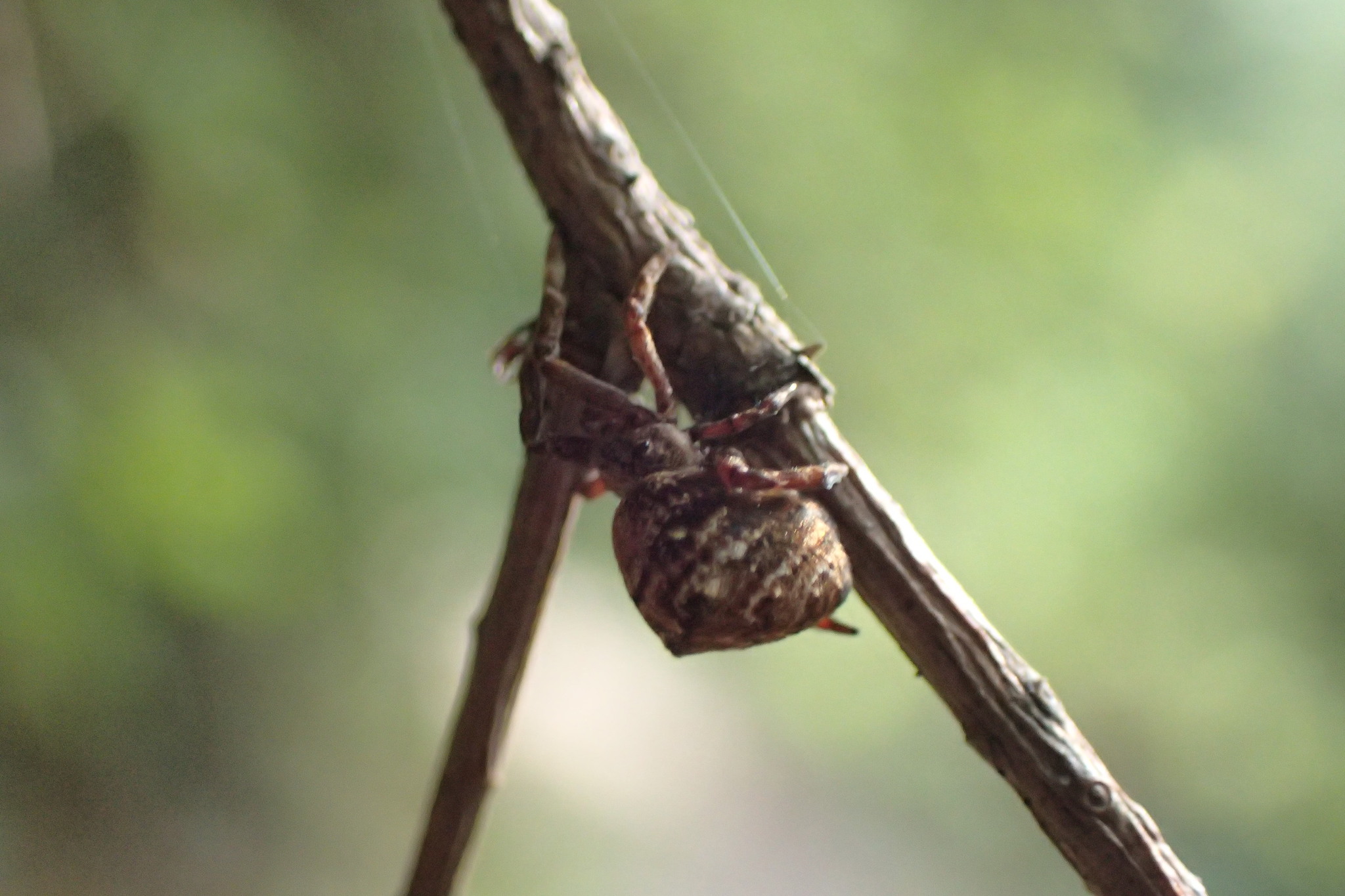
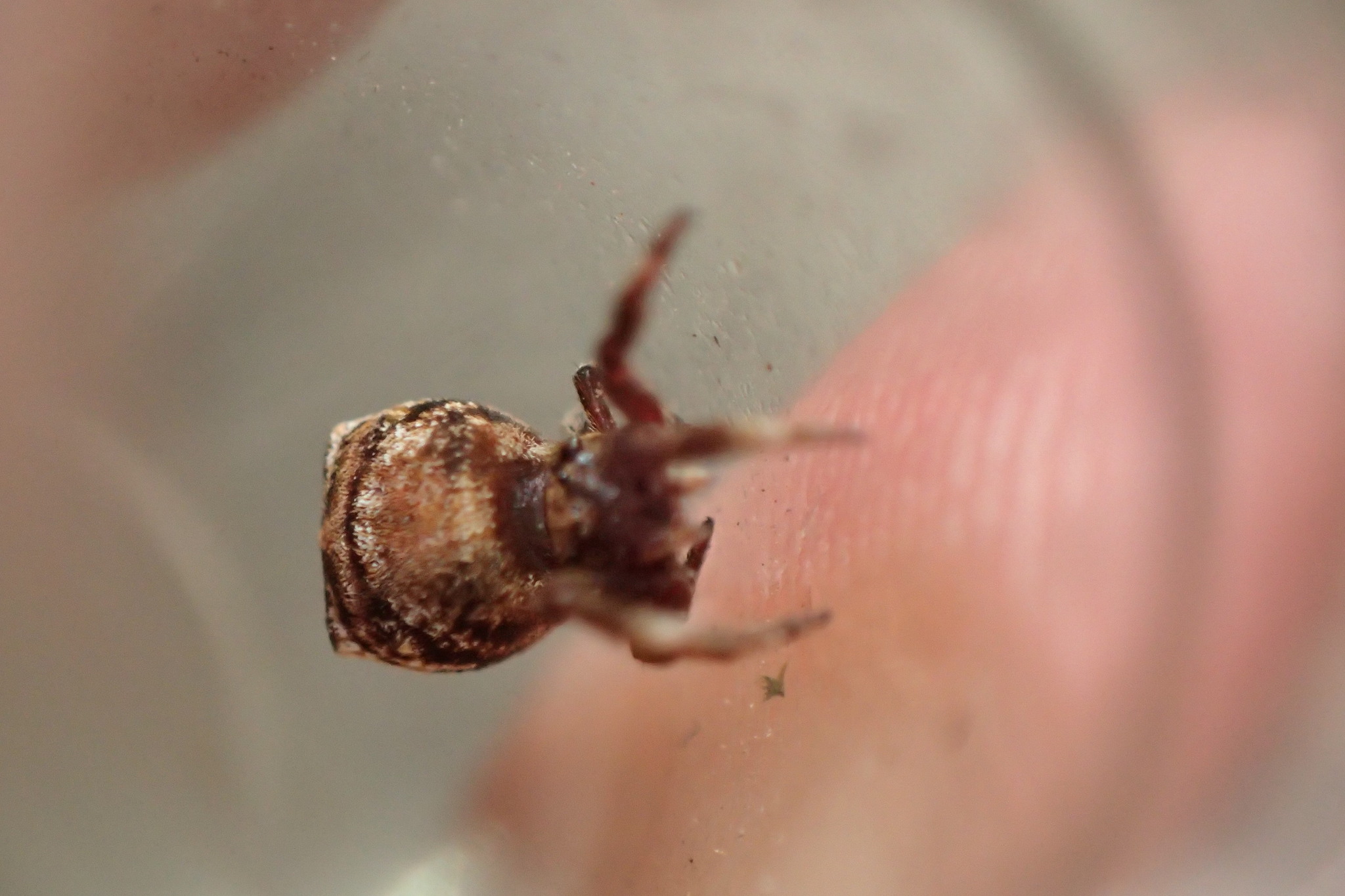
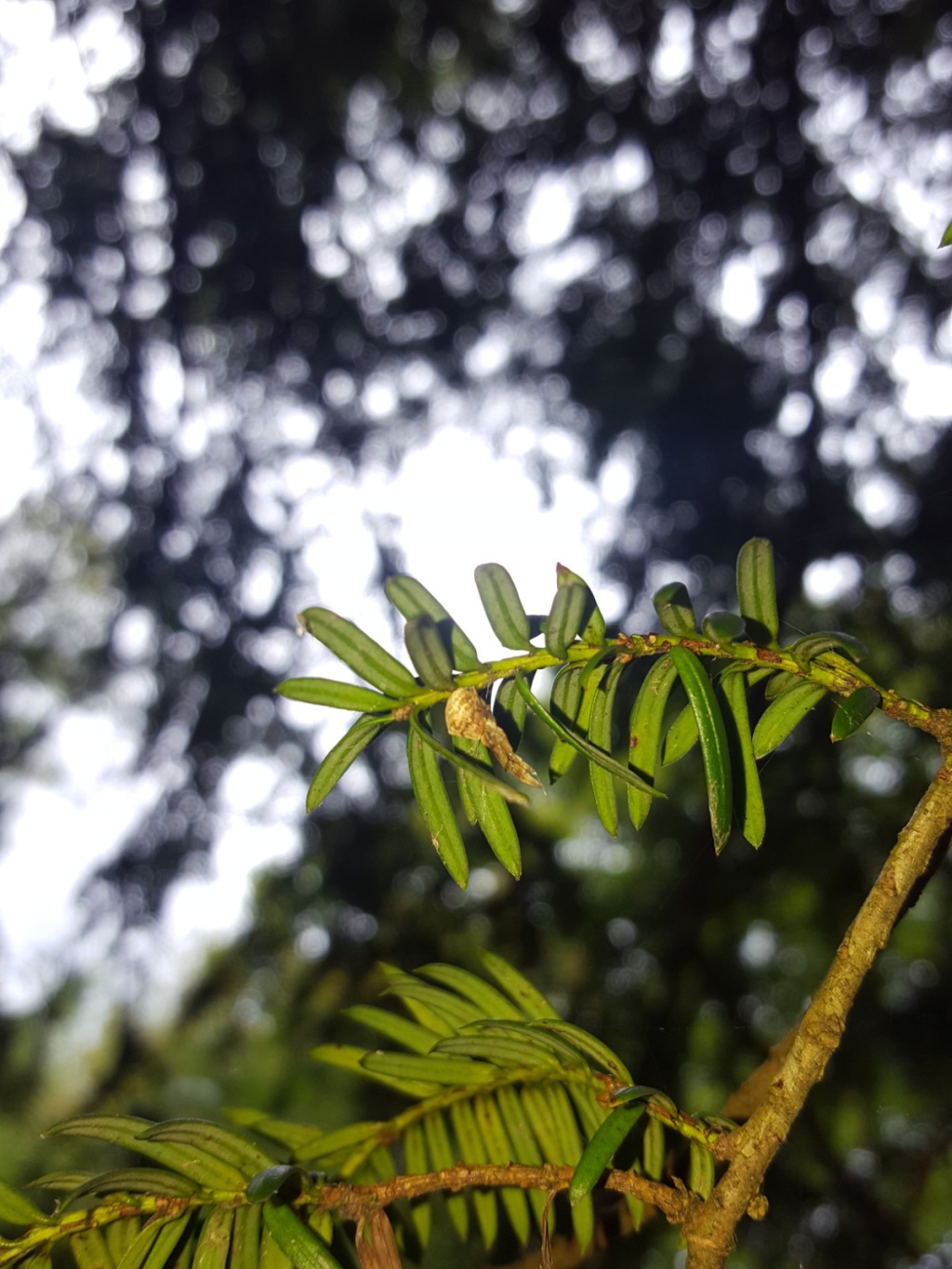
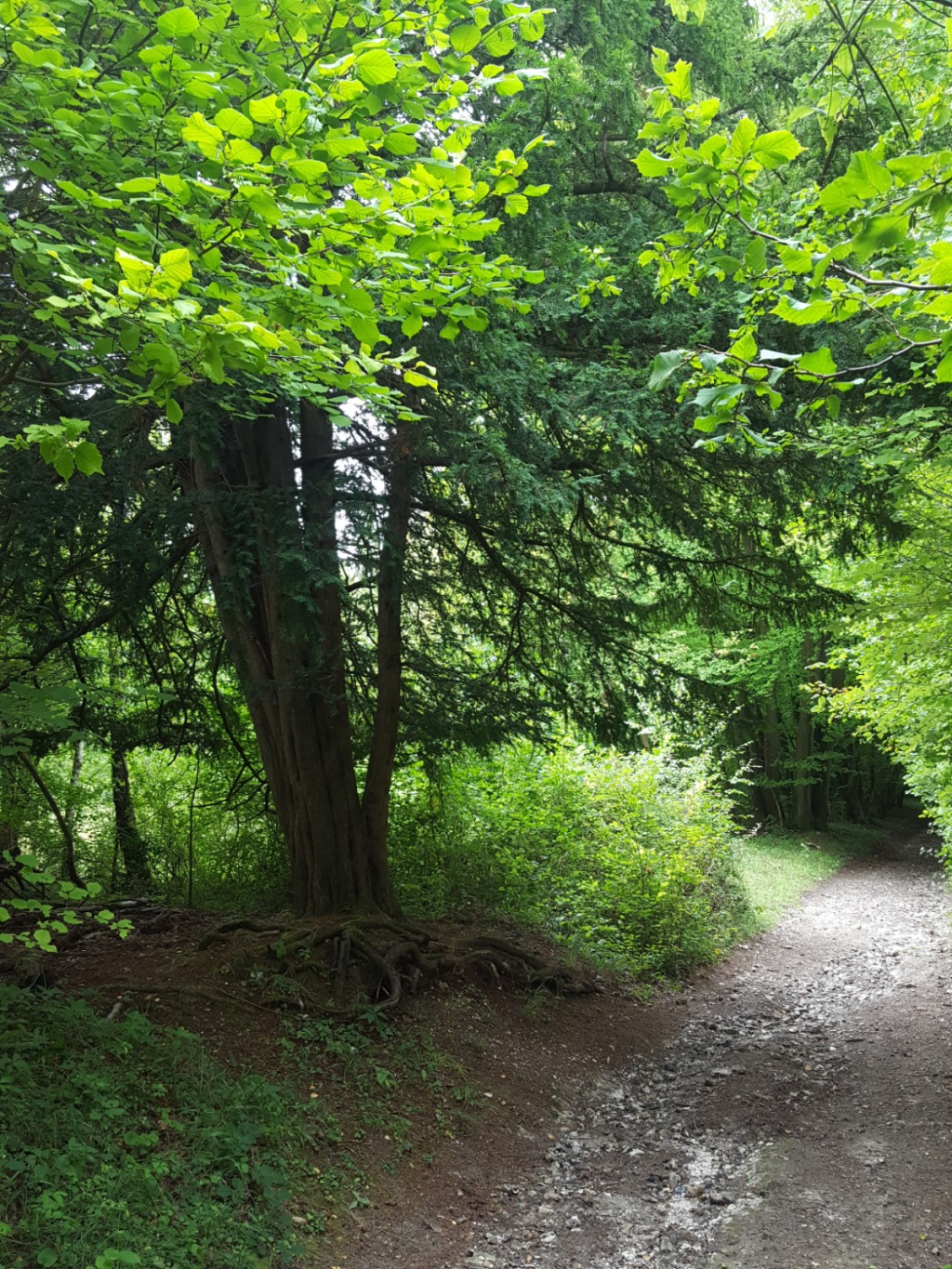
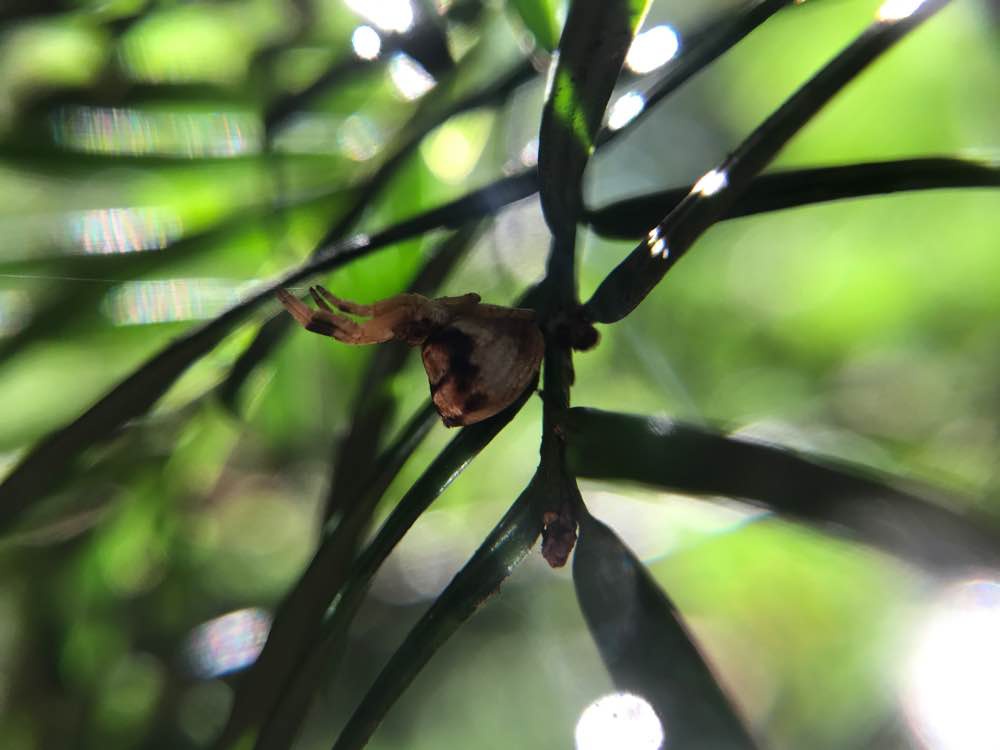
H. paradoxus is found on evergreen trees and shrubs (particularly yew), although has been found by one of the the authors in its web on immature beech on edge of oak woodland in Central France. The spider spins a triangular segment of orb web (containing 2 radial threads) within the tree foliage and keeps it taut by holding on to one corner of the triangle from its sitting position. When an insect is caught in the web the spider slackens and tightens the tension of the web until its prey is fully entangled in silk before advancing to wrap it securely (Roberts 1995). Both sexes reach maturity in the late summer, mating not occurring until the following spring. It appears that the young spiders over-winter in the egg-sac, not reaching maturity until late the following summer, two years after their mother reached maturity (Bristowe 1958).Status
The spider has been abundant at some sites, such as Bagley Wood (where it was still recorded in the 1970s), Box Hill and some sites in the New Forest. West Country records are each for only one or two individuals.Threats
The spider appears to favour a habitat where evergreen trees and bushes grow in amongst broad-leaved species e.g. Bagley Wood and West Walk Wood. Bagley Wood has undergone extensive conifer planting and although the spider has been recorded since this occurred it is not known whether the spider is utilising the increased conifer coverage or remaining within the broad-leaved woodland. West Walk Wood has similarly undergone conifer planting but there is no information on the current status of the spider at this site.Management and conservation
The present uncertain status of Hyptiotes paradoxus within the sites where it has been recorded makes it difficult to offer any concrete suggestions for future management. Confirmation of the continued presence of the spider at the sites mentioned and some assessment of its current status is required. Maintenance of a suitable mix of evergreen and broad-leaved trees and shrubs would seem to be an essential pre-requisite at sites where the spider has been recorded. Text based on Dawson, I.K., Harvey, P.R., Merrett, P. & Russell-Smith, A.R. (in prep.).Stats
- First recorded
- 1800
- Last recorded
- 2025
- Total records
- 144
- Total visits
- 142
Conservation status
Hyptiotes paradoxus
| Source | Reporting category | Designation | Date designated | Comments |
|---|---|---|---|---|
| A Review of the scarce and threatened spiders (Araneae) of Great Britain: Species Status No. 22 (Sep 2017) | Rare and scarce species | Nationally Scarce. Includes Red Listed taxa | 01/09/2017 | |
| A Review of the scarce and threatened spiders (Araneae) of Great Britain: Species Status No. 22 (Sep 2017) | Red listing based on 2001 IUCN guidelines | Least concern | 01/09/2017 | Threats: The spider appears to favour a habitat where evergreen trees and bushes grow in amongst broad-leaved species e.g. Bagley Wood and West Walk Wood. Bagley Wood has undergone extensive conifer planting and although the spider has been recorded since this occurred it is not known whether the spider is utilising the increased conifer coverage or remaining within the broad-leaved woodland. West Walk Wood has similarly undergone conifer planting but there is no information on the current status of the spider at this site. |
Photos and media
Spatial distribution - hectad map
Click on one of the date ranges in the key to highlight that particular range. Click anywhere else on the map to go back to all three date ranges.
Thresholds:
Move mouse cursor over dot for info
Rejected records are excluded from this map. Unverified records are included.
Temporal distribution - records by year
Records that span more than one year are not included in this chart.
Temporal distribution - records by week
__