
Species Details
- Species name
- Mioxena blanda (Simon, 1884)
- Synonym
- Mioxena blandum
- Taxonomy
- Animalia :: Araneae :: Linyphiidae
- short sward & bare ground
Distribution
M. blanda is known from widely scattered localities in England, Wales and Scotland (E. Lothian and Skye, records not submitted to the recording scheme). It is widespread in north-western and central Europe, but has not been recorded from Ireland.Habitat and ecology
The species has been recorded from a wide range of habitats: saltmarsh, calcareous grassland, beneath stones on a river bed, in birch and pine litter, sand dunes, bracken, sugar-beet fields and a tin mine. It is thought that its true habitat has not yet been identified, and it may be subterranean. Adults have been found between August and January, possibly mostly in the late autumn and early winter.Status
Although there may be some under-recording, this still appears to be a rare spider known from only two locations since 1992 and which has undergone major decline in area of occupancy.Threats
Specific threats are unknown for this species.Management and conservation
Too little is known of the biology of this species to make management recommendations. Text based on Dawson, I.K., Harvey, P.R., Merrett, P. & Russell-Smith, A.R. (in prep.).Stats
- First recorded
- 1900
- Last recorded
- 2023
- Total records
- 63
- Total visits
- 61
Conservation status
Mioxena blanda
| Source | Reporting category | Designation | Date designated | Comments |
|---|---|---|---|---|
| A Review of the scarce and threatened spiders (Araneae) of Great Britain: Species Status No. 22 (Sep 2017) | Rare and scarce species | Nationally Rare. Includes Red Listed taxa | 42979 | |
| A Review of the scarce and threatened spiders (Araneae) of Great Britain: Species Status No. 22 (Sep 2017) | Red listing based on 2001 IUCN guidelines | Data Deficient | 42979 | Although collected from a wide range of habitats, it is thought that its true habitat preference has not yet been determined. Since 1993 it has been recorded at only a single location in South Devon in 2003-4. All nine specimens caught there were females captured over four occasions using aeronaught bottle traps during the winter months. This, together with its sporadic occurrence, supports the view that it may be a subterranean species dispersing in the autumn/winter months. Threats: Specific threats are unknown for this species. |
Photos and media
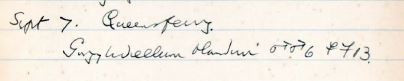
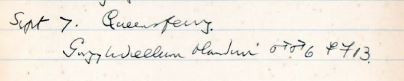
Spatial distribution - hectad map
Click on one of the date ranges in the key to highlight that particular range. Click anywhere else on the map to go back to all three date ranges.
Thresholds:
Move mouse cursor over dot for info
Rejected records are excluded from this map. Unverified records are included.
Temporal distribution - records by year
Records that span more than one year are not included in this chart.
Temporal distribution - records by week
__