
Species Details
- Species name
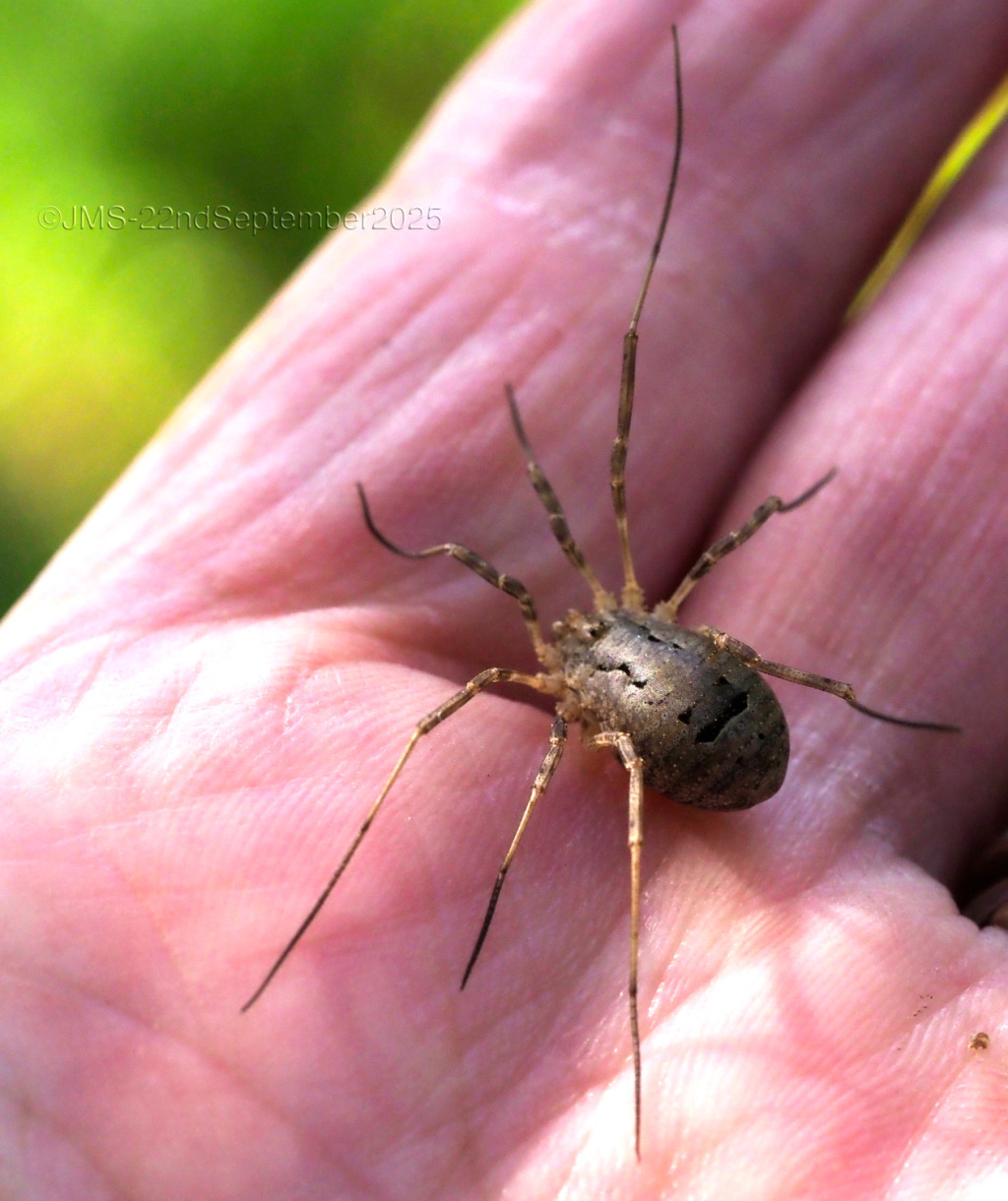
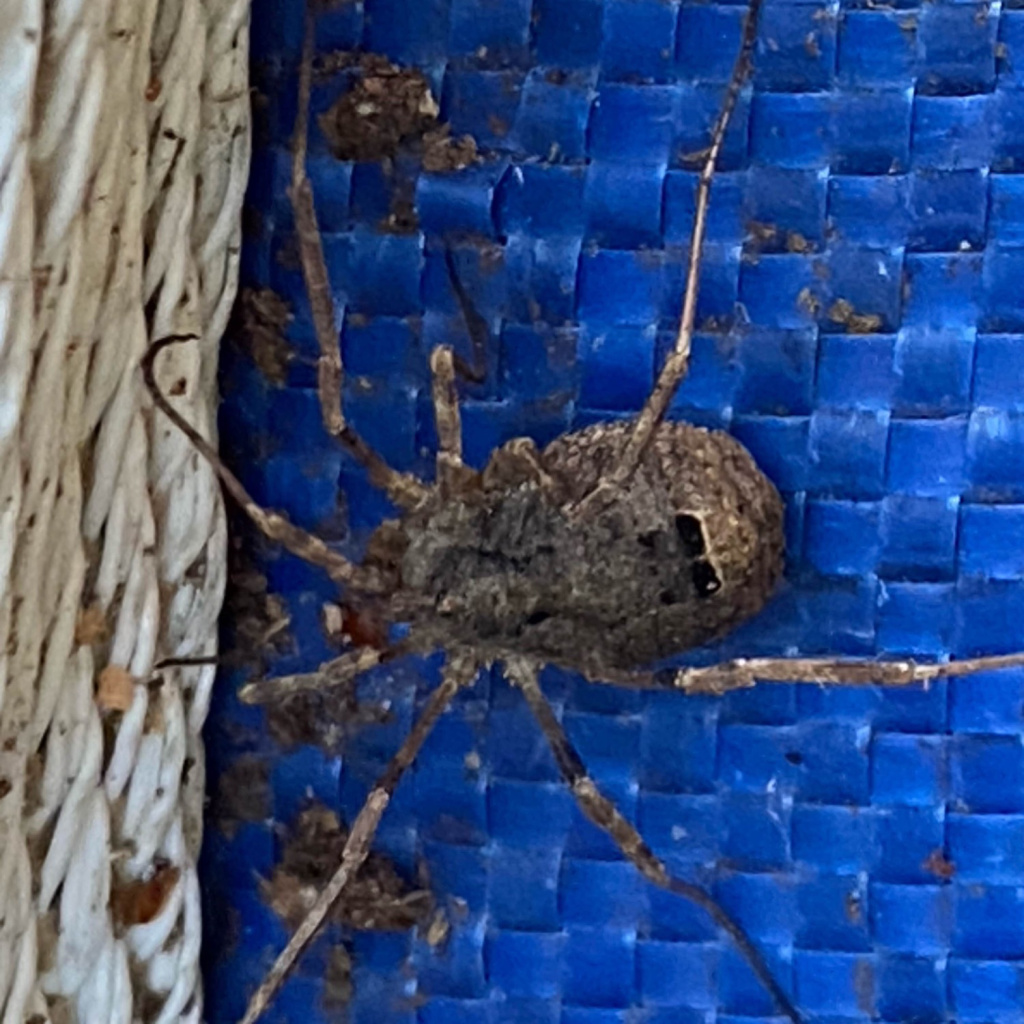
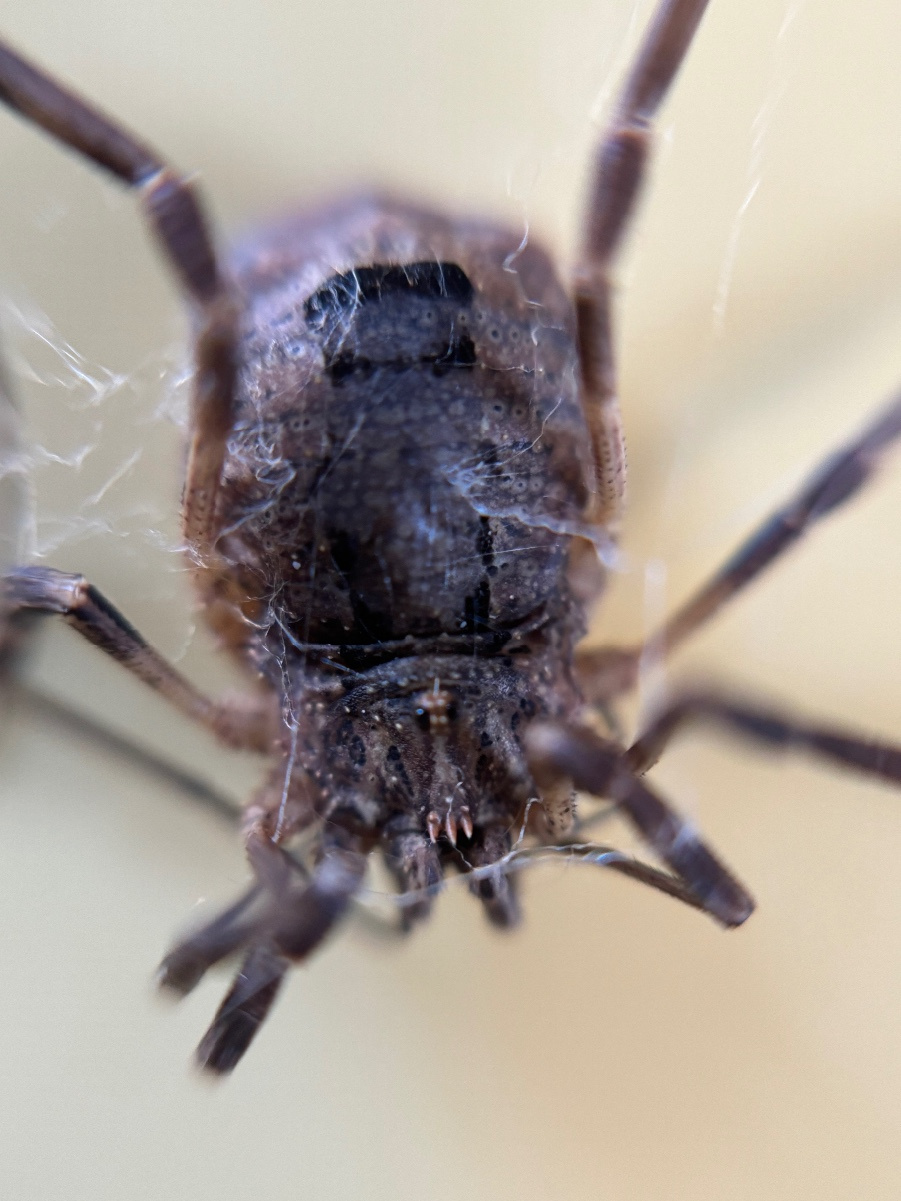
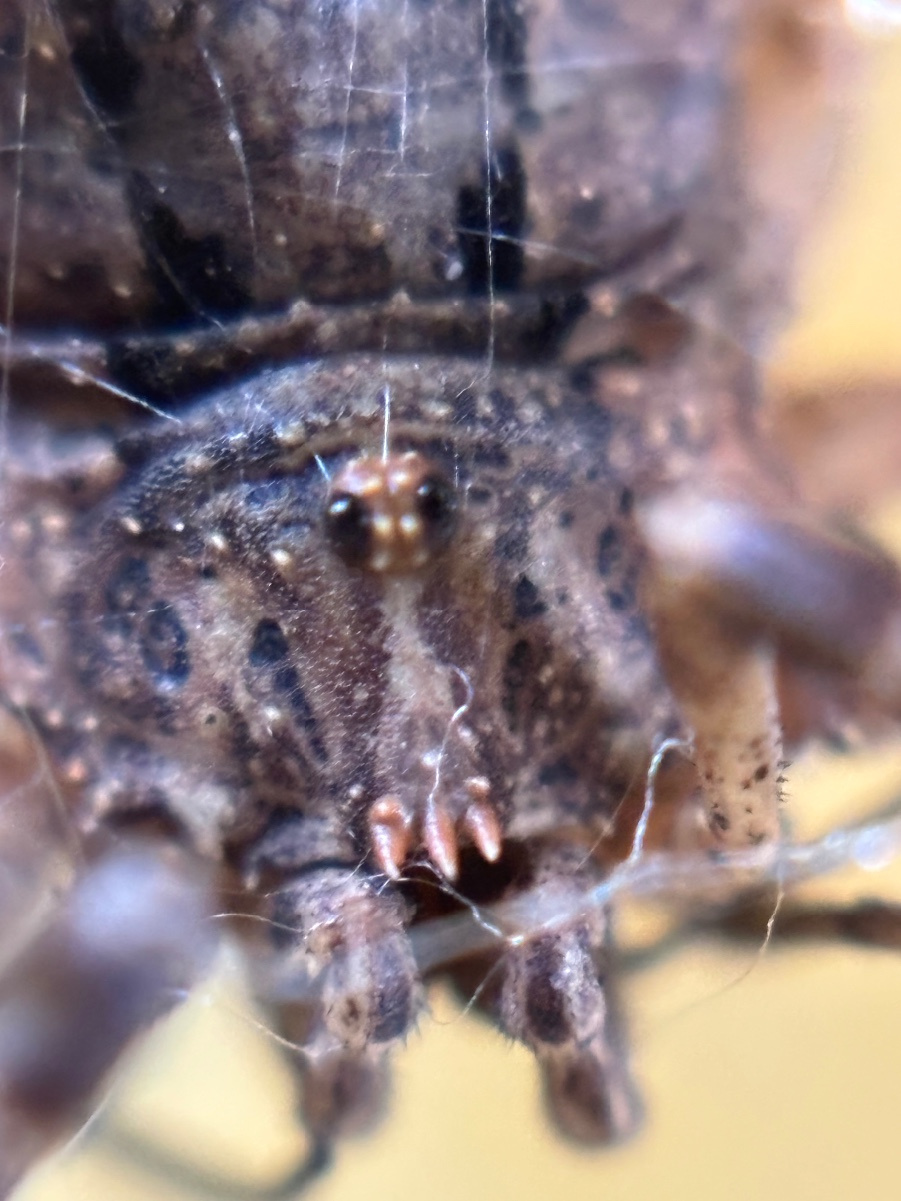
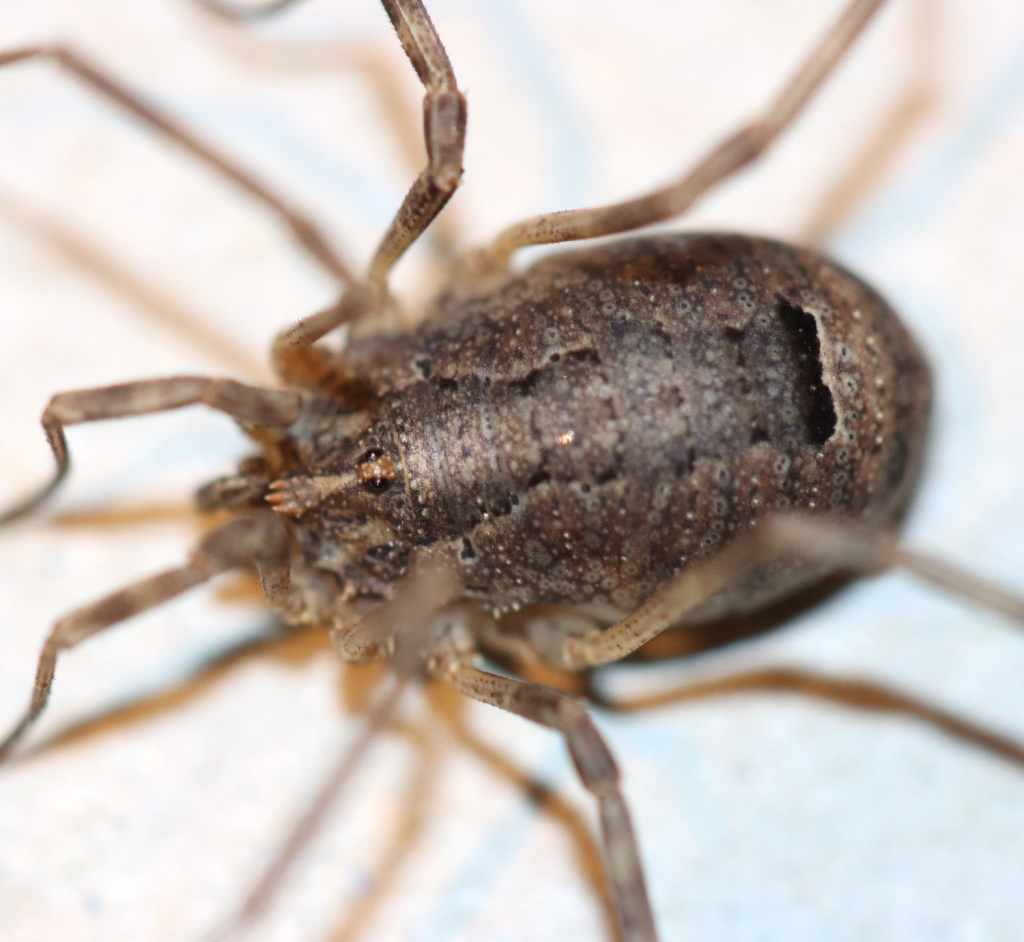
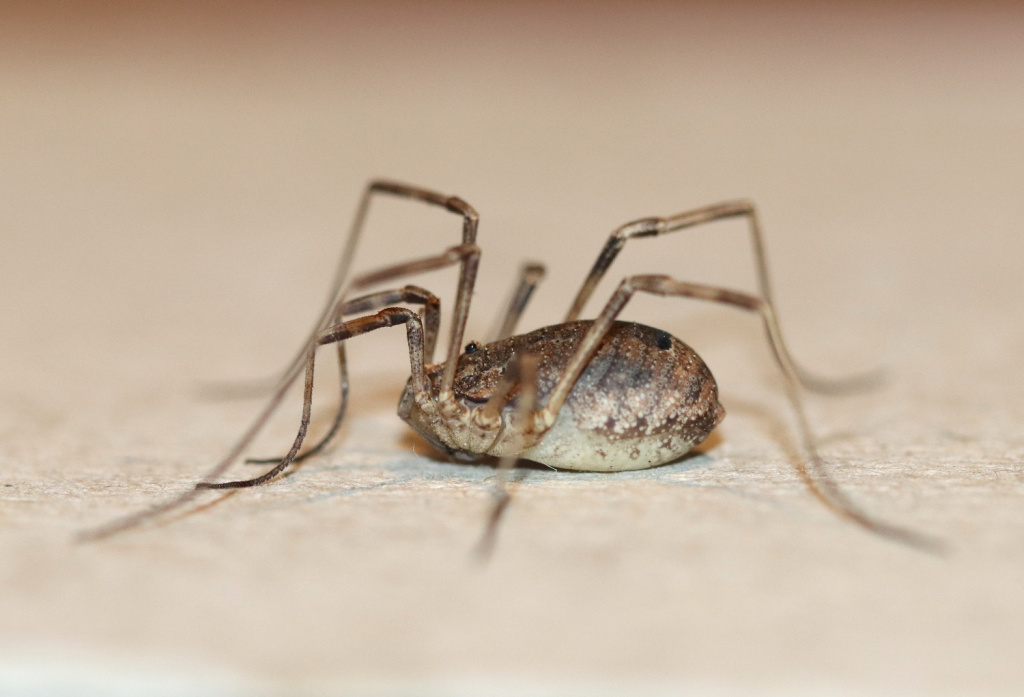
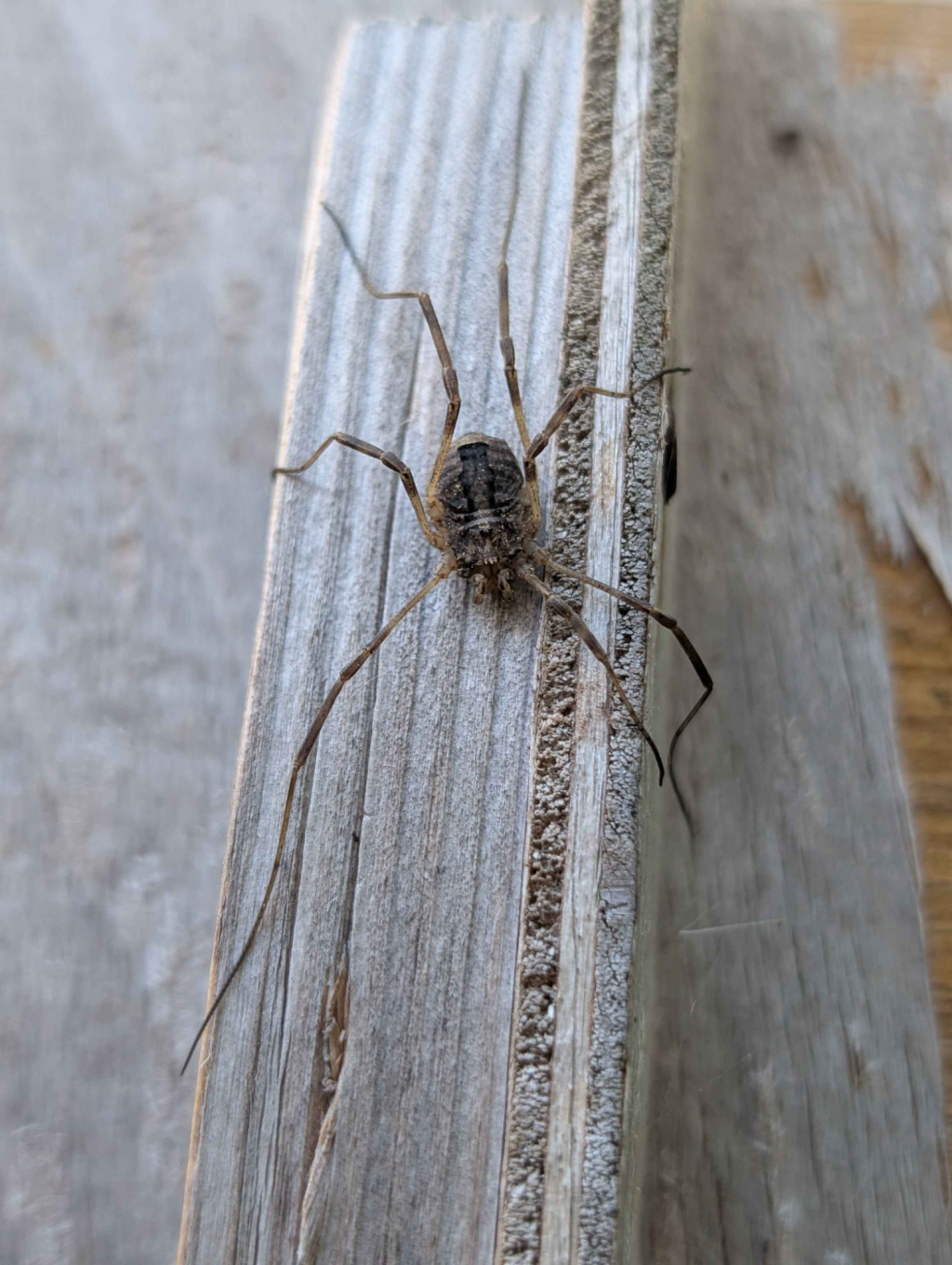
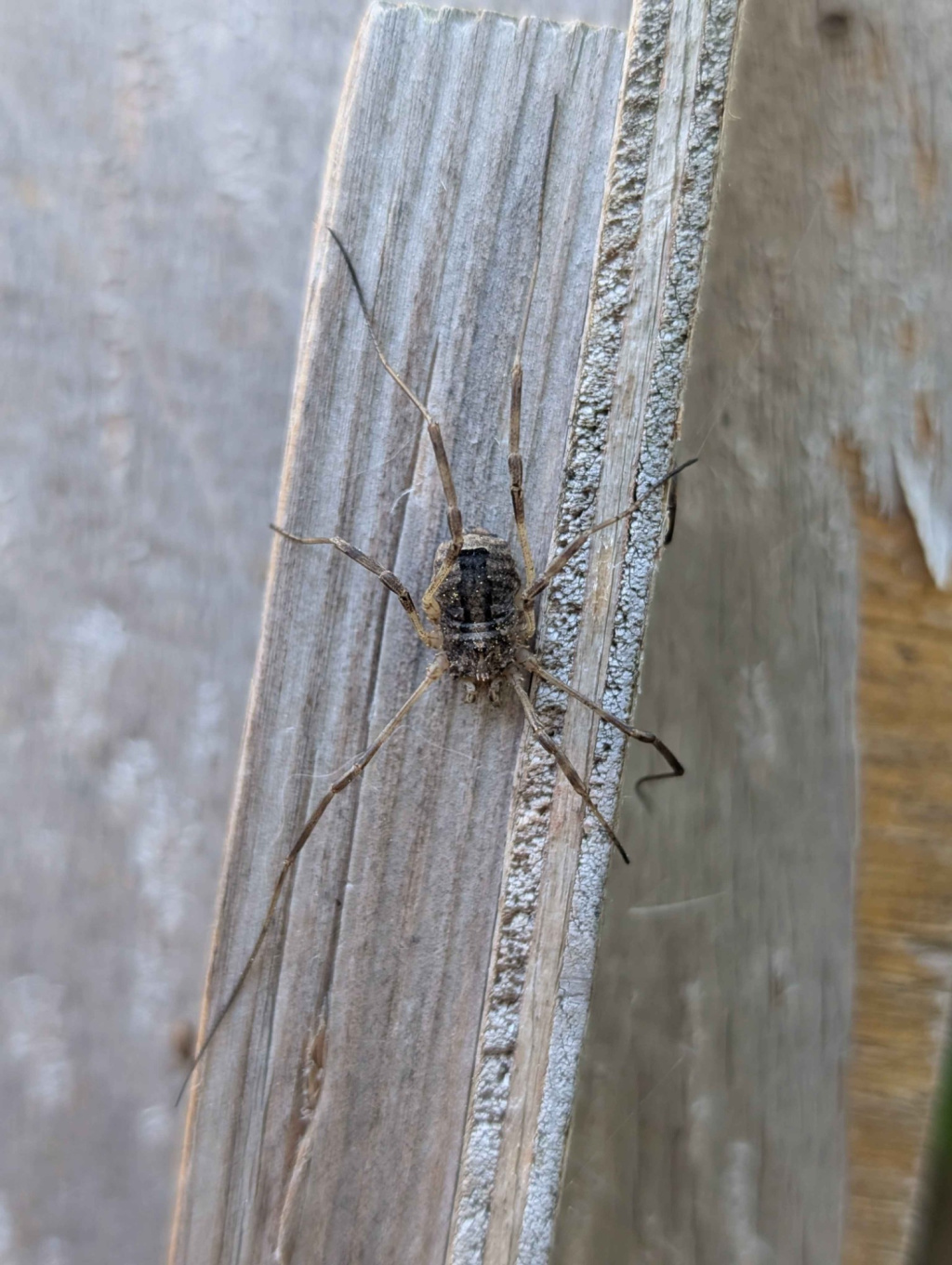
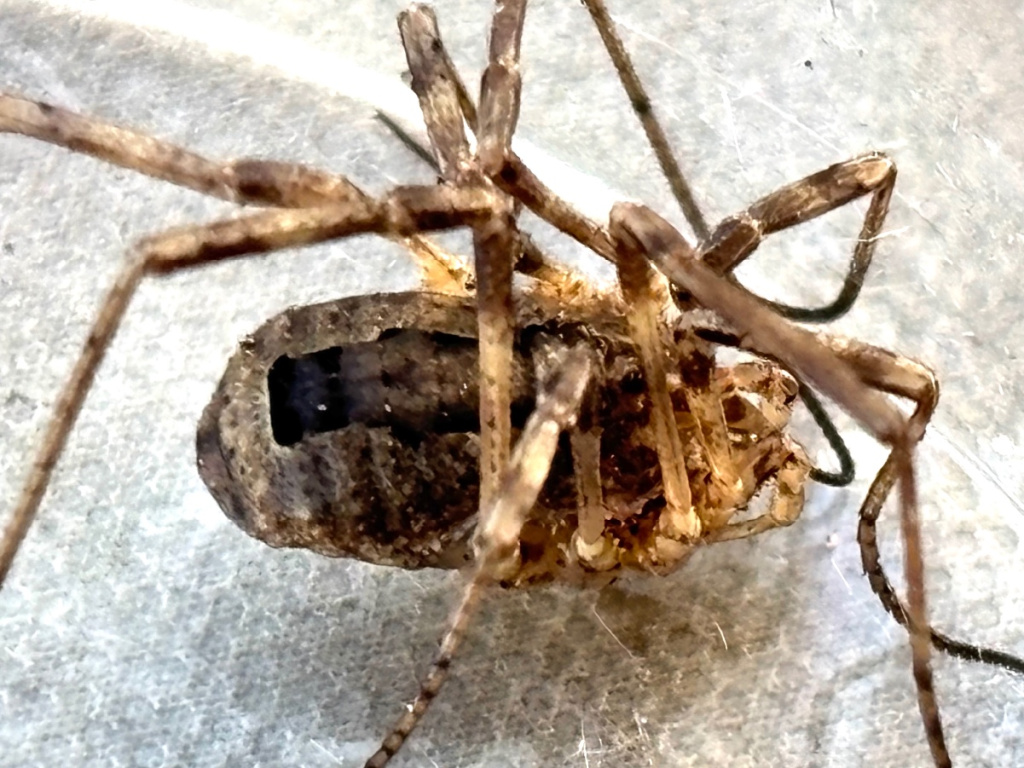
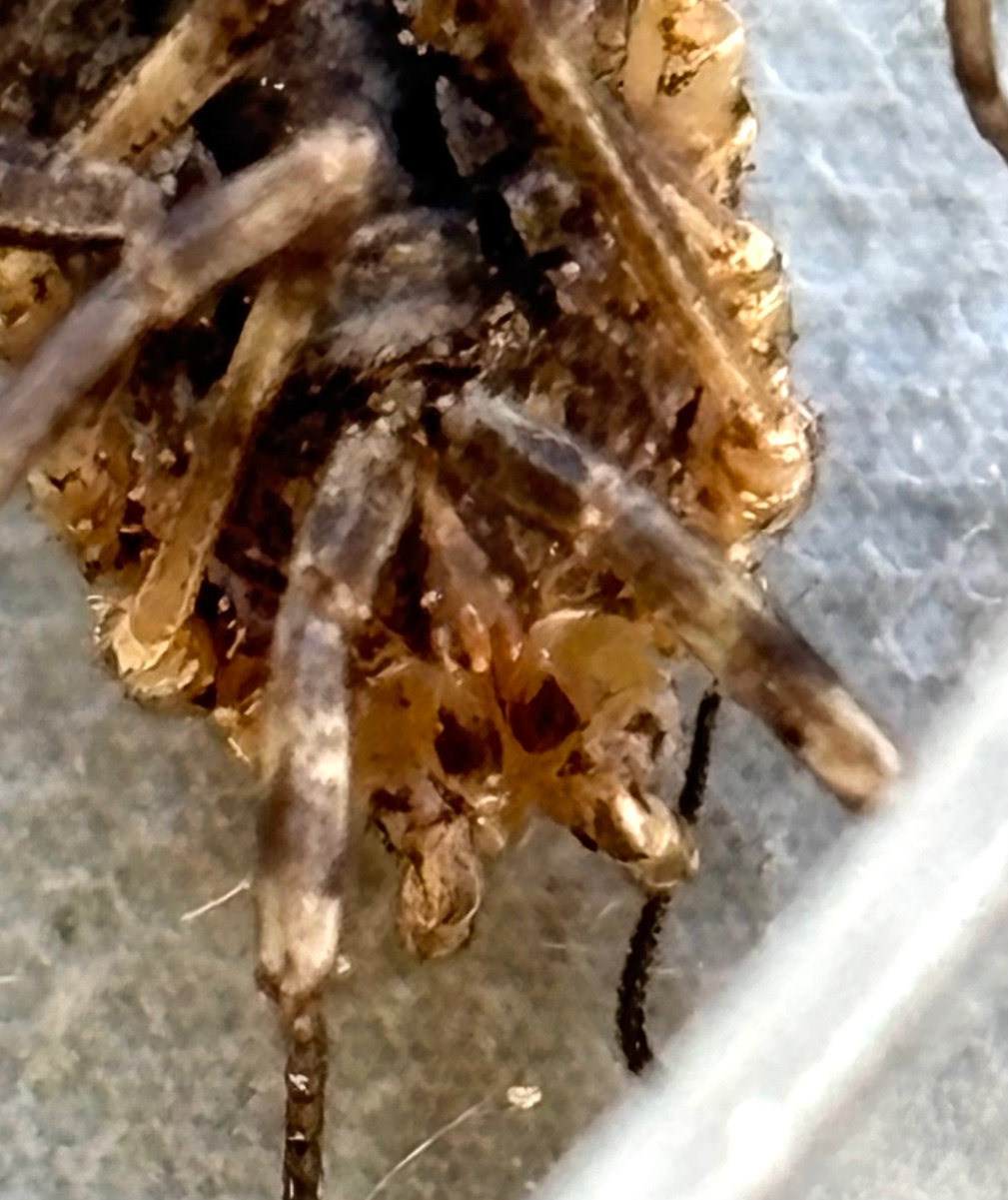
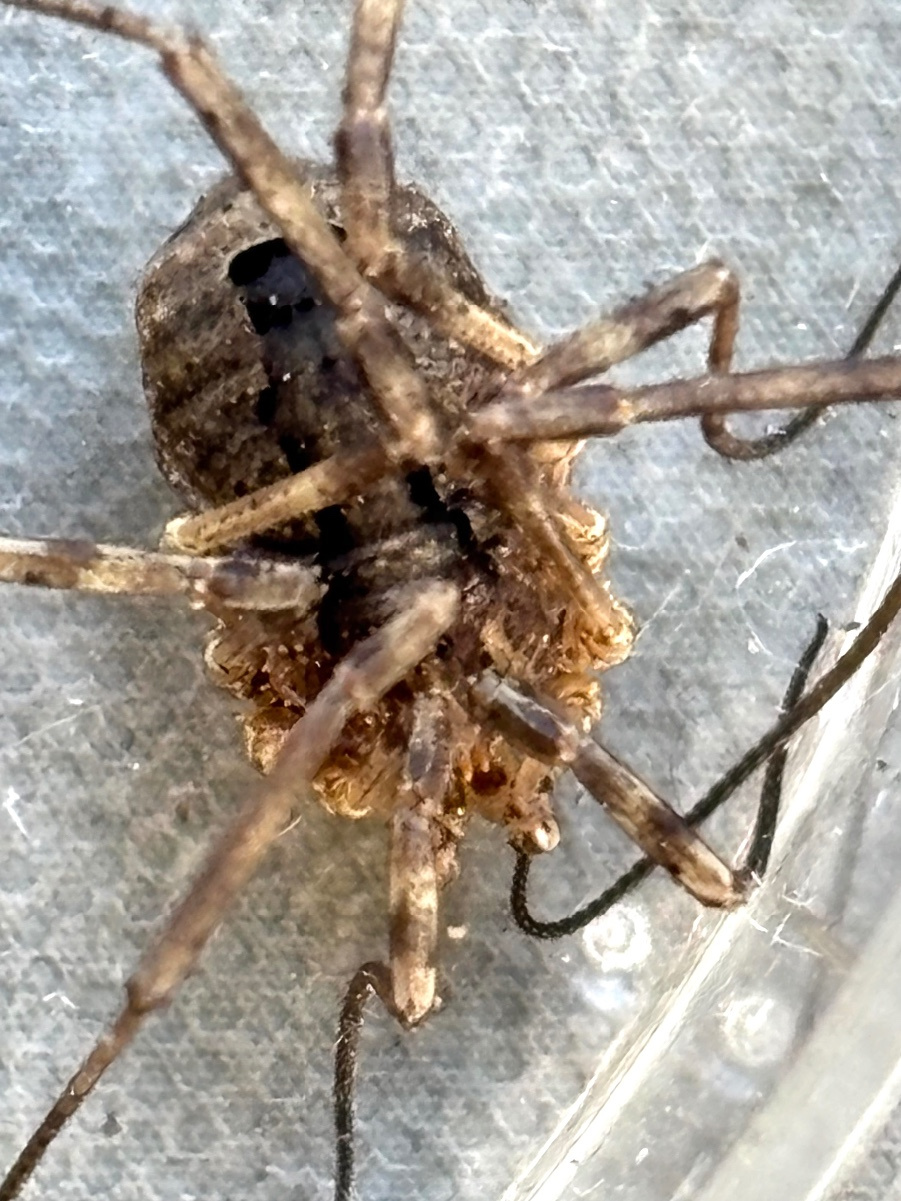
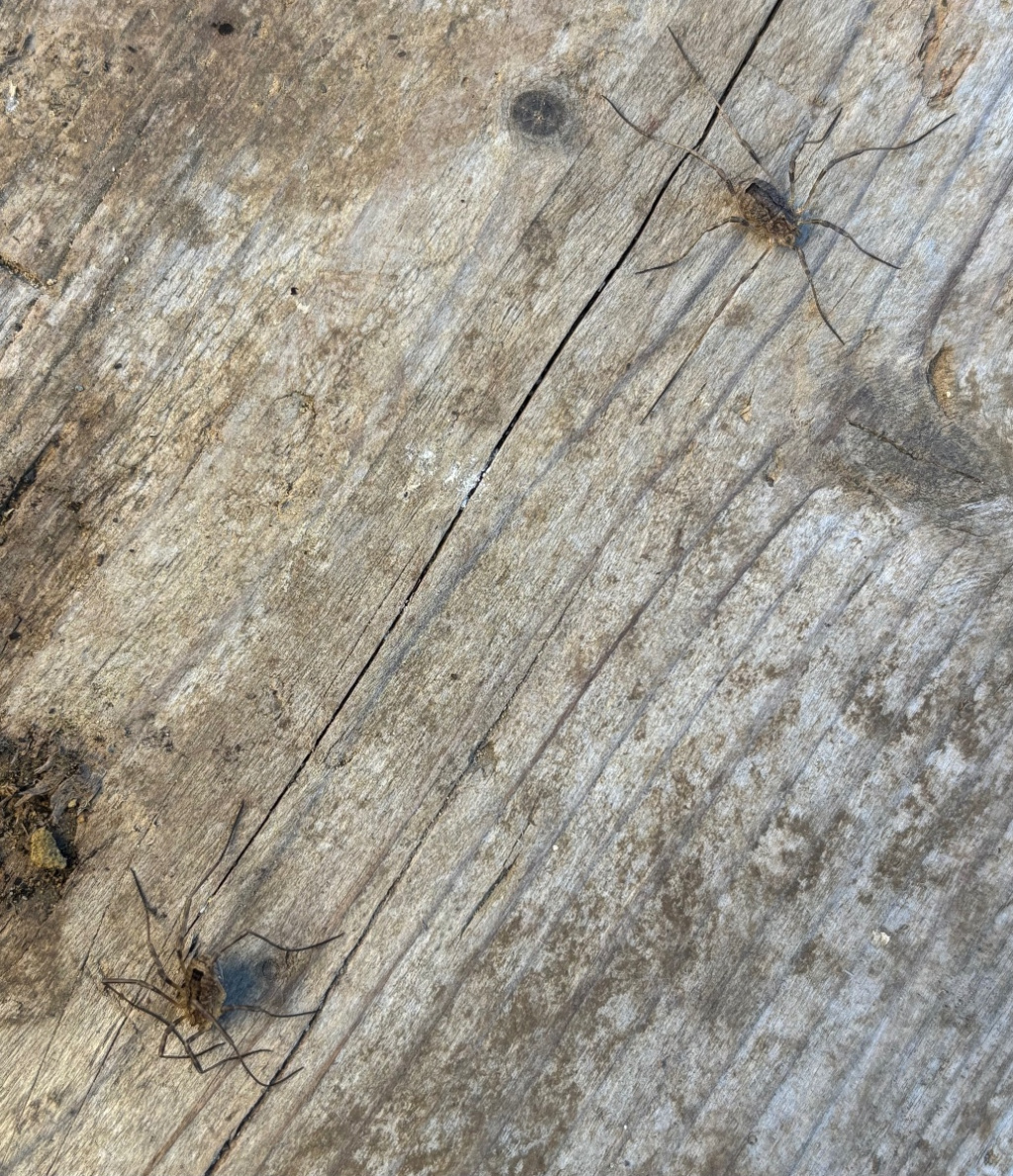
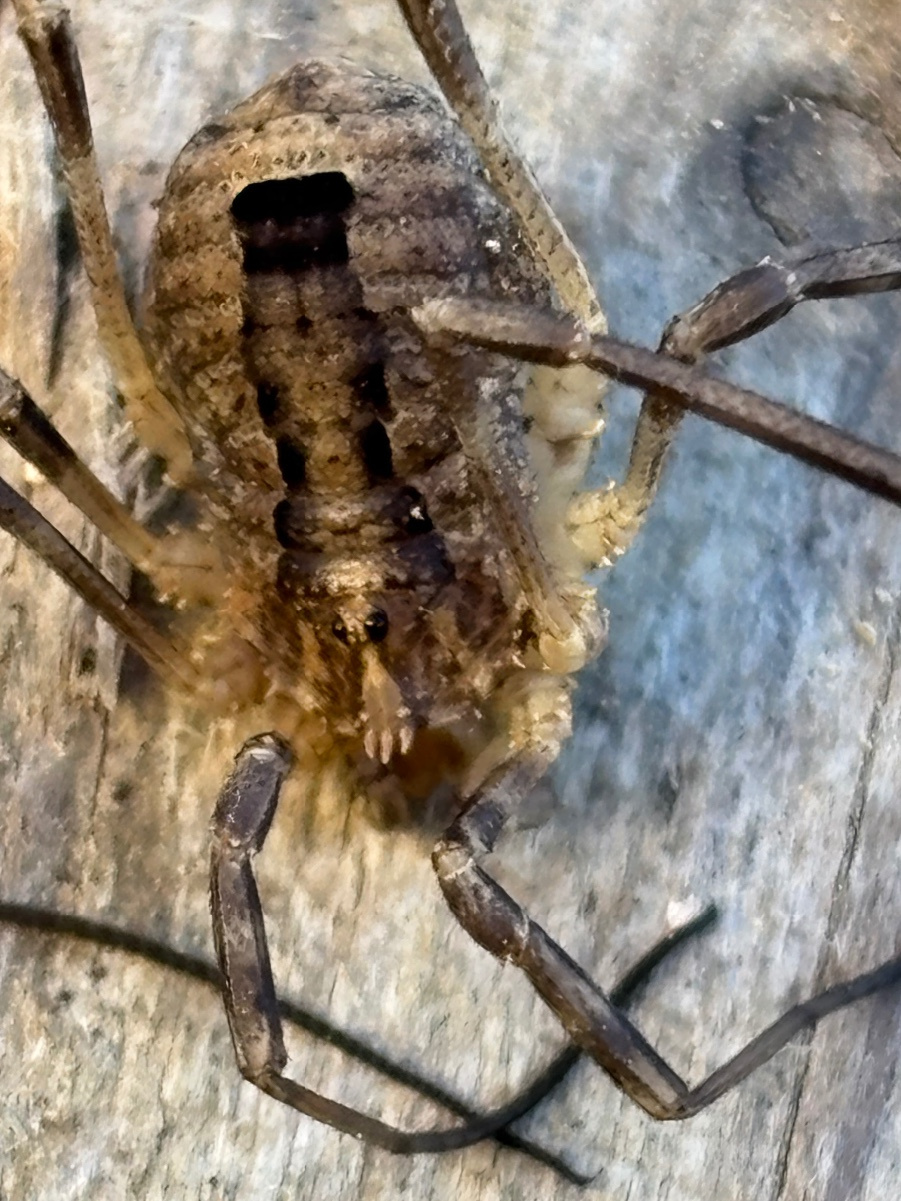
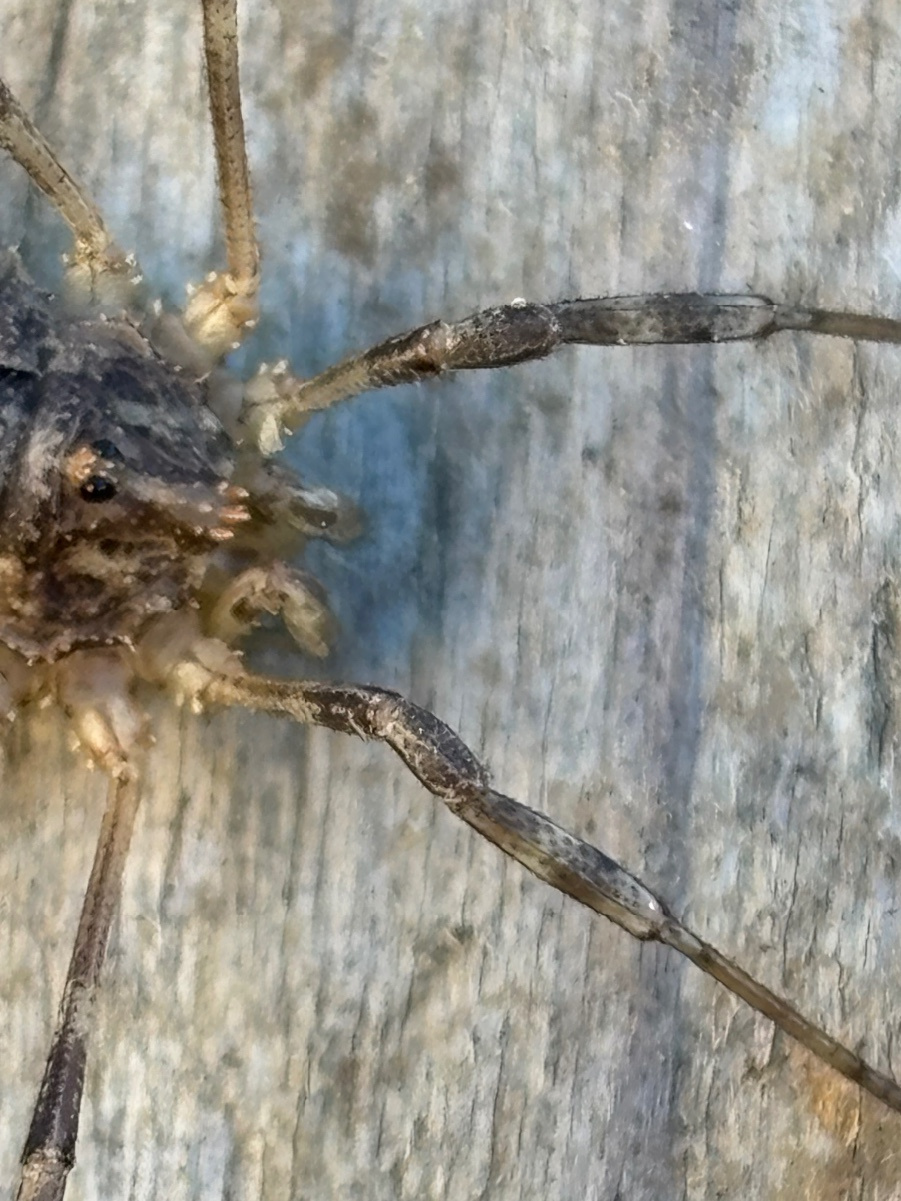
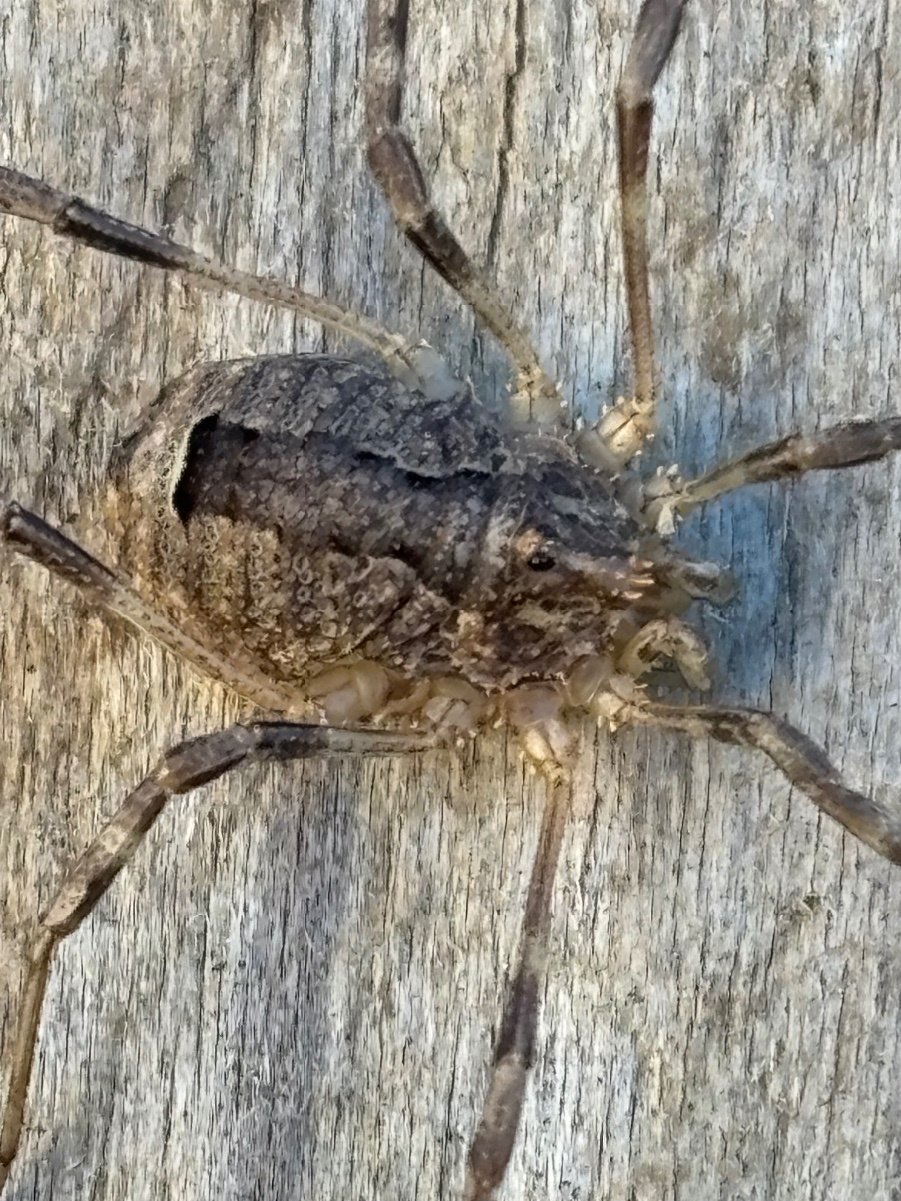
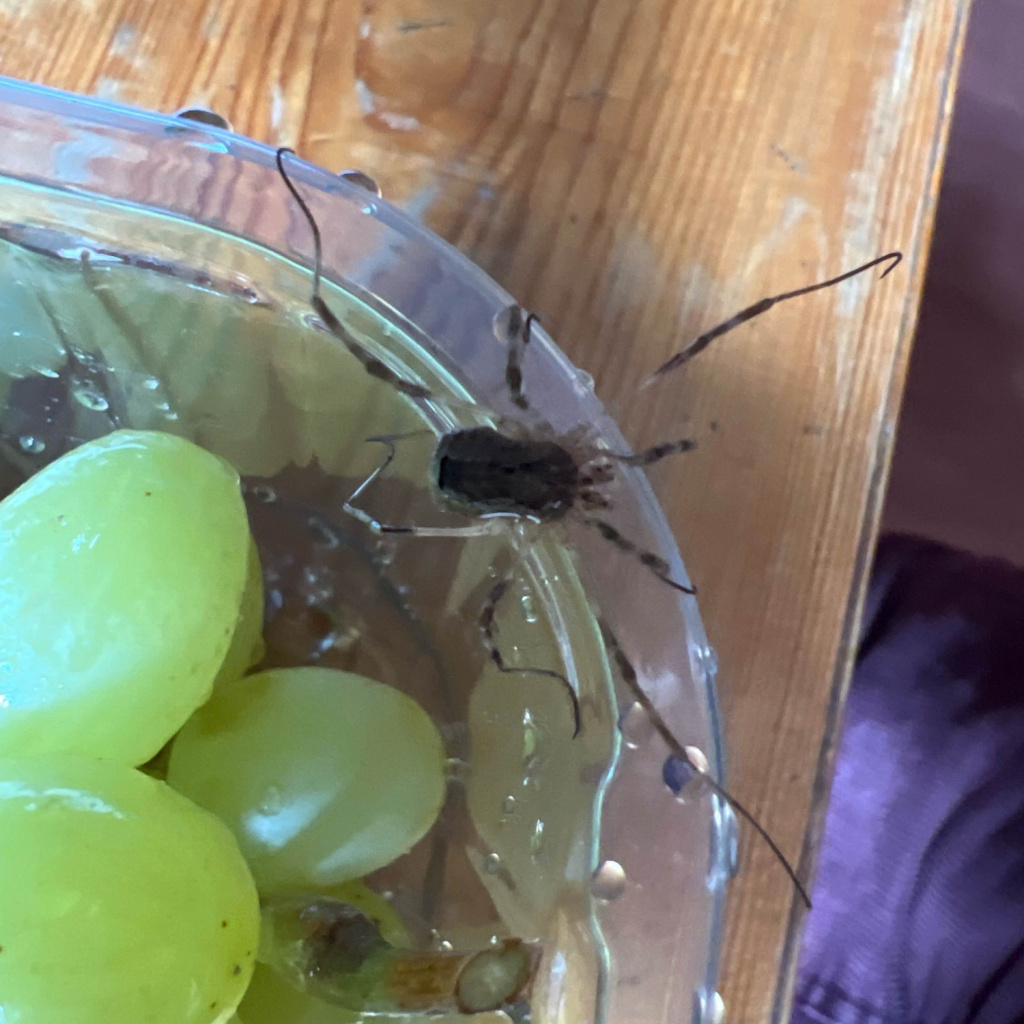
- Odiellus spinosus
- Synonyms
- Opilio histrix Meade, 1855, Phalangium spinosum Bosc, 1792, Acantholophus spinosus Simon, 1879, Odiellus spinosus Roewer, 1923, Oligolophus spinosus Pickard-Cambridge, 1890, Opilio histrix
- Taxonomy
- Animalia :: Opiliones :: Phalangiidae
Distribution
Although listed by Meade (1855), the first authenticated British record of Odiellus spinosus appears to be by Pickard-Cambridge (1890) from Corfe Castle in Dorset. The species is common and widespread in the south and east of England but is gradually expanding its range north, and has now reached Wales, Lancashire, Yorkshire, Cumbria and, in 2017, Orkney. Owen (1991) shows that of 10 species of harvestmen recorded in an English garden over a 10 year period in the 1980s, O. spinosus was consistently by far the most abundant species.
In Europe its range includes Portugal, Spain, Corsica, France, Belgium, the Netherlands, Germany, Switzerland, Italy, Slovenia and Croatia (Wijnhoven 2009).
Habitat and ecology
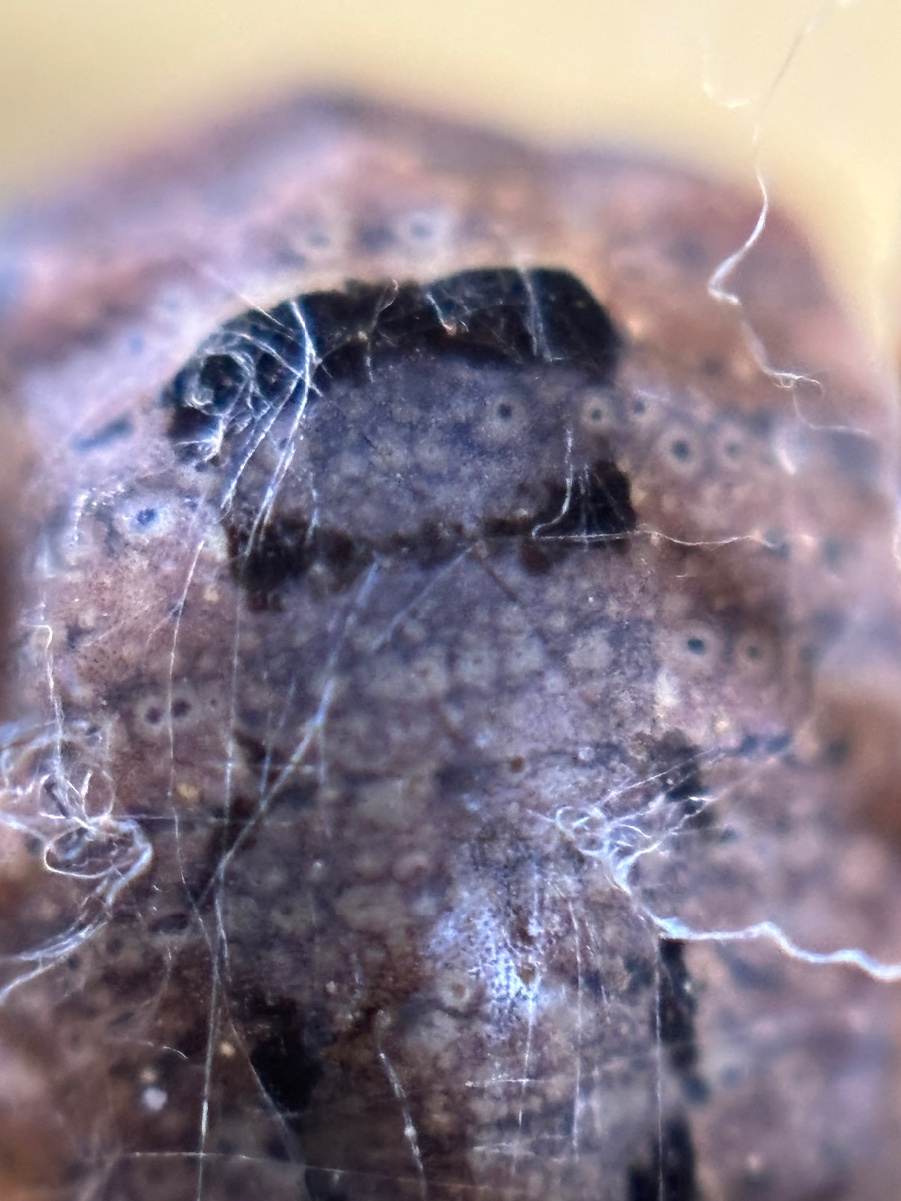
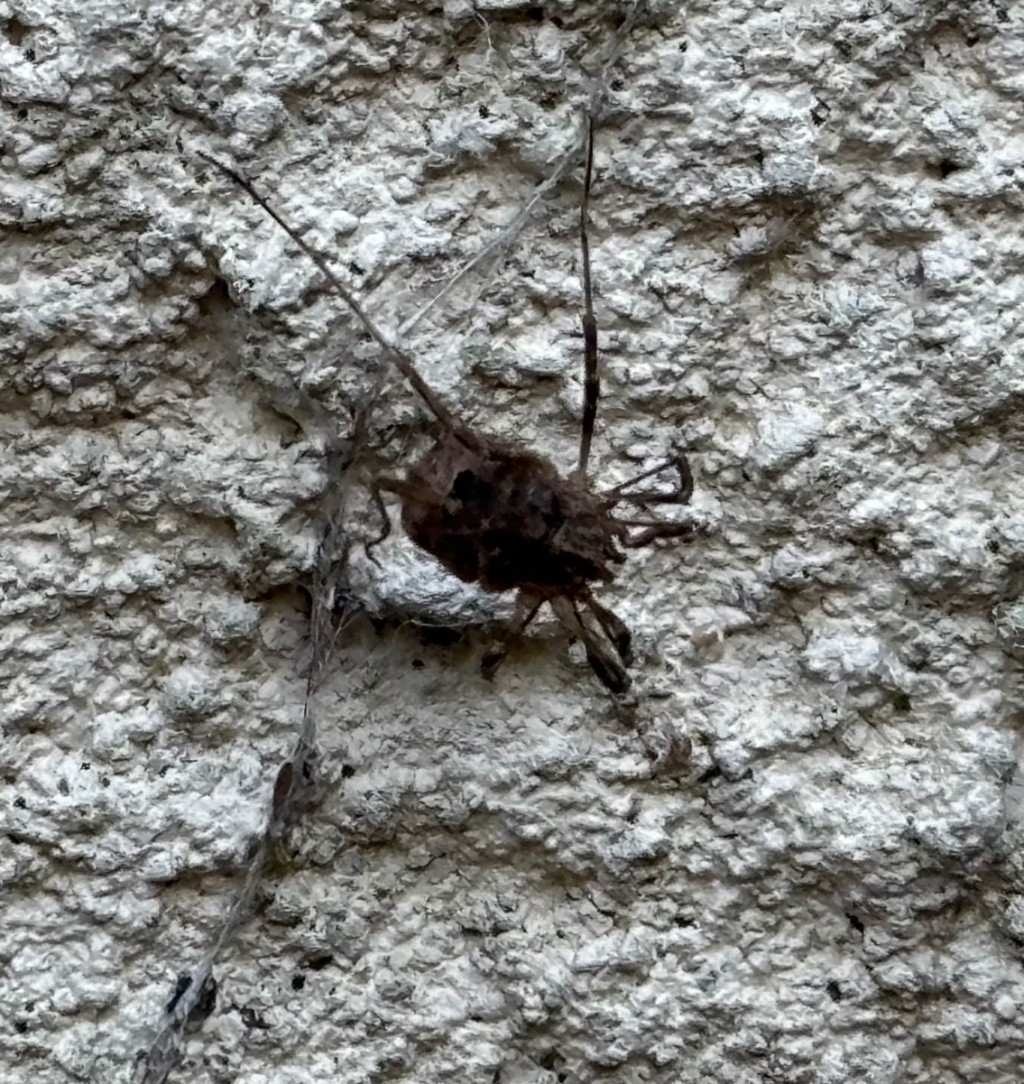
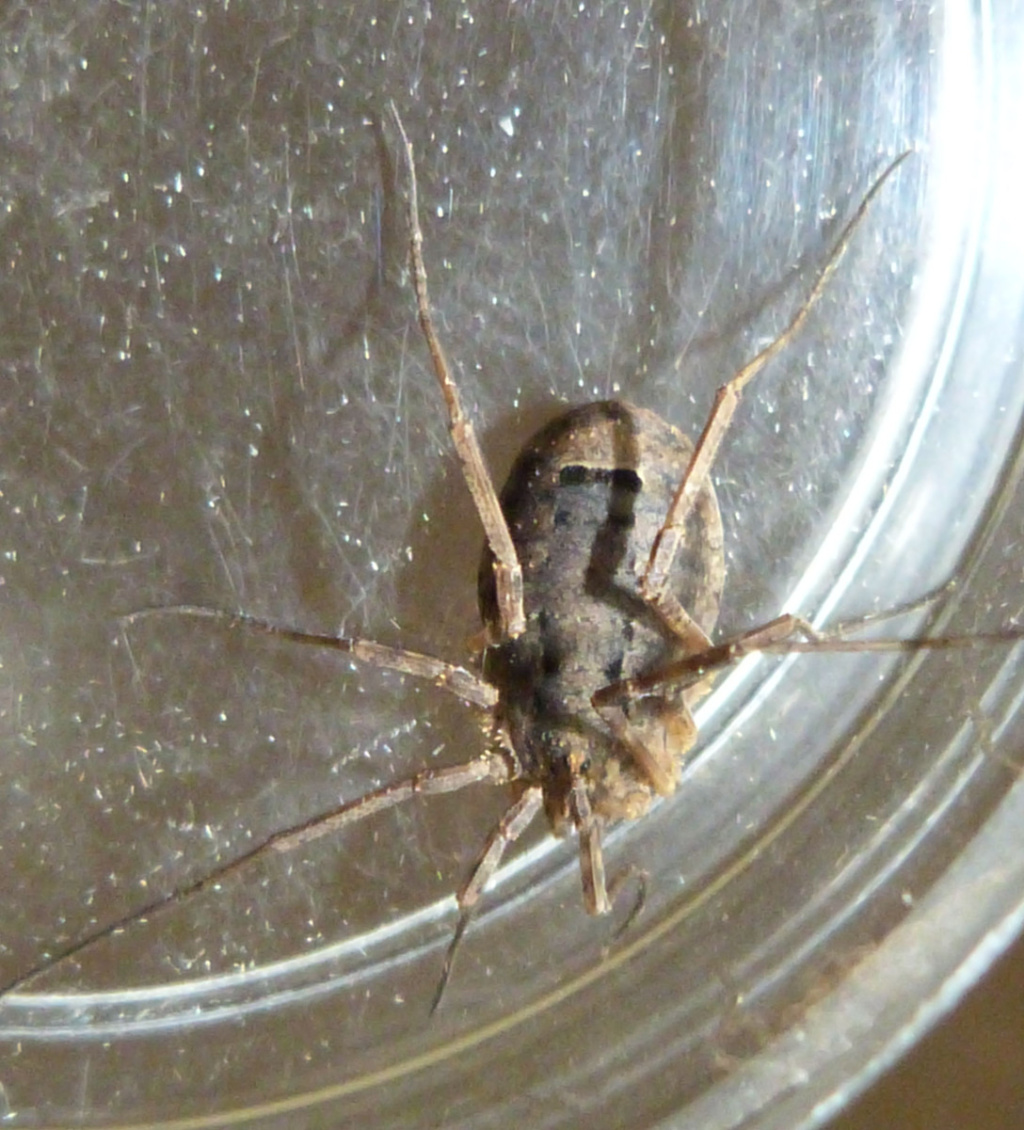
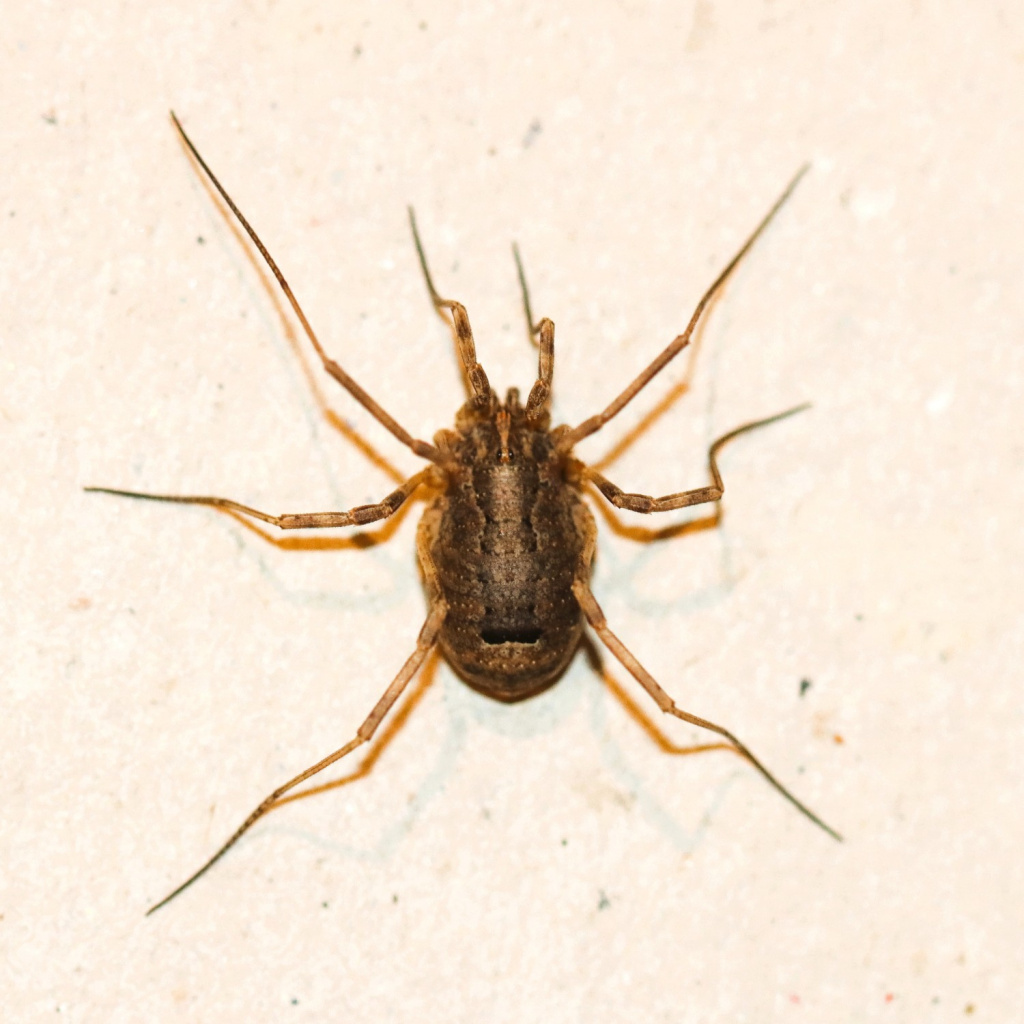
Odiellus spinosus has been found up to 135m altitude in Britain and Hillyard (2005) notes that it generally avoids high ground. This is a ground-living species which ascends vegetation and walls. It can be abundant in parks, gardens, brown-field sites and around buildings and on walls and may form small aggregations. Wijnhoven (2009) notes its preference for hot, dry sites, suggesting that its natural habitat may be open heath and dune.
Hillyard (2005) reports that the eggs hatch in June and that individuals mature around August, surviving until the end of the year. British data shows adult records from June to November.
Surprisingly, information on the food of O. spinosus is sparse. Sankey (1949) notes spiders and a mite being eaten but also records that the harvestmen themselves are eaten by hedgehogs!
Status
Introduced, established and spreading north.
Text based on: Hillyard, P. D. 2005. Harvestmen: keys and notes for the identification of British species. Synopses of the British Fauna 4 (3rd edn). Field Studies Council, Shrewsbury.
References
Meade R. H. 1855. XXXV. Monograph on the British species of Phalangiidae or Harvestmen. Annals & Magazine of Natural History 2nd Series ### 15 (90): 393-416.
Owen, J. 1991. The ecology of a garden. Cambridge University Press, Cambridge.
Pickard-Cambridge, O. 1890. Monograph of the British Phalangidea or harvestmen. Proceedings of the Dorset Natural History and Antiquarian Field Club, Sherborne/Dorchester 11: 163-216.
Sankey, J. H. P. 1949. Observations on food, enemies and parasites of British harvest-spiders (Arachnida, Opiliones). Entomologists’ Monthly Magazine 85: 246-247.
Wijnhoven, H. 2009. De Nederlandse hooiwagens (Opiliones) Naturalis Biodiversity Centre - Entomologische Tabellen, The Netherlands. (translation available here: http://srs.britishspiders.org.uk/portal/p/Harvestman+Resources)
Stats
- First recorded
- 1890
- Last recorded
- 2025
- Total records
- 1,893
- Total visits
- 1,641
Photos and media
Spatial distribution - hectad map
Click on one of the date ranges in the key to highlight that particular range. Click anywhere else on the map to go back to all three date ranges.
Thresholds:
Move mouse cursor over dot for info
Rejected records are excluded from this map. Unverified records are included.
Temporal distribution - records by year
Records that span more than one year are not included in this chart.
Temporal distribution - records by week
__