
Species Details
- Species name
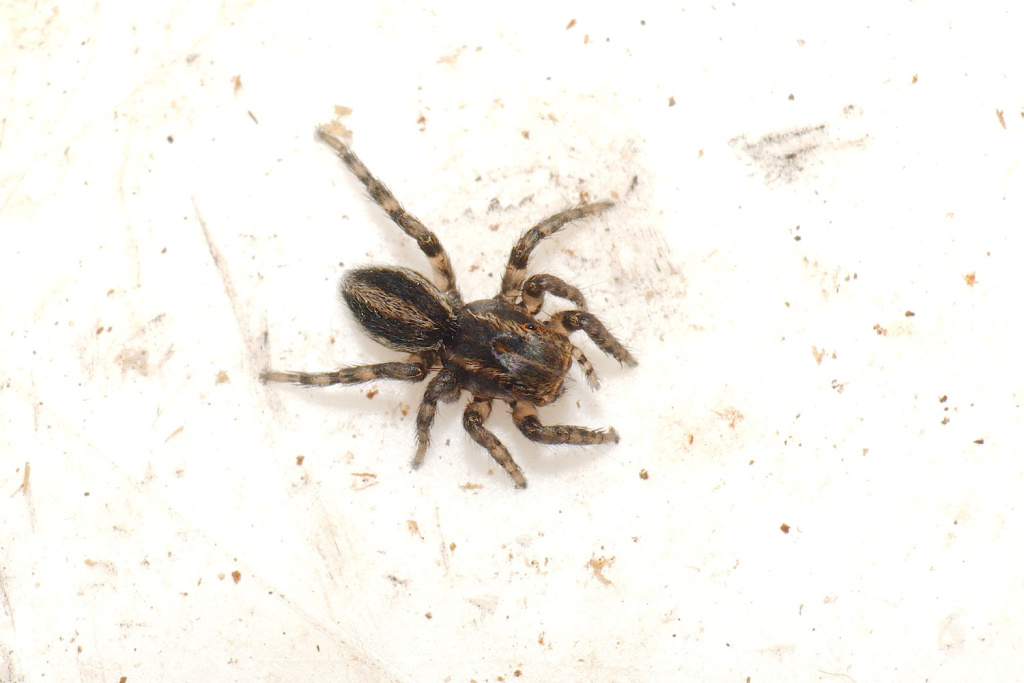
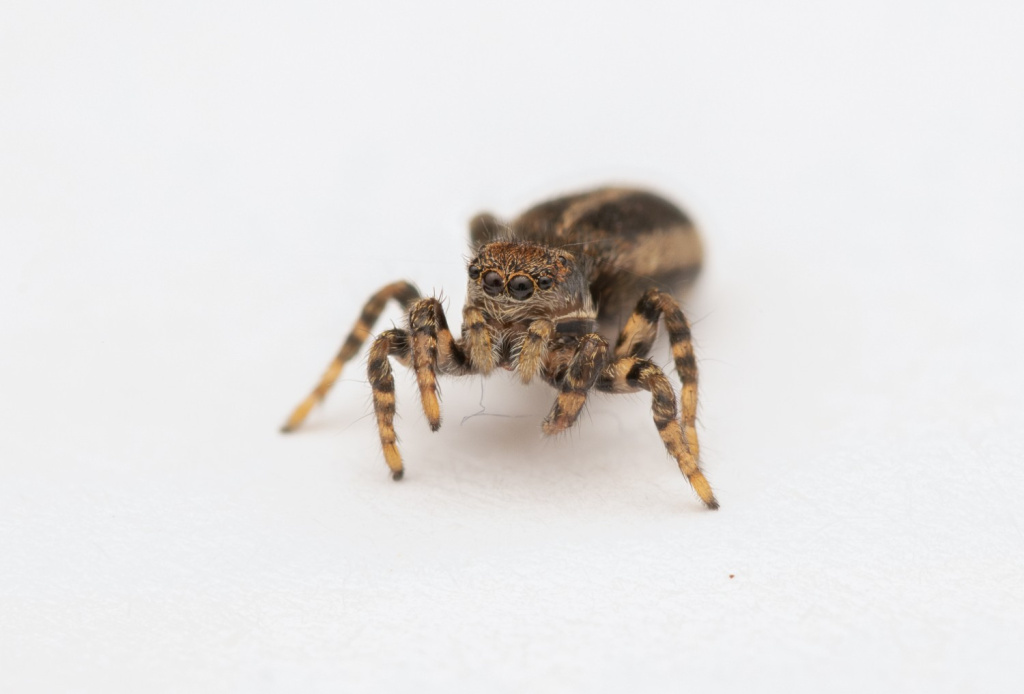
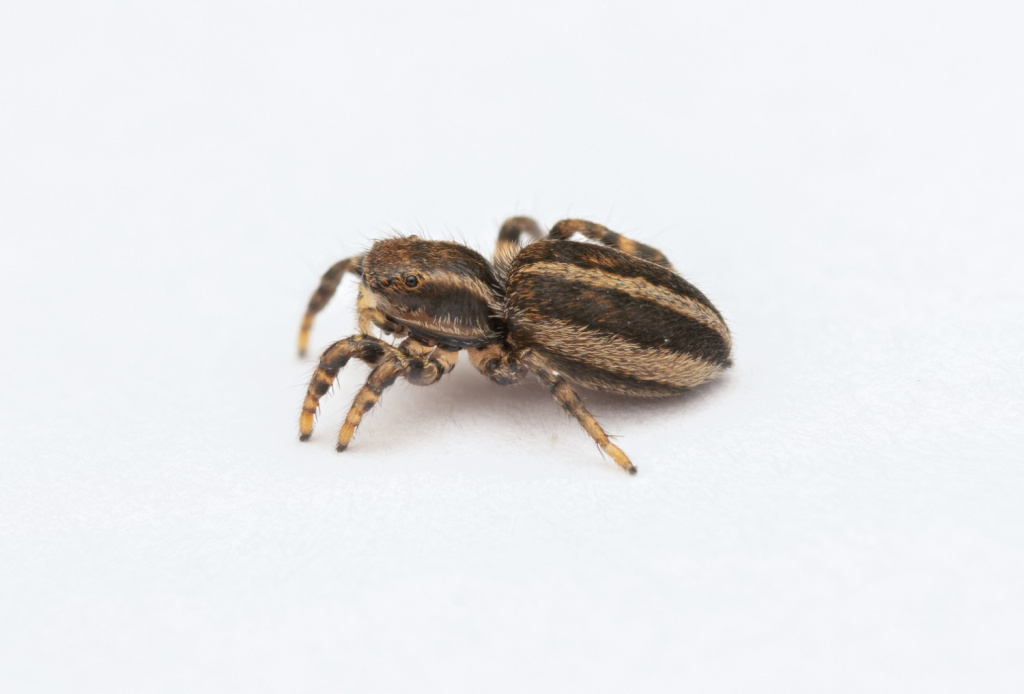
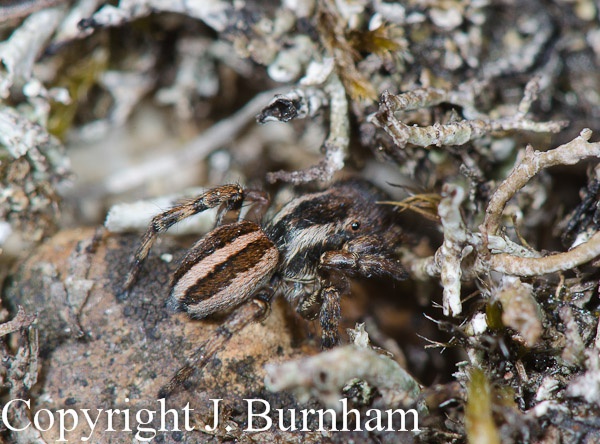
- Phlegra fasciata (Hahn, 1826)
- Synonym
- Phlegra fasciatus
- Taxonomy
- Animalia :: Araneae :: Salticidae
- short sward & bare ground
Distribution
The species has been recorded from a number of sites on the south coast between Sandwich Bay, East Kent and Chesil Beach, Dorset. It was recently discovered in South Wales (Alexander & Morgan 1994). It is fairly widespread in Europe, and also found in the U.S.A.Habitat and ecology
P. fasciata is found mainly on sand dunes and sometimes in other dry coastal habitats such as shingle. In South Wales the spider was found on steep rocky limestone sea cliffs, on bare and sparsely vegetated limestone slopes and in a very warm and dry spot with loose rocks and sparse, herb-rich limestone grassland vegetation on skeletal soils (Alexander & Morgan 1994) Adults of both sexes are found between April and July, females also in September.Status
For some sites, the records are over fifty years old. The spider was recorded in small numbers at several sampling points at Rye Harbour and Dungeness during an NCC survey in the late 1980s, but it is not common. Several specimens were found independently at two locations on the Gower in 1994 and it may be widespread on limestone cliffs in that area.Threats
Erosion caused by high public use, particularly the use of motor vehicles on shingle, and possibly holiday development threaten the rather fragile habitats of this species. Dungeness has been extensively damaged by gravel extraction, which has causing significant alteration of the hydrology, and thereby ecology, in addition to the obvious loss of shingle area to gravel-pits. There are plans for a new power station at Dungeness.Management and conservation
Ensure that important shingle beaches and sand dune sites are protected from damage due to gravel extraction and to excessive use of off-road vehicles. Text based on Dawson, I.K., Harvey, P.R., Merrett, P. & Russell-Smith, A.R. (in prep.).Stats
- First recorded
- 1800
- Last recorded
- 2024
- Total records
- 170
- Total visits
- 164
Conservation status
Phlegra fasciata
| Source | Reporting category | Designation | Date designated | Comments |
|---|---|---|---|---|
| A Review of the scarce and threatened spiders (Araneae) of Great Britain: Species Status No. 22 (Sep 2017) | Rare and scarce species | Nationally Rare. Includes Red Listed taxa | 42979 | |
| A Review of the scarce and threatened spiders (Araneae) of Great Britain: Species Status No. 22 (Sep 2017) | Red listing based on 2001 IUCN guidelines | Near Threatened | 42979 | The apparent decline on its dry, southern coastal sites islikely to be real, but specimens found at two locations on the Gower peninsula in 1994 may indicate a more widespread occurrence on limestone cliffs in that area. Threats: Erosion caused by high public use, particularly the use of motor vehicles on shingle, and possibly holiday development threaten the rather fragile habitats of this species. Dungeness has been extensively damaged by gravel extraction, which has causing significant alteration of the hydrology, and thereby ecology, in addition to the obvious loss of shingle area to gravel-pits. There are plans for a new power station at Dungeness. |
Photos and media
Spatial distribution - hectad map
Click on one of the date ranges in the key to highlight that particular range. Click anywhere else on the map to go back to all three date ranges.
Thresholds:
Move mouse cursor over dot for info
Rejected records are excluded from this map. Unverified records are included.
Temporal distribution - records by year
Records that span more than one year are not included in this chart.
Temporal distribution - records by week
__