
Species Details
- Species name
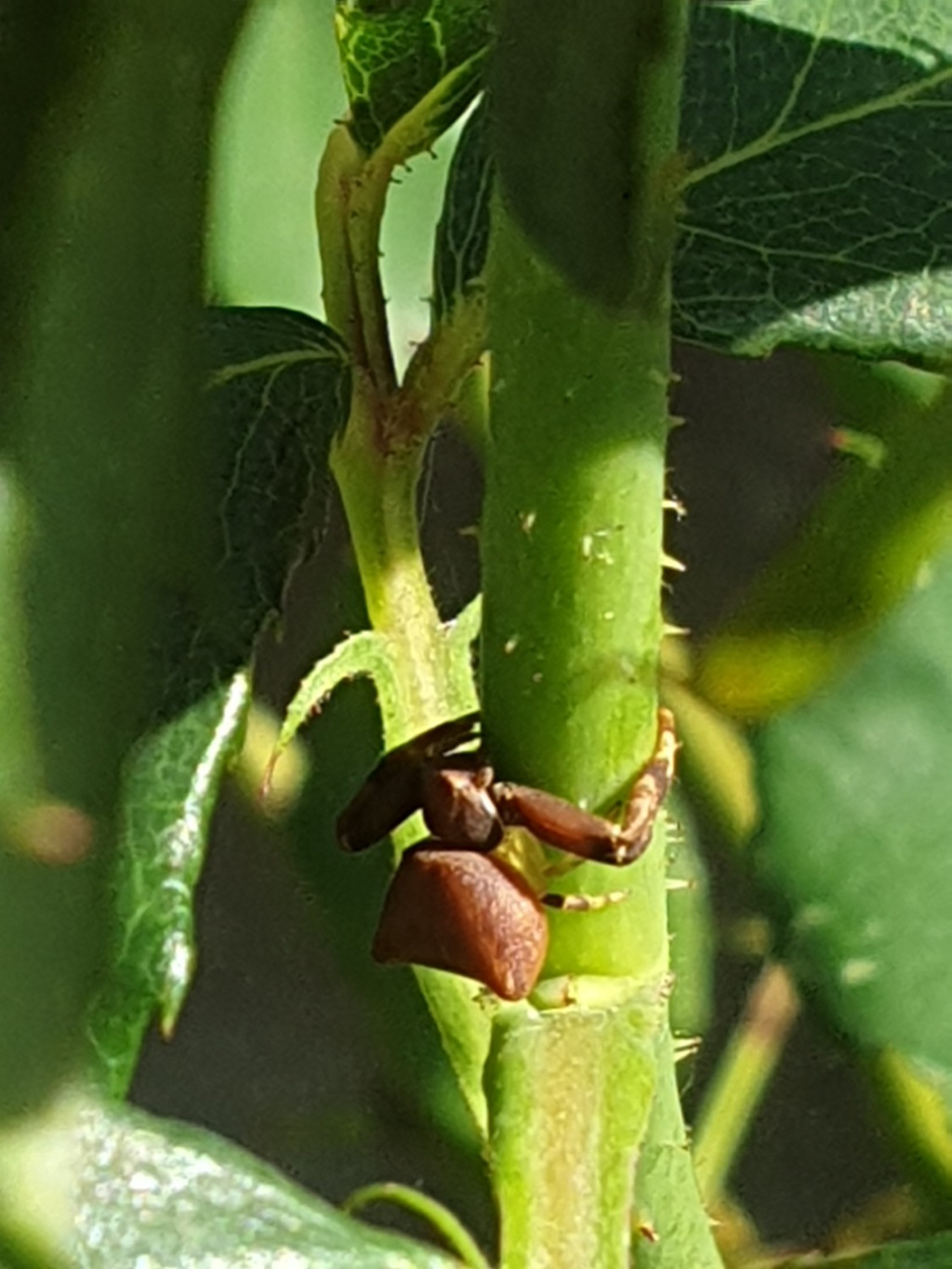
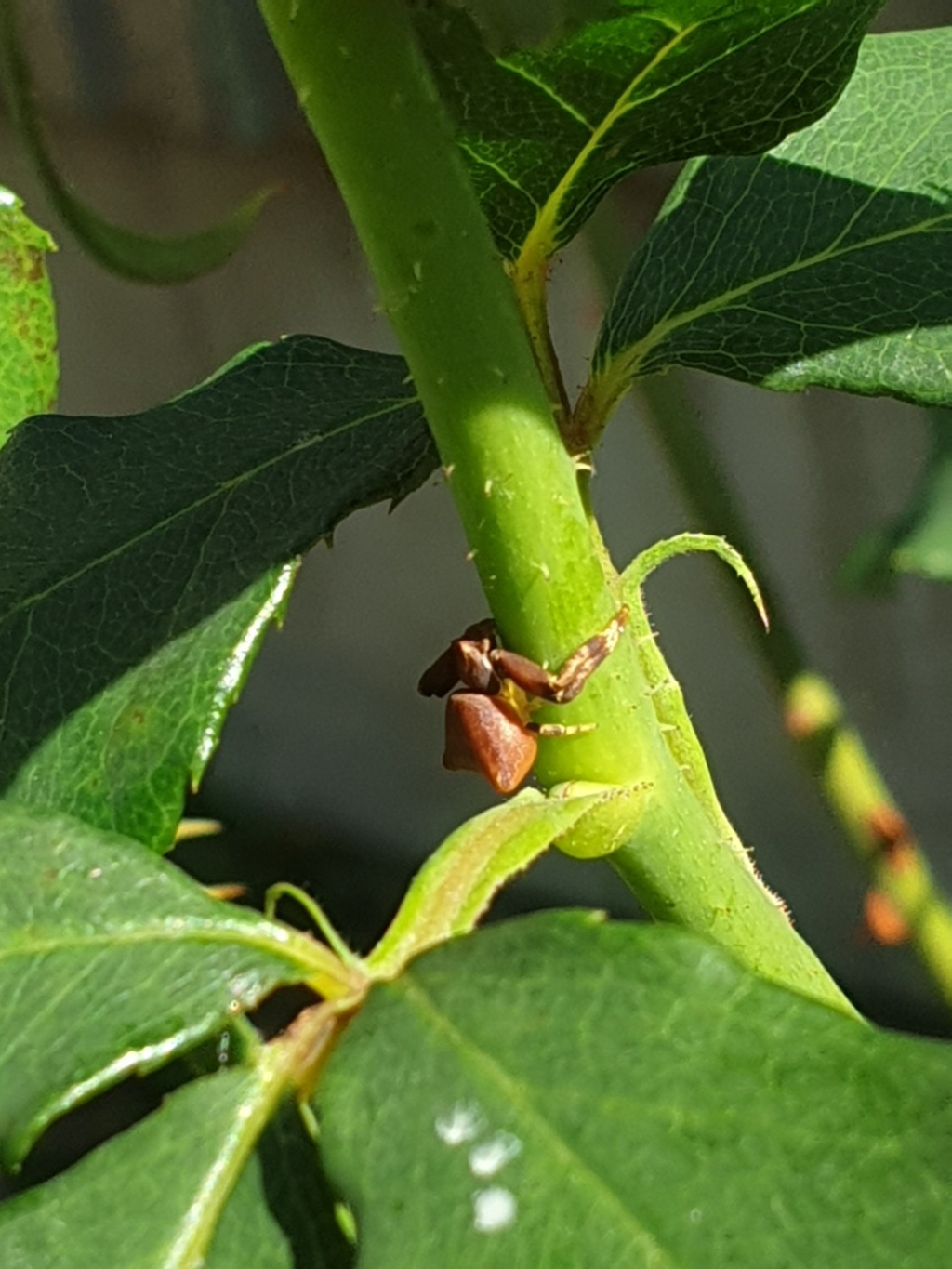
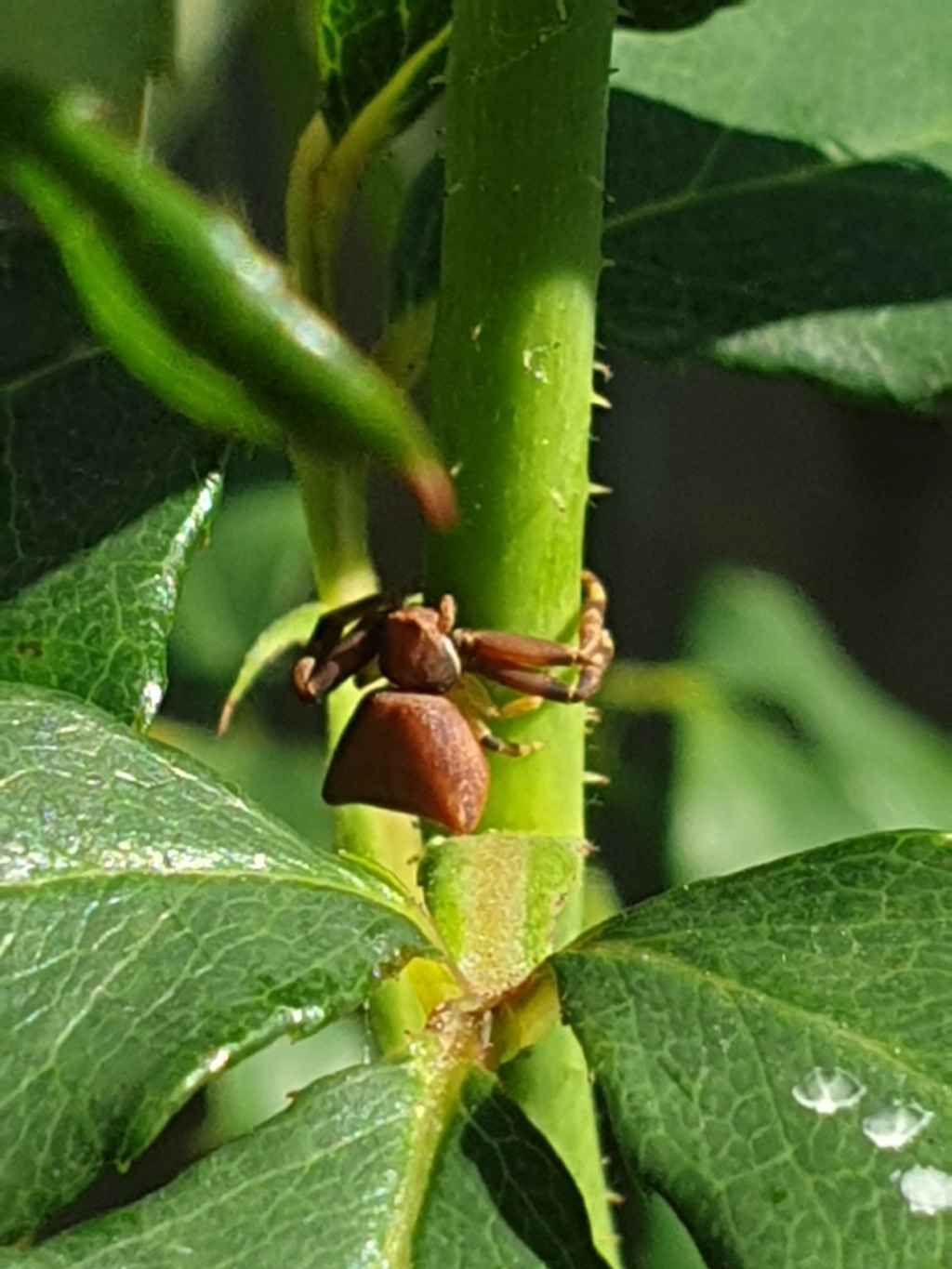
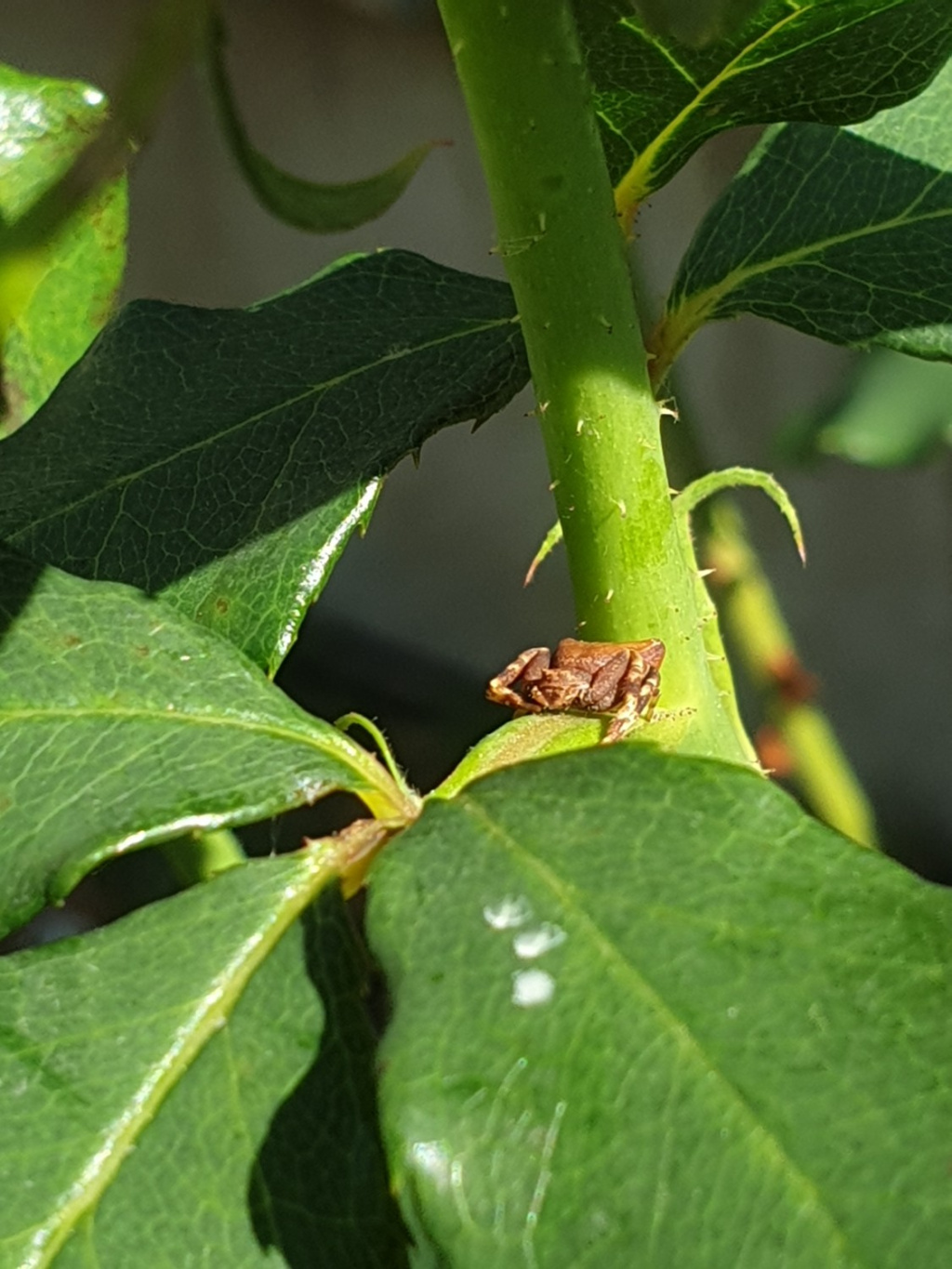
- Pistius truncatus (Pallas, 1772)
- Synonym
- Pistius truncata
- Taxonomy
- Animalia :: Araneae :: Thomisidae
- arboreal
Distribution
The species was recorded from the New Forest near Brockenhurst, South Hampshire, in 1896. The precise locality is not known. A female was recorded from a wood in the Blean area, East Kent, in 1985 and two juveniles collected at East Blean Woods in 1993. A single female was taken from the same area in 2001. The spider is widespread in western and central Europe as far north as Sweden, where it is included on their Red List (Gärdenfors 2000). It has not been recorded in Ireland.Habitat and ecology
The first Blean specimen emerged in May from pieces of dead wood collected in the previous March, which suggests that dead wood is an over-wintering site. The specimen survived for some weeks in captivity, being fed on flies. The two juveniles were collected from small coppiced oak. In France, this species is found on bushes, especially small scrubby oaks. Adults occur in May and June; in captivity one male reached maturity in March.Status
The spider was thought to be extinct in Britain until rediscovered in 1985. Although originally recorded from the New Forest, it now appears to be confined to a single location in Kent where populations appear to be extremely small.Threats
Many broad-leaved woodlands in south-east England have been cleared for agriculture or converted to conifer plantations. Development pressures are also increasing in Kent with the effects of the Channel Tunnel, and further woods are likely to be lost to housing, industry and roads.Management and conservation
Protection of woodland form development pressures. In the site in which it occurs, ensuring that some oaks are maintained as small trees by coppicing. Text based on Dawson, I.K., Harvey, P.R., Merrett, P. & Russell-Smith, A.R. (in prep.).Stats
- First recorded
- 1896
- Last recorded
- 2024
- Total records
- 12
- Total visits
- 12
Conservation status
Pistius truncatus
| Source | Reporting category | Designation | Date designated | Comments |
|---|---|---|---|---|
| A Review of the scarce and threatened spiders (Araneae) of Great Britain: Species Status No. 22 (Sep 2017) | Rare and scarce species | Nationally Rare. Includes Red Listed taxa | 42979 | |
| A Review of the scarce and threatened spiders (Araneae) of Great Britain: Species Status No. 22 (Sep 2017) | Red listing based on 2001 IUCN guidelines | Critically Endangered | 42979 | Although originally recorded from the New Forest, it now appears to be confined to a single location in Kent where populations appear to be extremely small and vulnerable. Threats: Many broad-leaved woodlands in south-east England have been cleared for agriculture or converted to conifer plantations. Development pressures are also increasing in Kent with the effects of the Channel Tunnel, and further woods are likely to be lost to housing, industry and roads. |
Photos and media
Spatial distribution - hectad map
Click on one of the date ranges in the key to highlight that particular range. Click anywhere else on the map to go back to all three date ranges.
Thresholds:
Move mouse cursor over dot for info
Rejected records are excluded from this map. Unverified records are included.
Temporal distribution - records by year
Records that span more than one year are not included in this chart.
Temporal distribution - records by week
__