
Species Details
- Species name
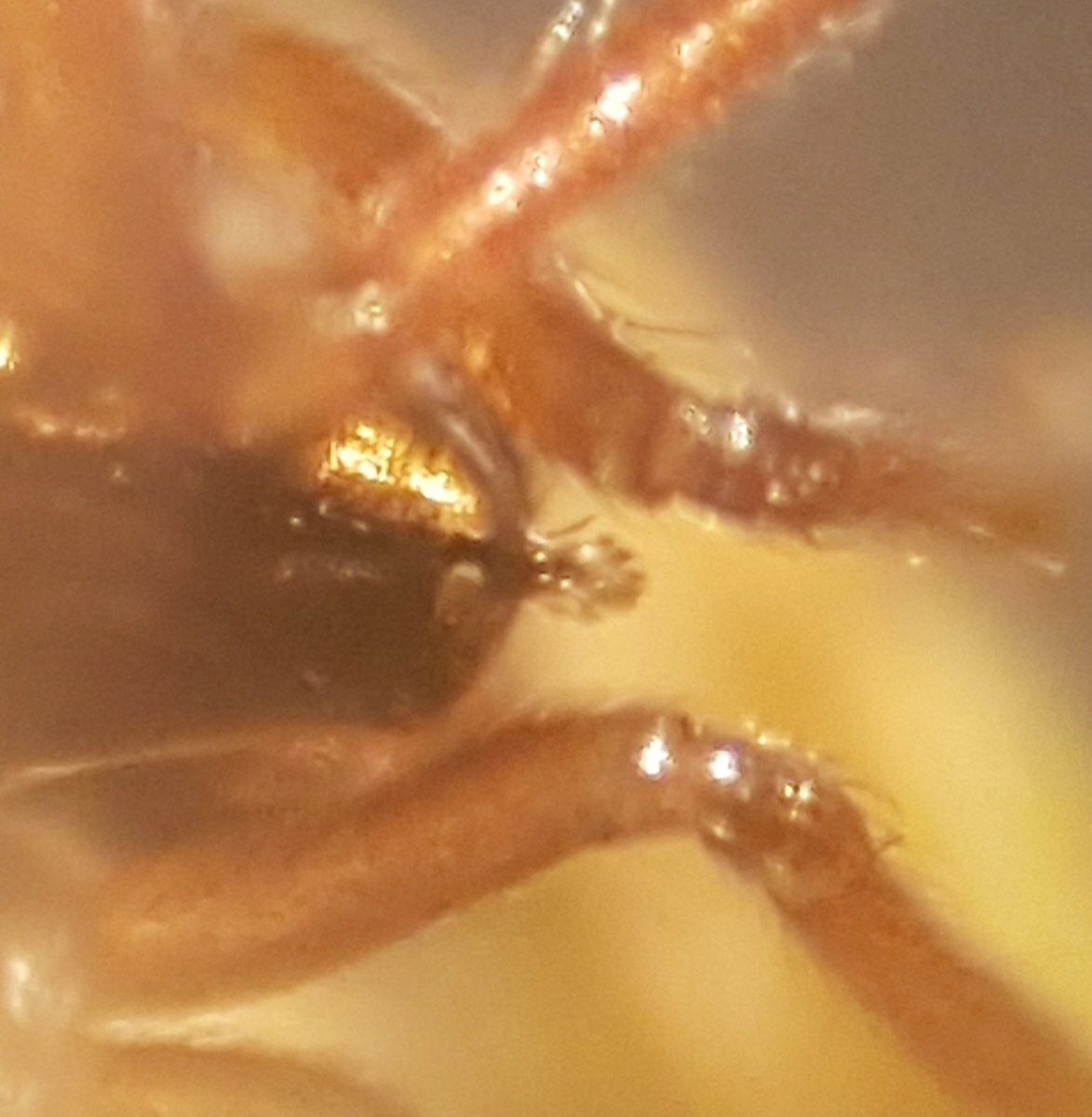
- Walckenaeria monoceros (Wider, 1834)
- Synonyms
- Walckenaeria subita (O.P.-Cambridge, 1902), Walckenaera monoceros (Wider, 1834), Prosopotheca monoceros (Wider, 1834)
- Taxonomy
- Animalia :: Araneae :: Linyphiidae
- short sward & bare ground
Distribution
The species has a widespread but patchy distribution in Britain. A European species widespread in north-western and central Europe.Habitat and ecology
The spider occurs under stones and detritus, on sand-hills and open habitats inland. It has been identified as a pioneer species on burnt heathland, reaching a peak of abundance just a few years after burning but followed by a rapid decline in numbers (Merrett 1976). On heathland the period of male activity was from December through to March while females were probably active throughout the year (Merrett 1969).Status
An infrequent species that has shown an apparently steep decline in the past 20 years. Trend analysis of the continuing decline in area of occupancy over the period 1976 to 2005 indicates a reduction in population size of 50% over a ten year period. The spider has never been very numerous on heathland, and has lost ground throughout its range from the north of Scotland southwards.Threats
The loss of heathland to forestry and building may have been one cause of its recent decline as could lack of management of heathland to maintain early successional stages.Management and conservation
Ensure remaining heathland areas are conserved and managed to maintain all stages in the successional cycle of heather growth. Text based on Dawson, I.K., Harvey, P.R., Merrett, P. & Russell-Smith, A.R. (in prep.).Stats
- First recorded
- 1895
- Last recorded
- 2025
- Total records
- 475
- Total visits
- 467
Conservation status
Walckenaeria monoceros
| Source | Reporting category | Designation | Date designated | Comments |
|---|---|---|---|---|
| A Review of the scarce and threatened spiders (Araneae) of Great Britain: Species Status No. 22 (Sep 2017) | Red data categories - spiders (not based on IUCN criteria) | Spider Amber List | 42979 | |
| A Review of the scarce and threatened spiders (Araneae) of Great Britain: Species Status No. 22 (Sep 2017) | Red listing based on 2001 IUCN guidelines | Least concern | 42979 | This species occurs infrequently throughout Britain, under stones and detritus in open, often sandy, inland habitats, including on burnt heathland. A2c is justified because the continuing decline in AOO indicates a reduction in population size of 70% over a twenty year period. It has never been very numerous on heathland sites and has lost ground throughout its range. The loss and degradation through innappropriate management (including failure to maintain early successional stages) of its heathland subhabitat may have been one cause of decline. Threats: The loss of heathland to forestry and building may have been one cause of its recent decline as could lack of management of heathland to maintain early successional stages. |
| A Review of the scarce and threatened spiders (Araneae) of Great Britain: Species Status No. 22 (Sep 2017) | Rare and scarce species | Nationally Scarce. Includes Red Listed taxa | 42979 | Threats: The loss of heathland to forestry and building may have been one cause of its recent decline as could lack of management of heathland to maintain early successional stages. |
Photos and media
__