
Species Details
- Species name
- Xerolycosa nemoralis (Westring, 1861)
- Synonym
- Xerolycosa meridiana (O.P.-Cambridge, 1909)
- Taxonomy
- Animalia :: Araneae :: Lycosidae
- short sward & bare ground
Distribution
The species is widely distributed in southern England except in the southwest. It is widespread in western and central Europe.Habitat and ecology
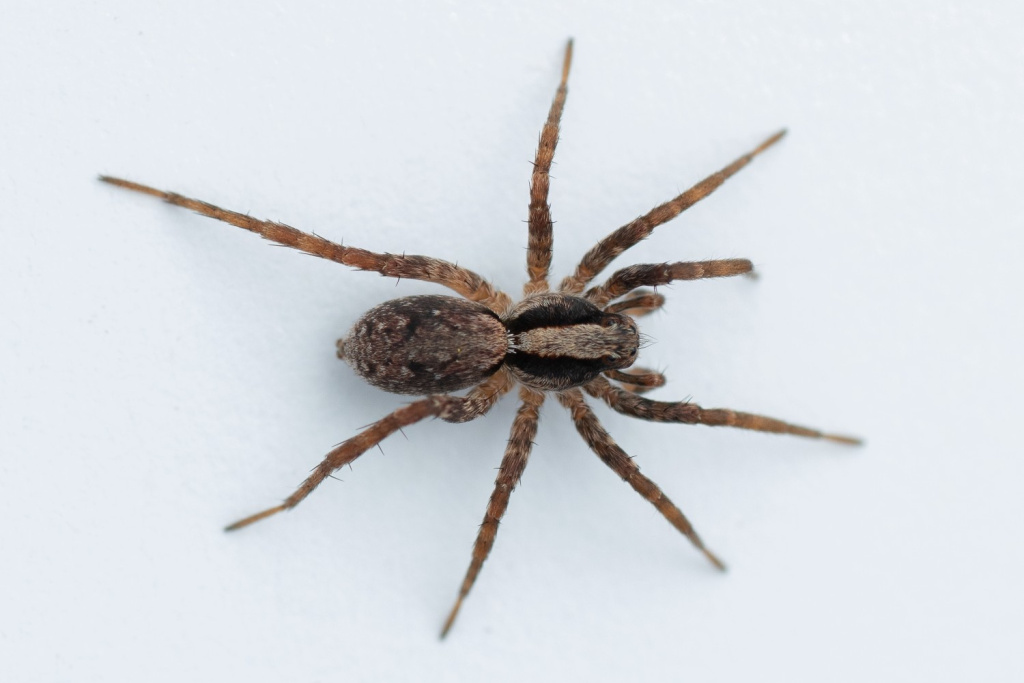
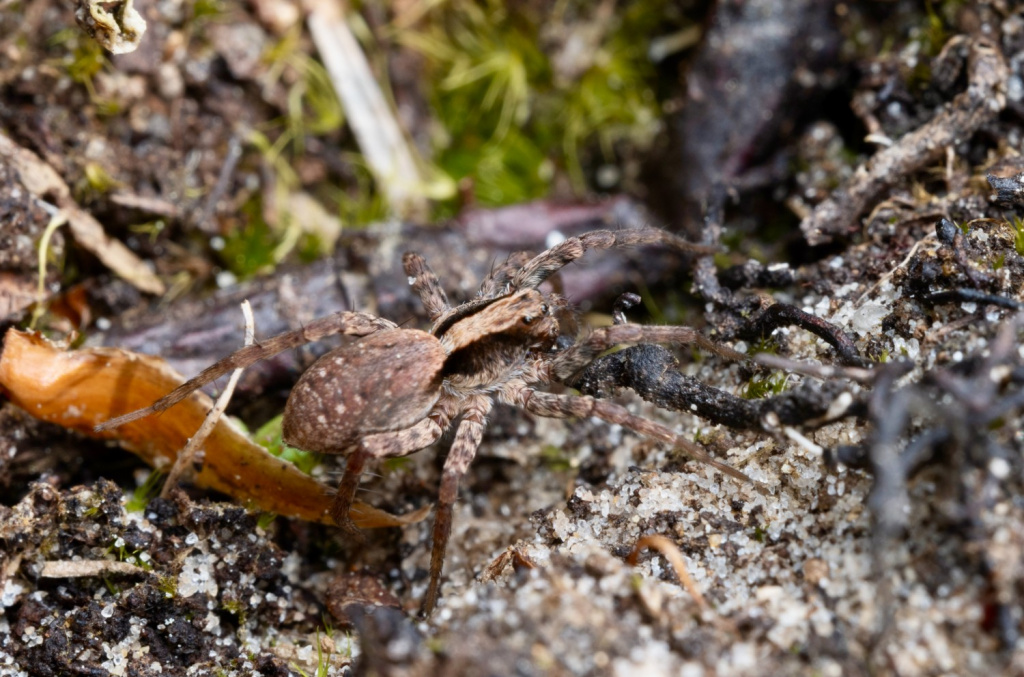
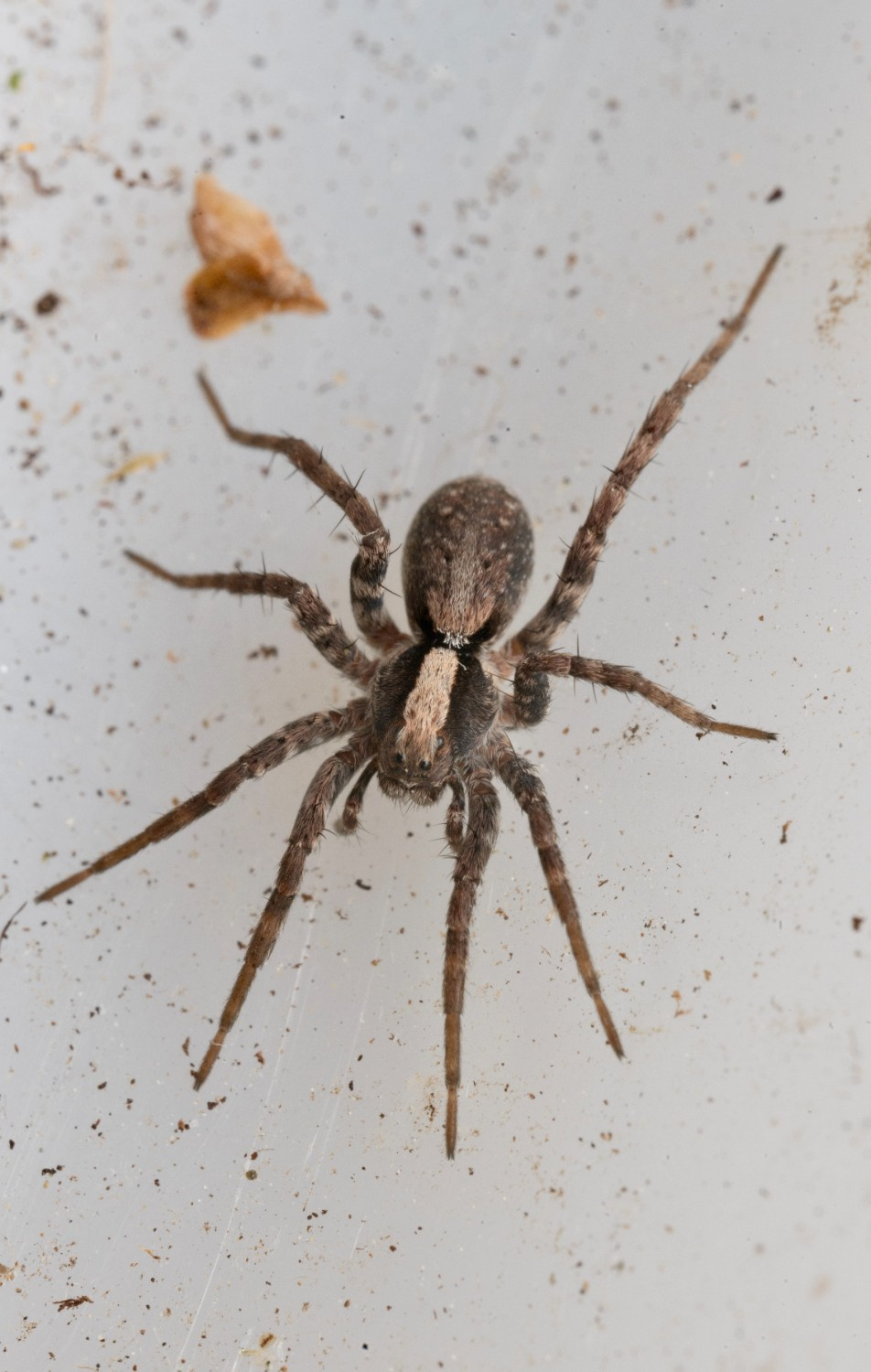
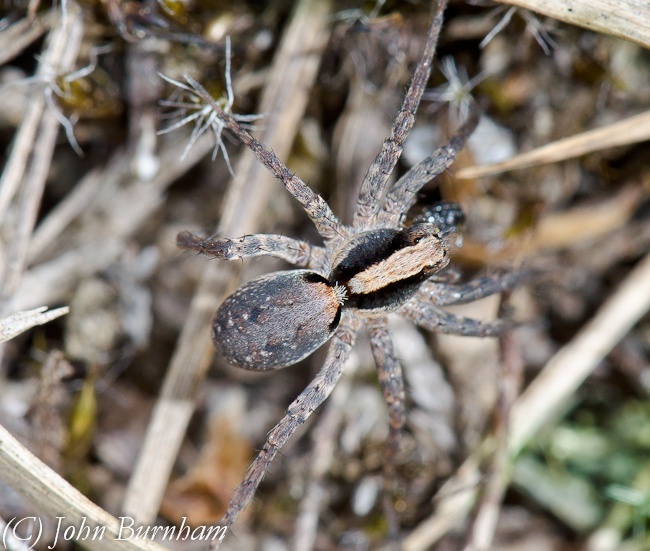
X. nemoralis occurs in dry litter and bark in coppiced areas or clearings in woods, on short stony chalk grassland, on recently burnt heathland (up to about 4 years after fire) or bare patches on older heathland. It has occurred in large numbers, almost to the exclusion of other lycosids, on sparsely vegetated rail ballast in a disused railway marshalling yard and on sparsely vegetated ground at post-industrial sites. The spider is extremely well camouflaged against its background, populations having a more greyish or pinkish tinge according to the surrounding substrate. Adults of both sexes are found in summer.Status
The spider is abundant at some sites in the south-east of England (mainly in Kent, Surrey, Sussex and southern Hampshire), but is very local and has shown some decline in the past 30 years. On heathland it seems to get scarcer in the west of its range.Threats
The loss of semi-natural woodland to intensive forestry, the loss of chalk grassland to agriculture, the loss of heathland to agriculture, forestry and development and the loss of post-industrial sites to development.Management and conservation
Maintain open clearings and rides with dry leaf and bark litter and reintroduce or maintain coppice cycles in woods, maintain short chalk grassland by grazing, and maintain all seral stages of heather by rotational management. Text based on Dawson, I.K., Harvey, P.R., Merrett, P. & Russell-Smith, A.R. (in prep.).Stats
- First recorded
- 1900
- Last recorded
- 2025
- Total records
- 928
- Total visits
- 895
Conservation status
Xerolycosa nemoralis
| Source | Reporting category | Designation | Date designated | Comments |
|---|---|---|---|---|
| A Review of the scarce and threatened spiders (Araneae) of Great Britain: Species Status No. 22 (Sep 2017) | Rare and scarce species | Nationally Scarce. Includes Red Listed taxa | 42979 | |
| A Review of the scarce and threatened spiders (Araneae) of Great Britain: Species Status No. 22 (Sep 2017) | Red listing based on 2001 IUCN guidelines | Least concern | 42979 | Threats: The loss of semi-natural woodland to intensive forestry, the loss of chalk grassland to agriculture, the loss of heathland to agriculture, forestry and development and the loss of post-industrial sites to development. |
Photos and media
Spatial distribution - hectad map
Click on one of the date ranges in the key to highlight that particular range. Click anywhere else on the map to go back to all three date ranges.
Thresholds:
Move mouse cursor over dot for info
Rejected records are excluded from this map. Unverified records are included.
Temporal distribution - records by year
Records that span more than one year are not included in this chart.
Temporal distribution - records by week
__