
Species page
Species Details
- Species name
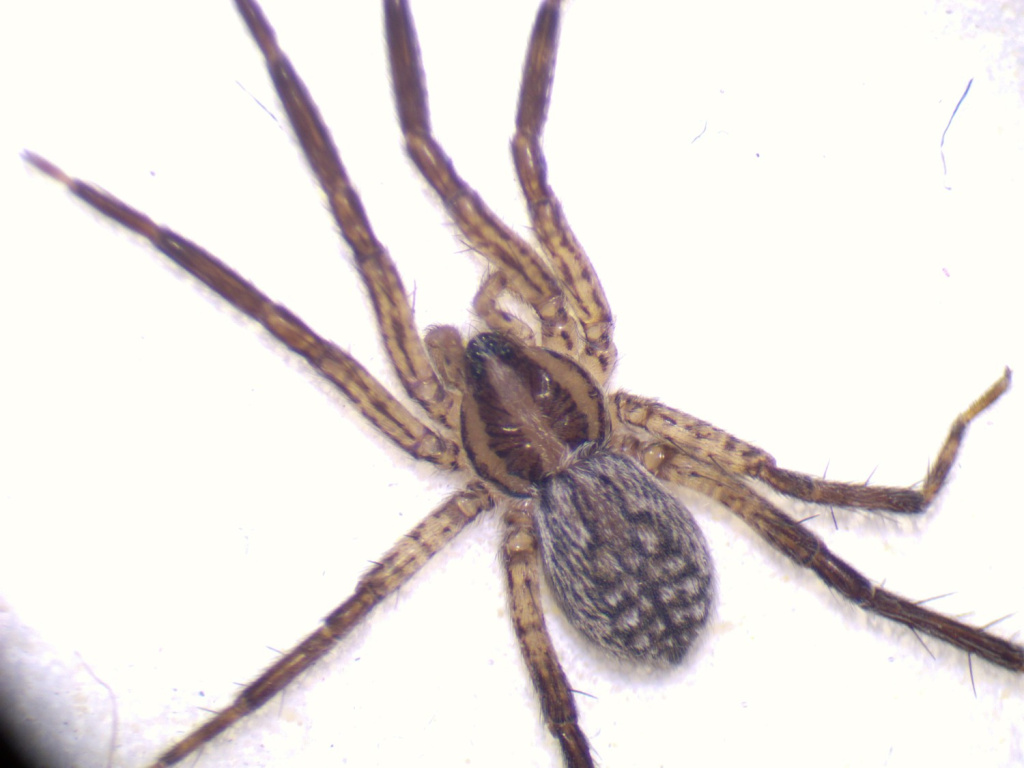
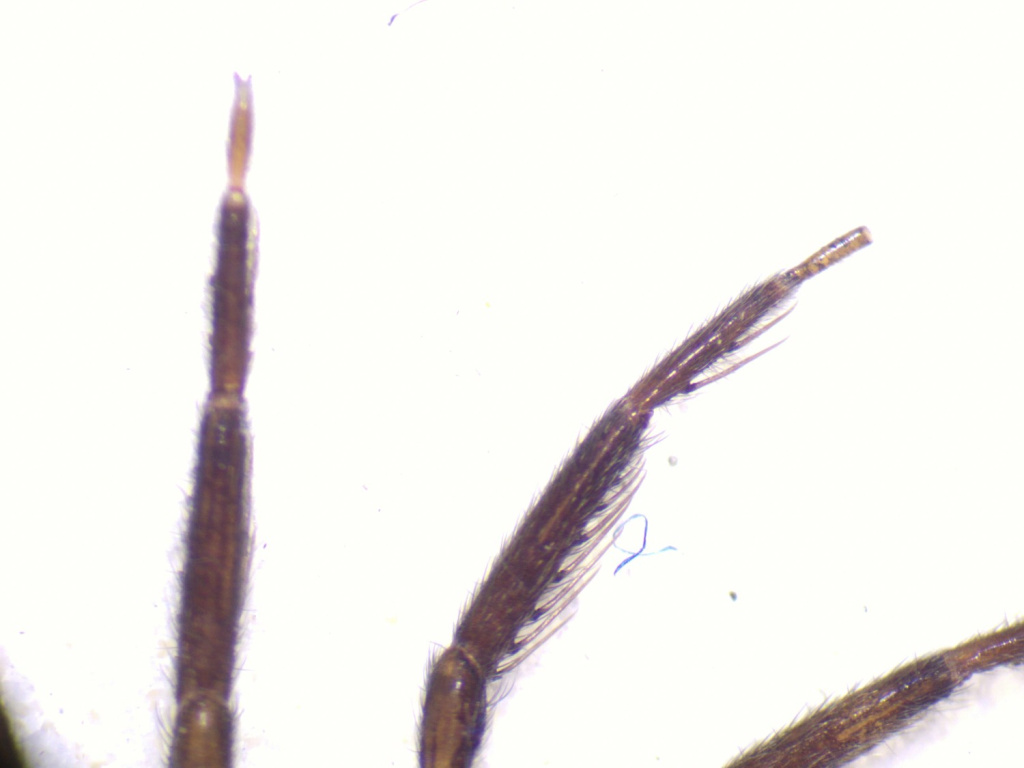
- Zora silvestris Kulczynski, 1897
- Taxonomy
- Animalia :: Araneae :: Zoridae
- tall sward & scrub
Distribution
The species has been recorded from Hurt Wood, Surrey, in 1953; Iken Heath, East Suffolk, in 1955; Ambersham Common, West Sussex, in 1969; Sherwood Forest Country Park, Nottinghamshire, in 1987 and from north-east Hampshire. It is widespread in north-western and central Europe as far north as Sweden, but has not been recorded from Ireland.Habitat and ecology
In Britain, Z. silvestris occurs on dry heathland, mainly in mature heather. In Sherwood Forest it was found with larger numbers of Z. spinimana in mixed heather and grassland from which encroaching scrub and trees had been cleared. Both sexes are found from May to July and a female has been recorded in September.Status
The spider is apparently rare but may have been overlooked owing to its similarity to the widespread and abundant Z. spinimana. It has only been found in very small numbers. Several specimens were found at Hurt Wood and Sherwood Forest but it has only been recorded from one 10 km square post-1992. It shows a decline of 75% in the area of occupancy from four hectads before 1992 to just one since that date.Threats
Fires in the mature heather habitat are a threat to this species. Management to reduce the fire risk by preventing the heather reaching the mature phase, such as by grazing or burning on a short rotation, is often used on nature reserves, but would probably result in very little heather being at the desired stage for this spider. Small unmanaged areas rapidly succumb to scrub encroachment, with loss of heather. Heathlands are also at risk from urban expansion and conversion to arable land. Motorcycle scrambling may cause damage to areas of heath and where sites are close to the roadside, there is risk from traffic pollution, road salt and roadworks.Management and conservation
Scrub and tree clearance to restore heathland should ideally be followed by a grazing regime which will maintain the heathland vegetation at a variety of heights. Text based on Dawson, I.K., Harvey, P.R., Merrett, P. & Russell-Smith, A.R. (in prep.).Stats
- First recorded
- 1953
- Last recorded
- 2024
- Total records
- 63
- Total visits
- 62
Conservation status
Zora silvestris
| Source | Reporting category | Designation | Date designated | Comments |
|---|---|---|---|---|
| A Review of the scarce and threatened spiders (Araneae) of Great Britain: Species Status No. 22 (Sep 2017) | Rare and scarce species | Nationally Rare. Includes Red Listed taxa | 42979 | |
| A Review of the scarce and threatened spiders (Araneae) of Great Britain: Species Status No. 22 (Sep 2017) | Red listing based on 2001 IUCN guidelines | Critically Endangered | 42979 | This spider has only been found in very small numbers. Several specimens were found at Hurt Wood, Surrey, and Sherwood Forest, Nottinghamshire, but it has been recorded from just one location since 1993. It shows a major decline in AOO and is currently known at only a single location. Threats: Fires in the mature heather habitat are a threat to this species. Management to reduce the fire risk by preventing the heather reaching the mature phase, such as by grazing or burning on a short rotation, is often used on nature reserves, but would probably result in very little heather being at the desired stage for this spider. Small unmanaged areas rapidly succumb to scrub encroachment, with loss of heather. Heathlands are also at risk from urban expansion and conversion to arable land. Motorcycle scrambling may cause damage to areas of heath and where sites are close to the roadside, there is risk from traffic pollution, road salt and roadworks. |
Photos and media
__