
Species Details
- Species name
- Misumena vatia (Clerck, 1757)
- Synonyms
- Misumena calycina, Misumena citreus (Linnaeus, 1758), Misumena vatius
- Taxonomy
- Animalia :: Araneae :: Thomisidae
- tall sward & scrub
Distribution
The species is widespread in the southern half of England and Wales. It is widespread in western and central Europe, but commoner towards the south of the region (Roberts 1995).Habitat and ecology
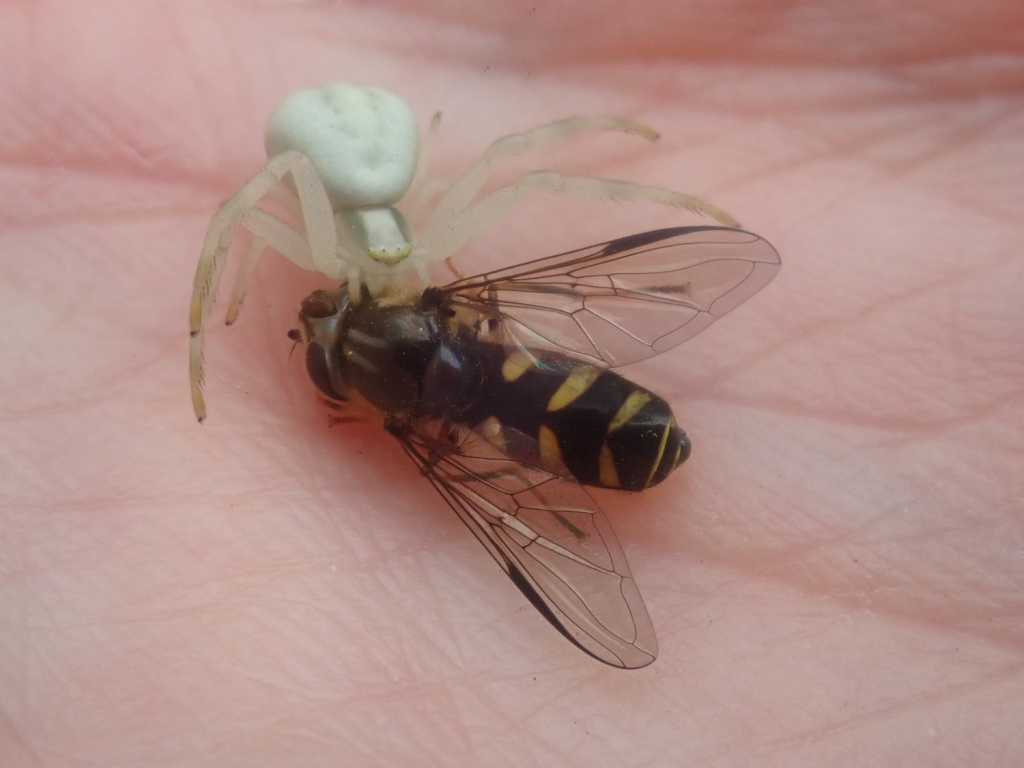
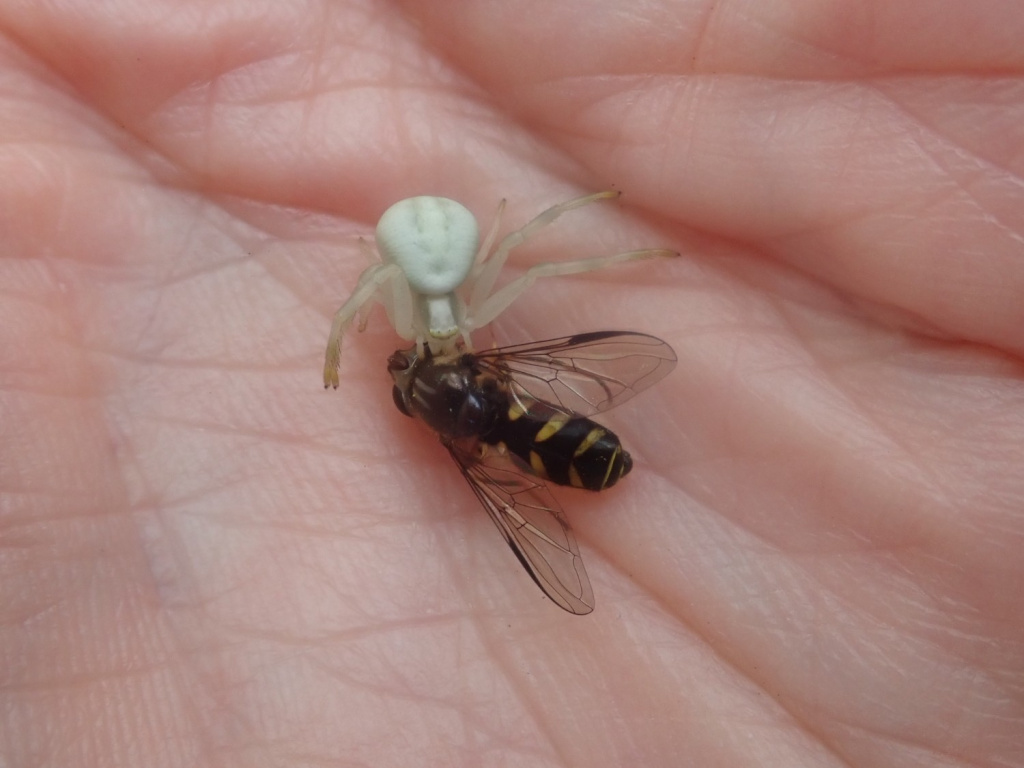
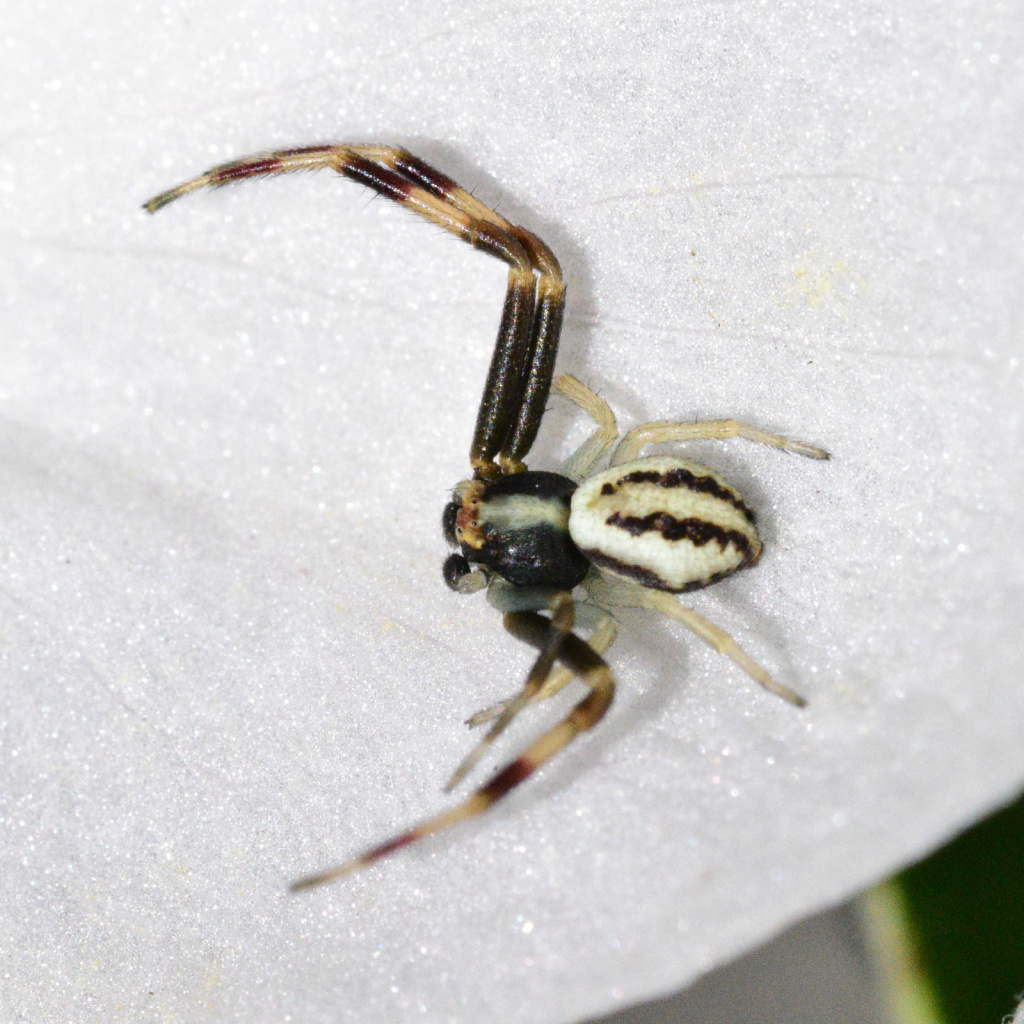
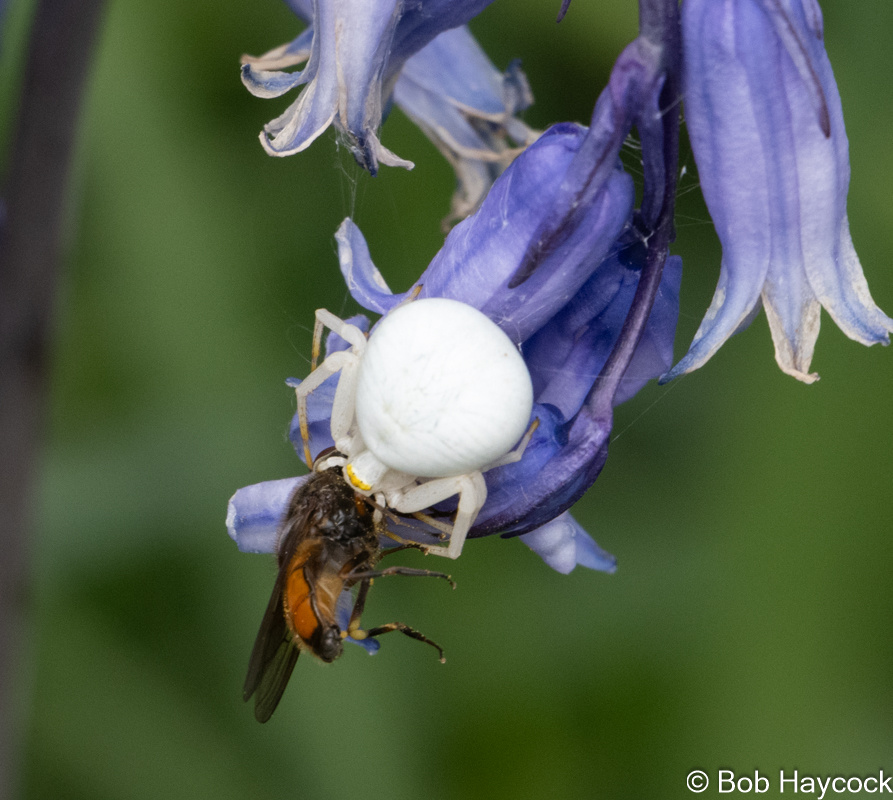
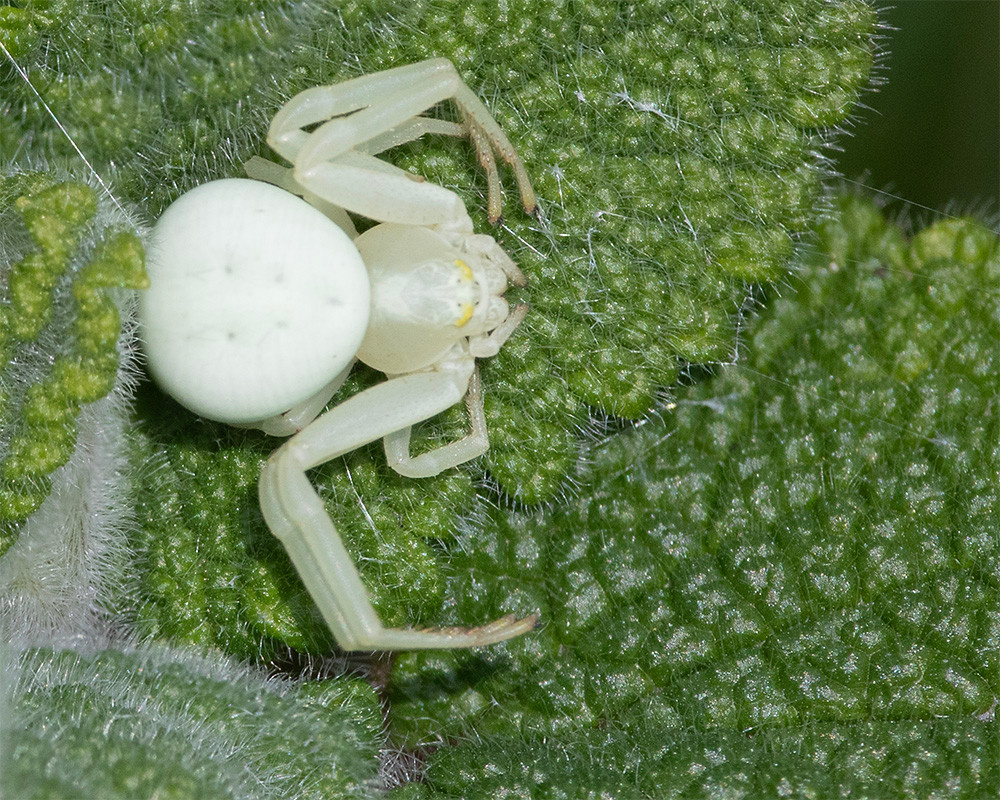
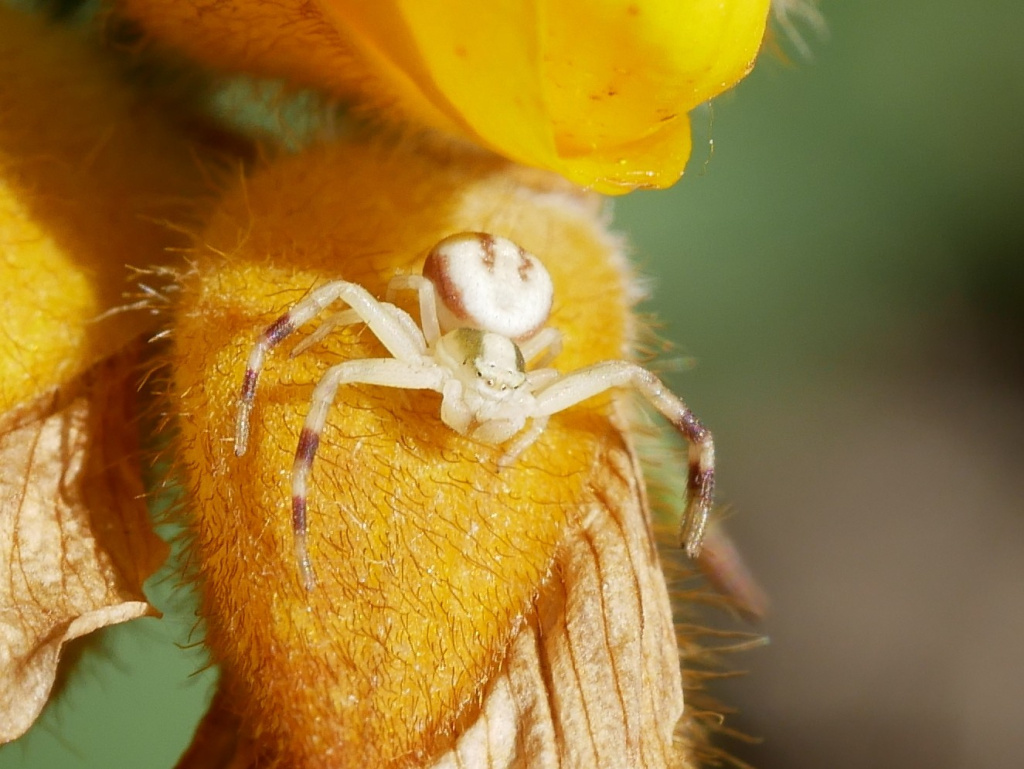
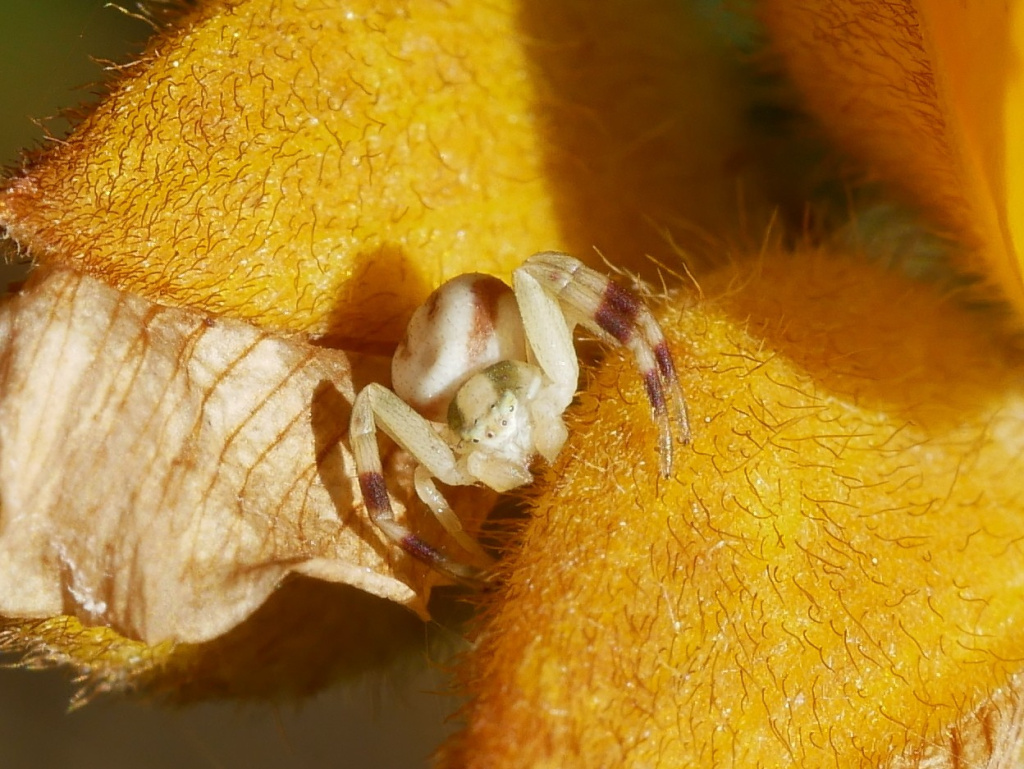
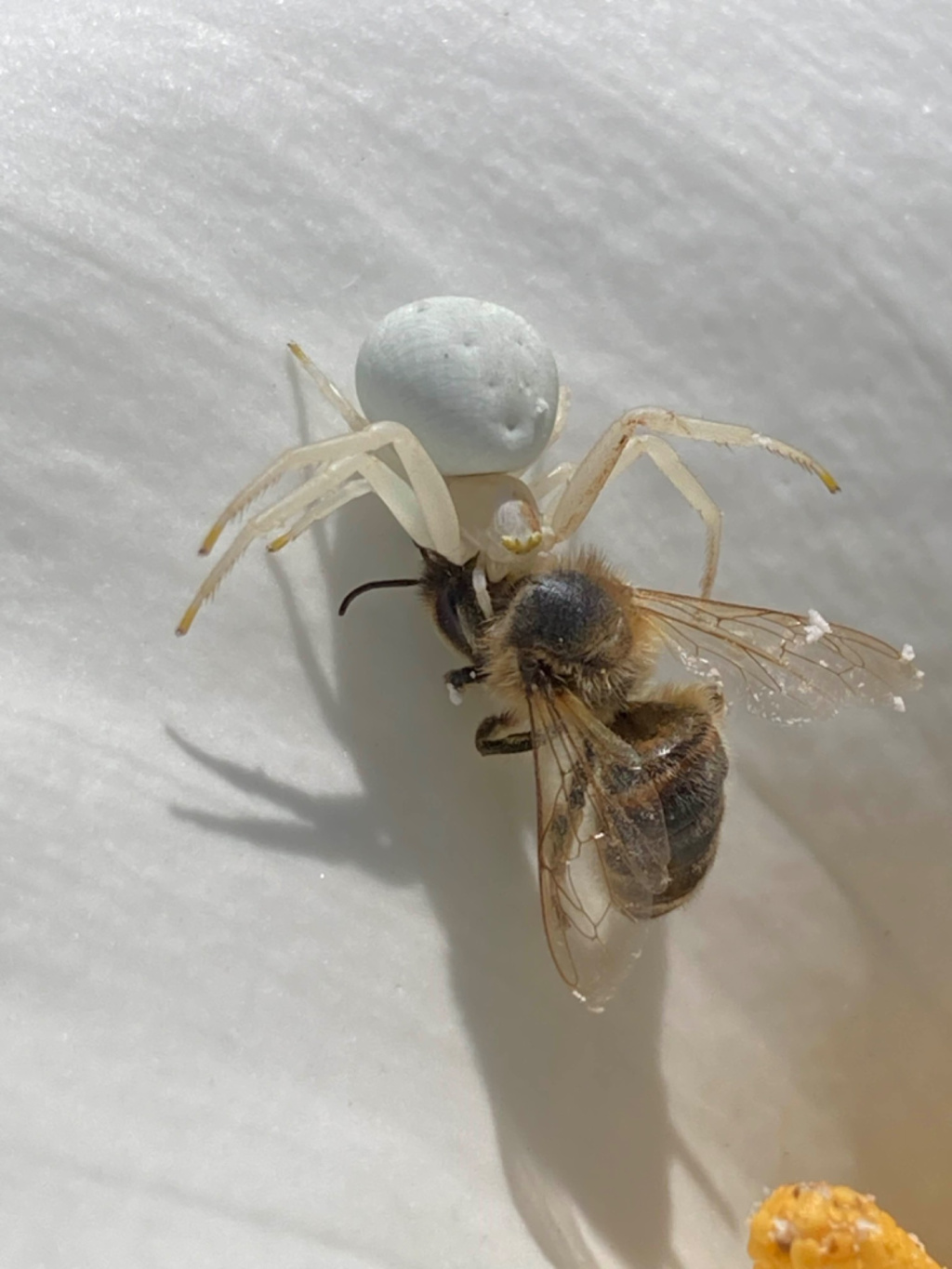
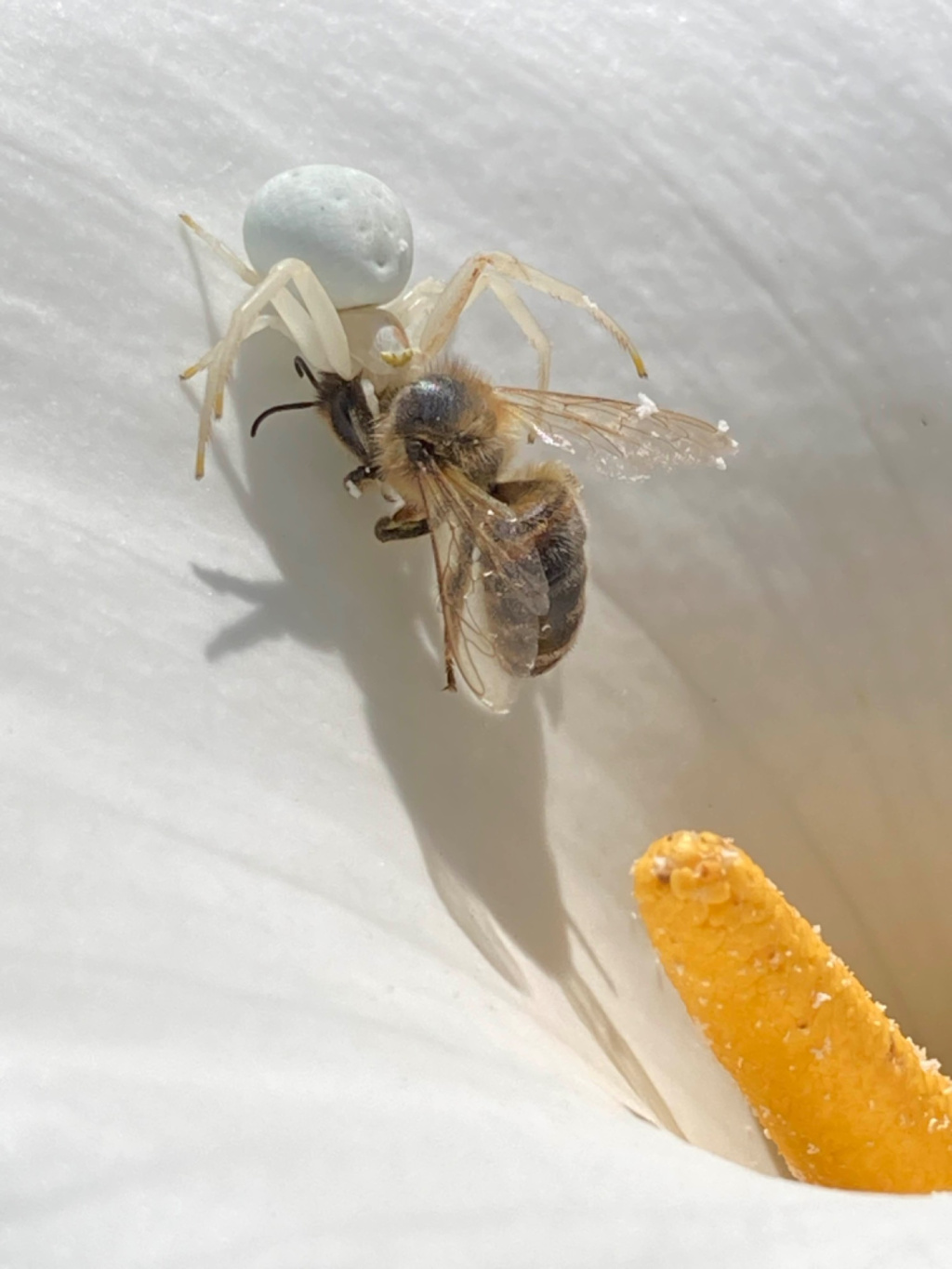
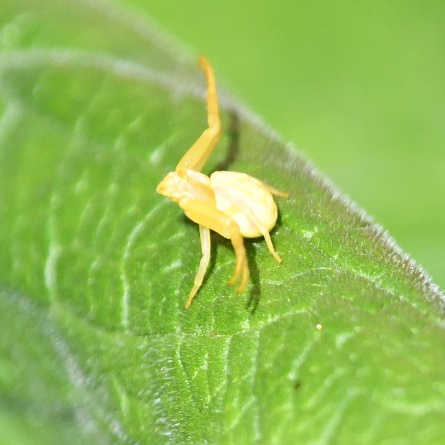
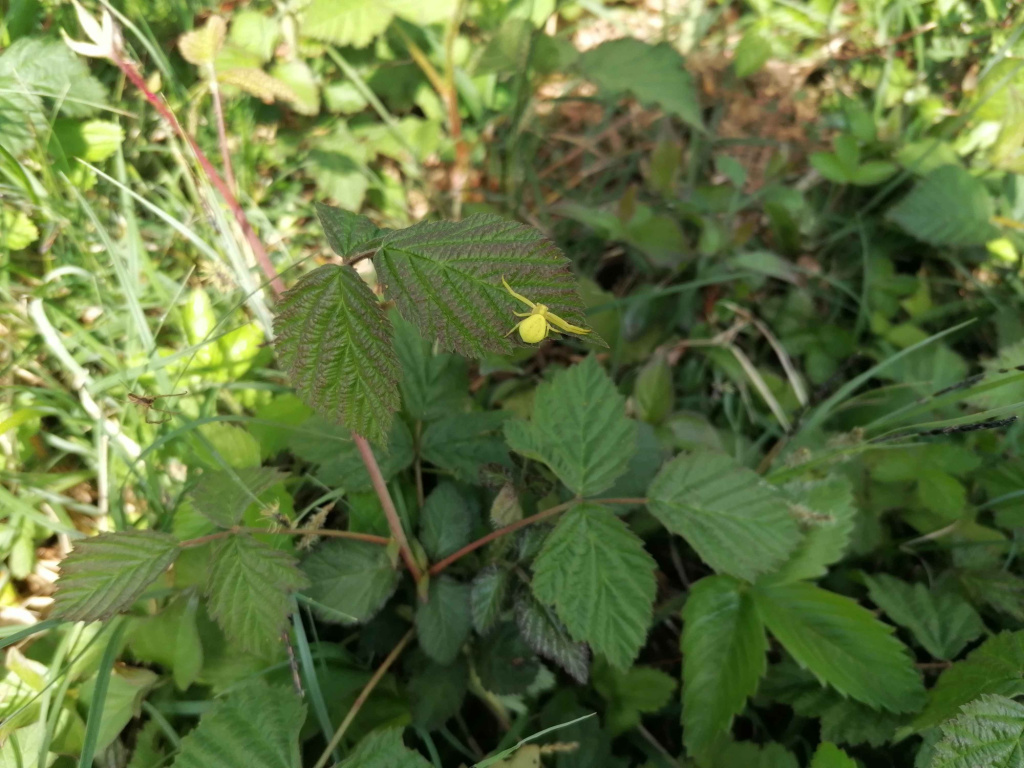
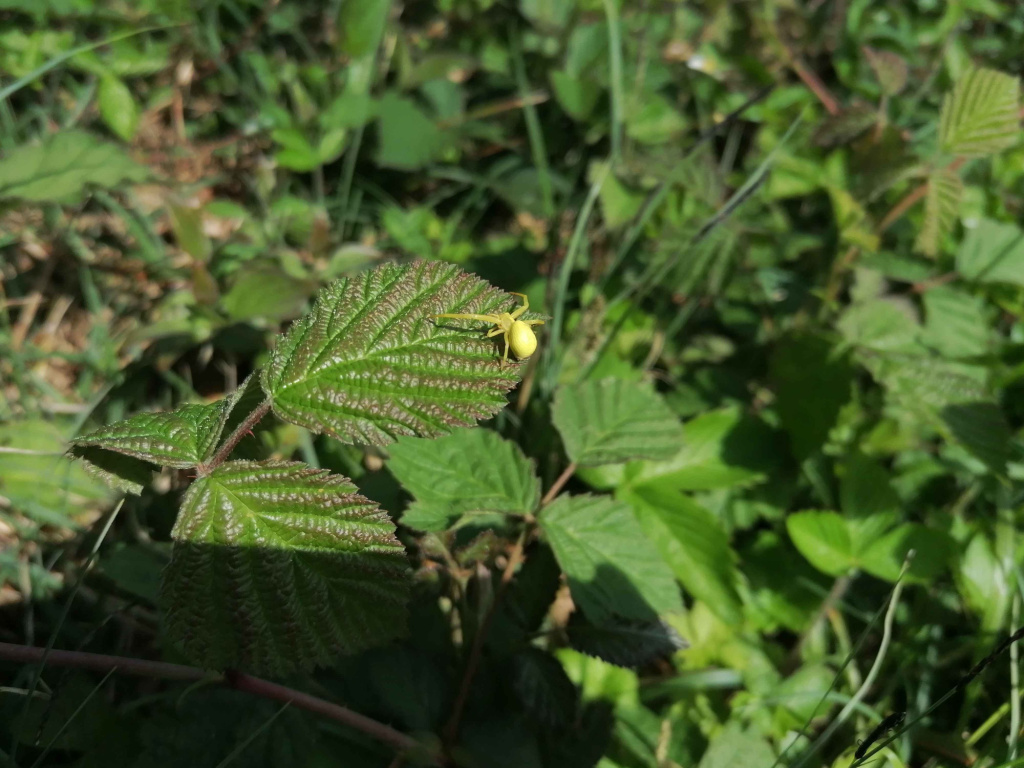
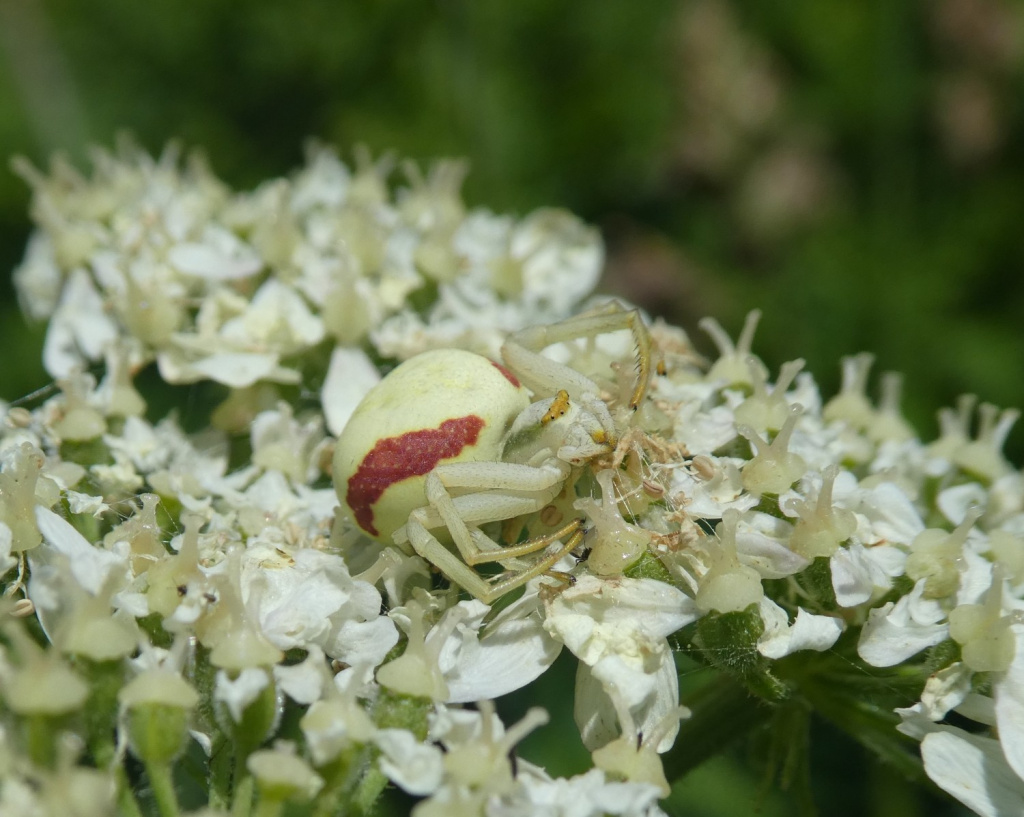
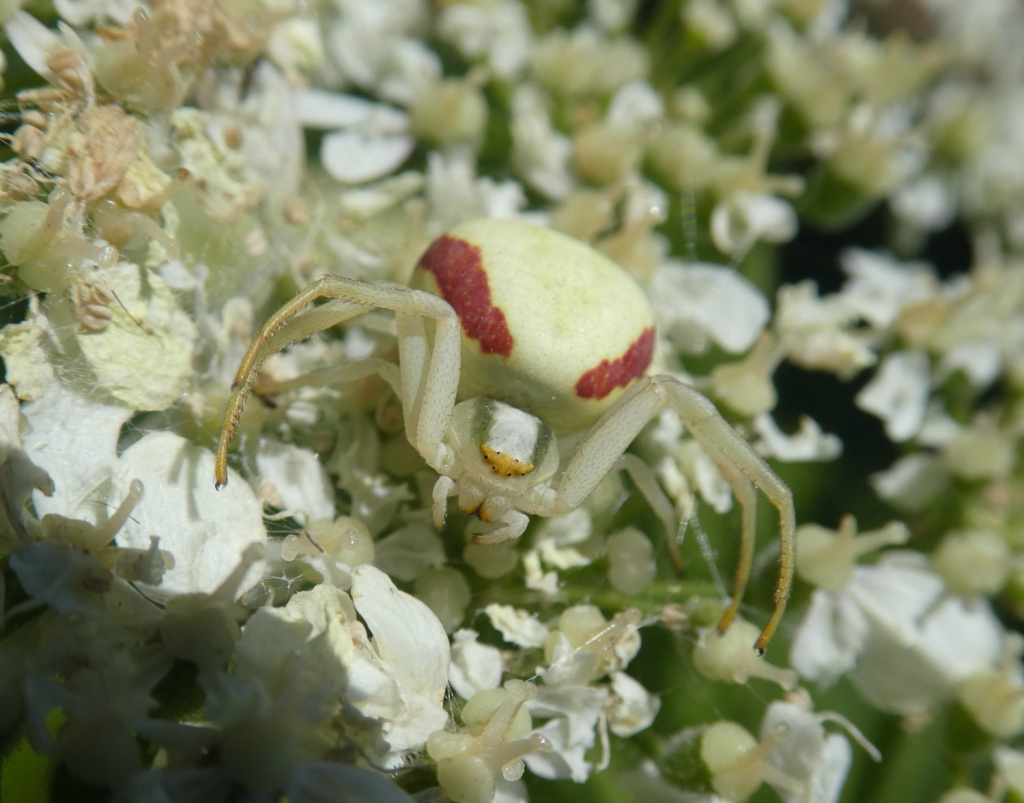
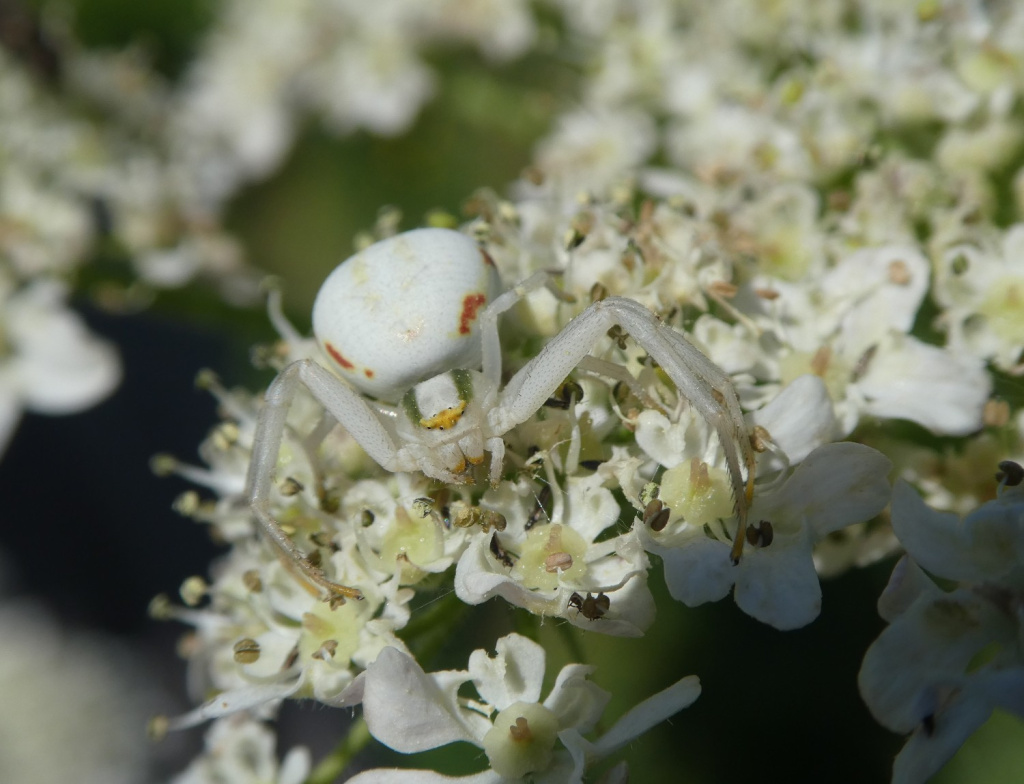
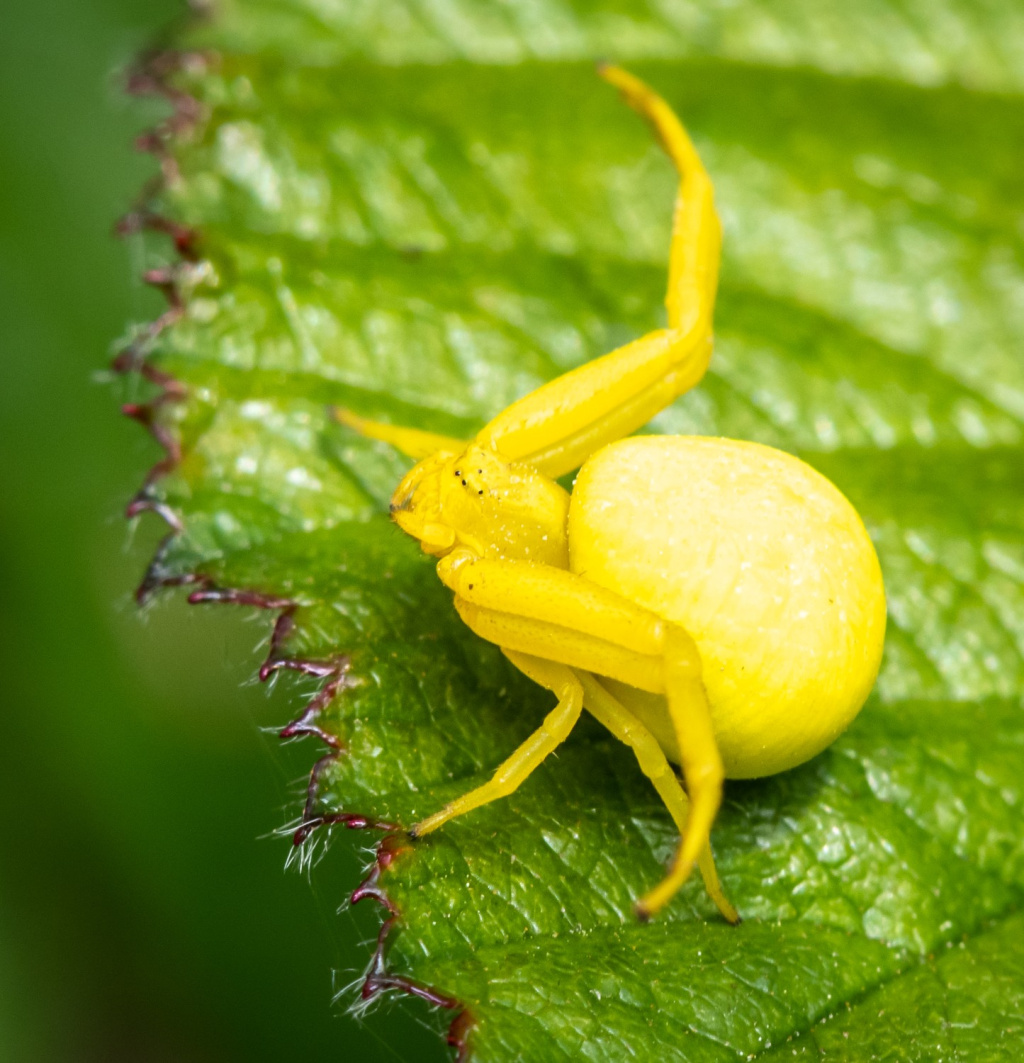
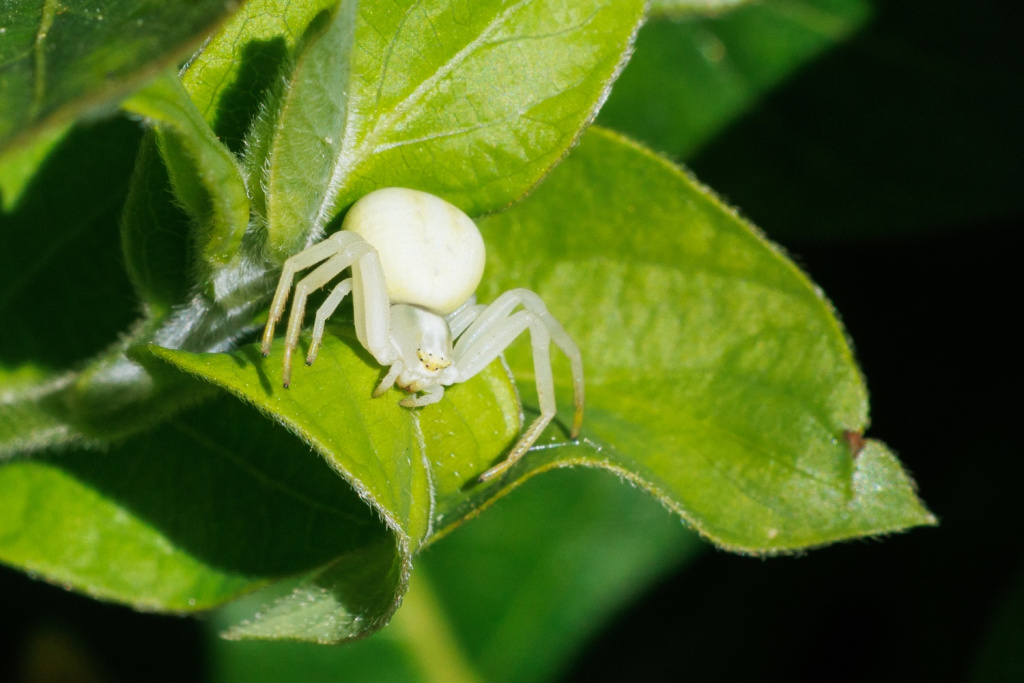
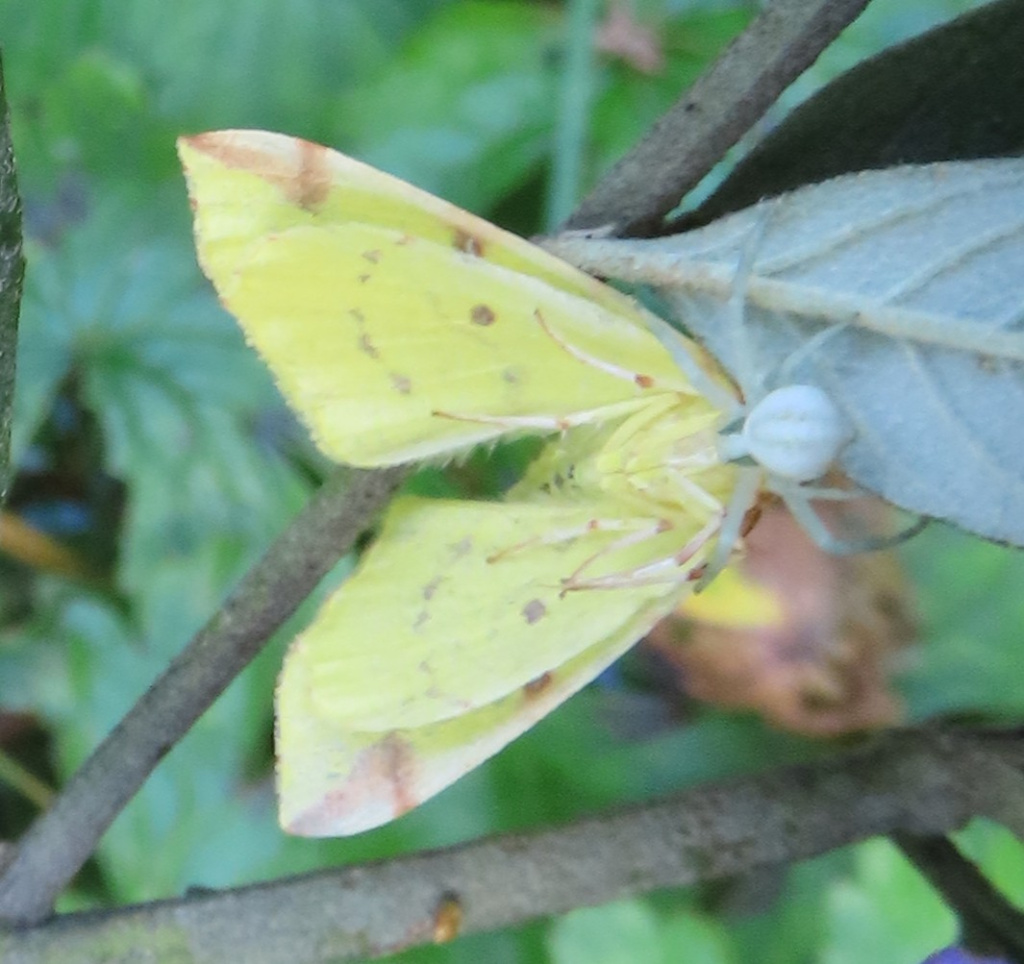
This species seems to be most commonly found in the boundary region between grass and scrub, such as the edges of woodland rides but it also occurs in more open locations. It may be found in the vegetation, or sitting on a flower head waiting for prey. In these situations its cryptic colouring may make it difficult to see until it moves, especially as the colouring may vary through white, yellow and greenish to match the flower. Only mature females can undergo background-matching colour changes. Some females have red anterior, dorso-lateral lines or spots which appear to be genetically determined and are unaffected by the background colour. Mature males are smaller and predominantly brown. The sexual dimorphism for colour is probably a result of males and females occupying different niches (Oxford and Gillespie 1998). Adults of both sexes have been recorded between May and August, but mainly in May and June with females occasionally persisting into the autumn or perhaps even through the winter with one female recorded in leaf litter in March.Status
The spider is fairly common in the south. Original author of profile: W.J. Partridge Text based on Harvey, P.R., Nellist, D.R. & Telfer, M.G. (eds) 2002. Provisional atlas of British spiders (Arachnida, Araneae), Volumes 1 & 2. Huntingdon: Biological Records Centre.Stats
- First recorded
- 1886
- Last recorded
- 2025
- Total records
- 3,121
- Total visits
- 3,090
Conservation status
Misumena vatia
| Source | Reporting category | Designation | Date designated | Comments |
|---|---|---|---|---|
| A Review of the scarce and threatened spiders (Araneae) of Great Britain: Species Status No. 22 (Sep 2017) | Red listing based on 2001 IUCN guidelines | Least concern | 42979 |
Photos and media


Spatial distribution - hectad map
Click on one of the date ranges in the key to highlight that particular range. Click anywhere else on the map to go back to all three date ranges.
Thresholds:
Move mouse cursor over dot for info
Rejected records are excluded from this map. Unverified records are included.
Temporal distribution - records by year
Records that span more than one year are not included in this chart.
Temporal distribution - records by week
__