
Species Details
- Species name
- Paroligolophus meadii (Pickard-Cambridge, 1890)
- Synonyms
- Paroligolophus meadii Martens, 1978, Odiellus meadii Roewer, 1923, Odius meadii Roewer, 1912, Oligolophus meadii Pickard-Cambridge, 1890, Paroligolophus meadii (O.P.-Cambridge, 1890)
- Taxonomy
- Animalia :: Opiliones :: Phalangiidae
- tall sward & scrub
Distribution
In the British Isles, Paroligolophus meadii appears to be restricted to England and Wales. A small number of possible Scottish records from museum specimens have proved to be juveniles of other oligolophine species (presumably due to the misinterpretation of characters such as the trident and tubercles which may be disproportionately large in early stages of development). It has not been possible, so far, to verify the HRS record from Brodick Castle on Arran or a literature record for Loch Lomond. However, there would seem to be no reason why it should not occur in Scotland, especially on coastal sand-dunes.
Bloxworth in Dorset is the type locality, from where it was described by Pickard-Cambridge (1890). Until it was discovered in Guernsey in 1955, it was thought to be endemic to Britain. More recently it was found in the Cantabrian Mountains of northern Spain (Martens 1978). However, its use of fairly natural habitats in Britain suggests it has been here for a long time rather than being an introduction from Iberia.
Habitat and ecology
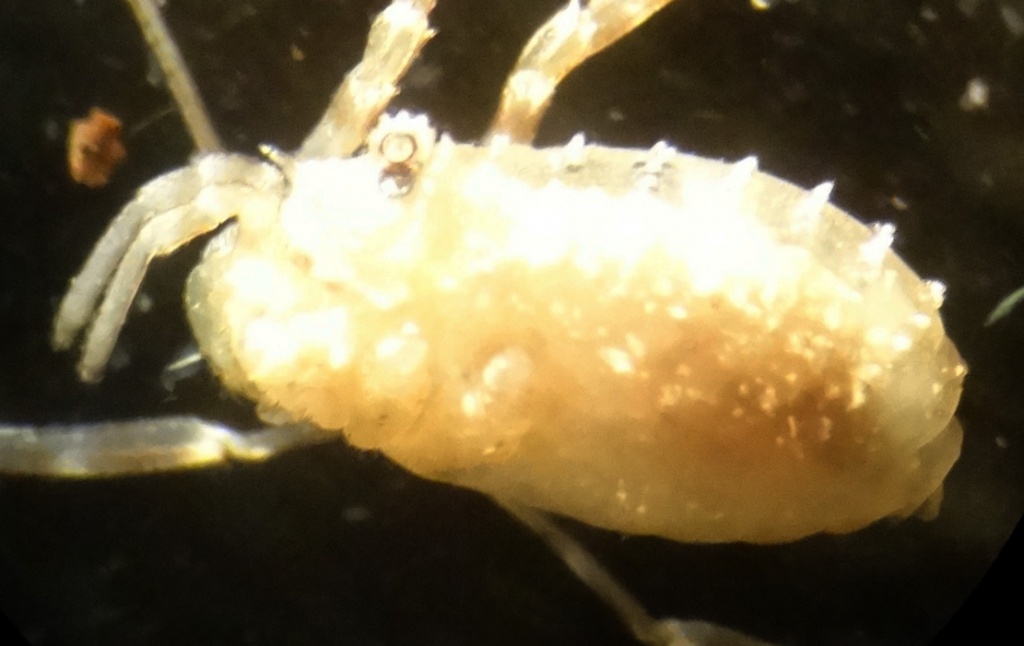
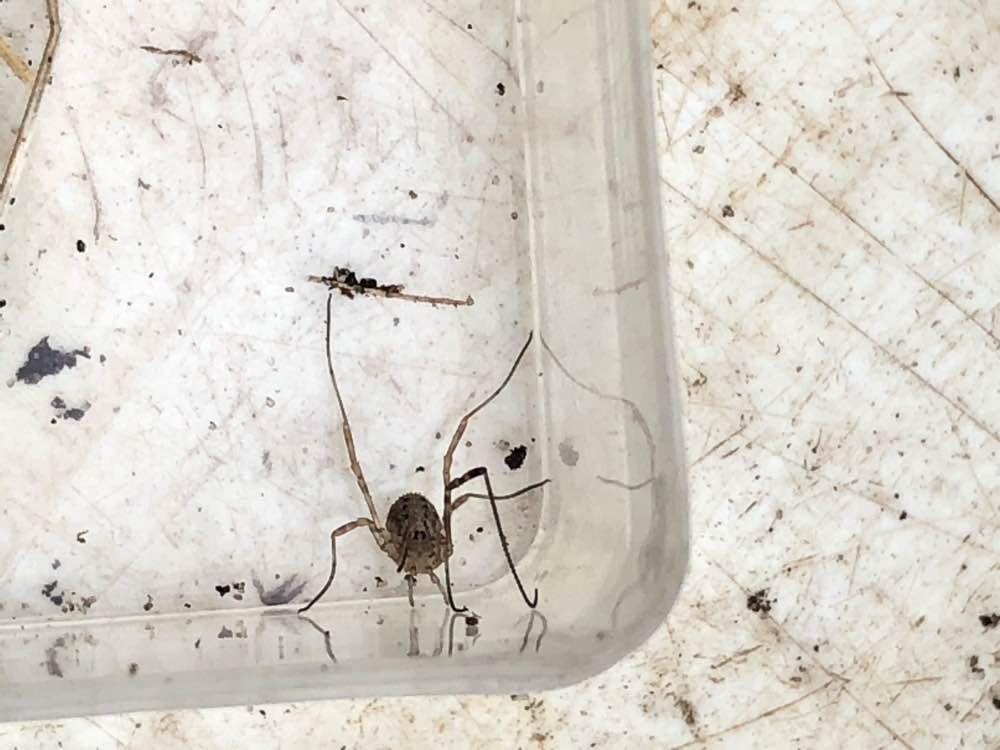
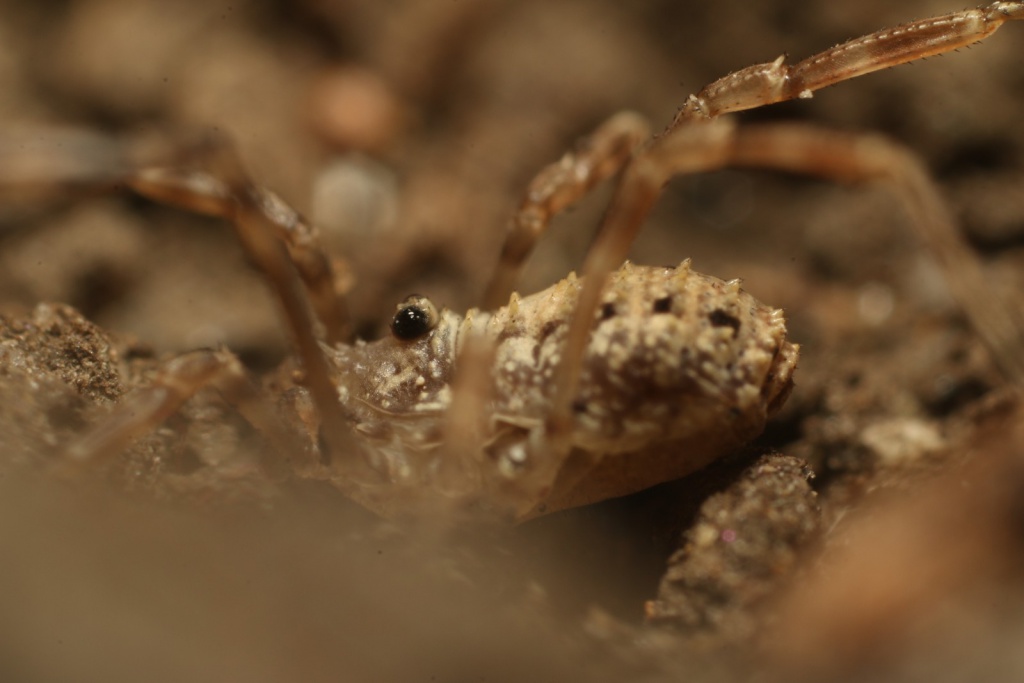
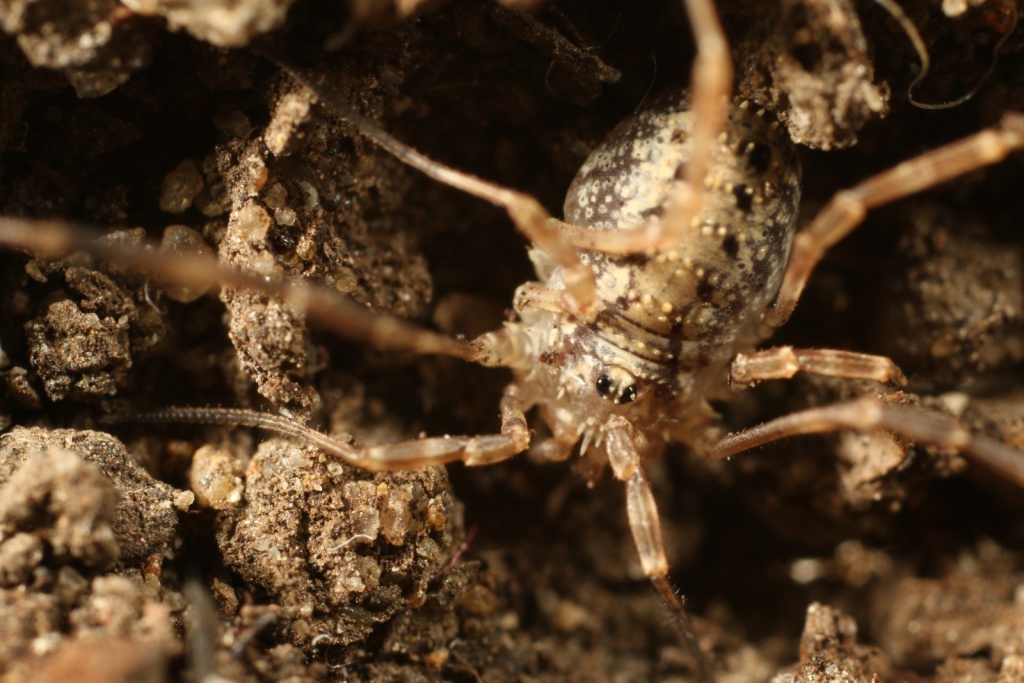
Although this is a fairly widespread species in England and Wales it is uncommon and has scarcely been recorded in the past five years. It prefers drier (and presumably warmer) habitats such as sand-dunes, chalk grassland and heath. Hillyard (2005) notes a preference for habitats with a mix of heather and grass, and its occurrence with Opilio saxatilis. It is a ground-layer species, found amongst the vegetation and also below stones etc.
Nothing seems to have been reported on the diet of P. meadii and much else remains to be discovered about the ecology and life-history of this species.
Adult records in Britain run from August for males, and September for females, through to March, while Hillyard (2005) gives a range from July to December and notes that juveniles have not been recorded before late May. Based on HRS records it seems possible that egg laying may continue beyond December into January but it is unclear why males should persist until March. This requires investigation.
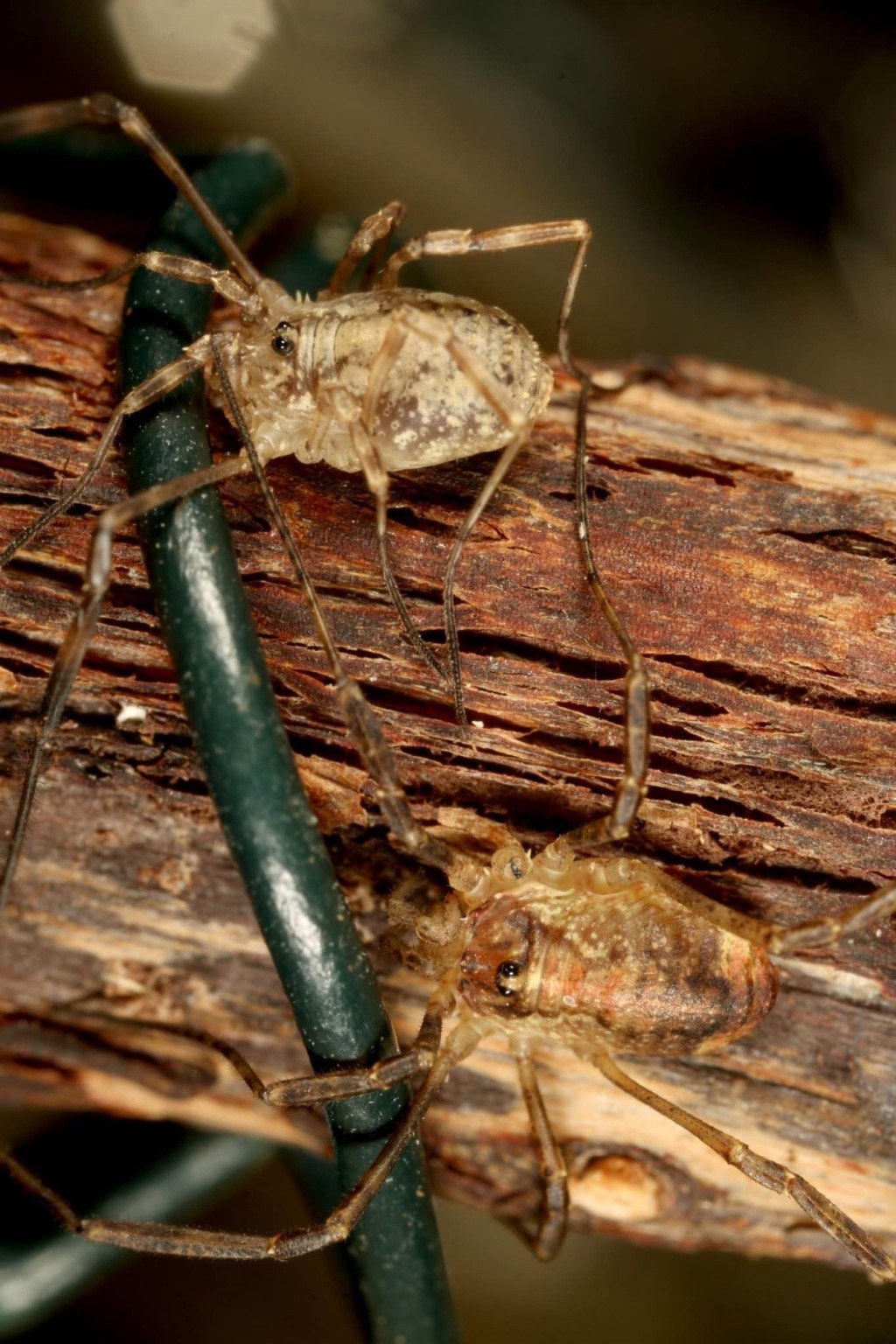
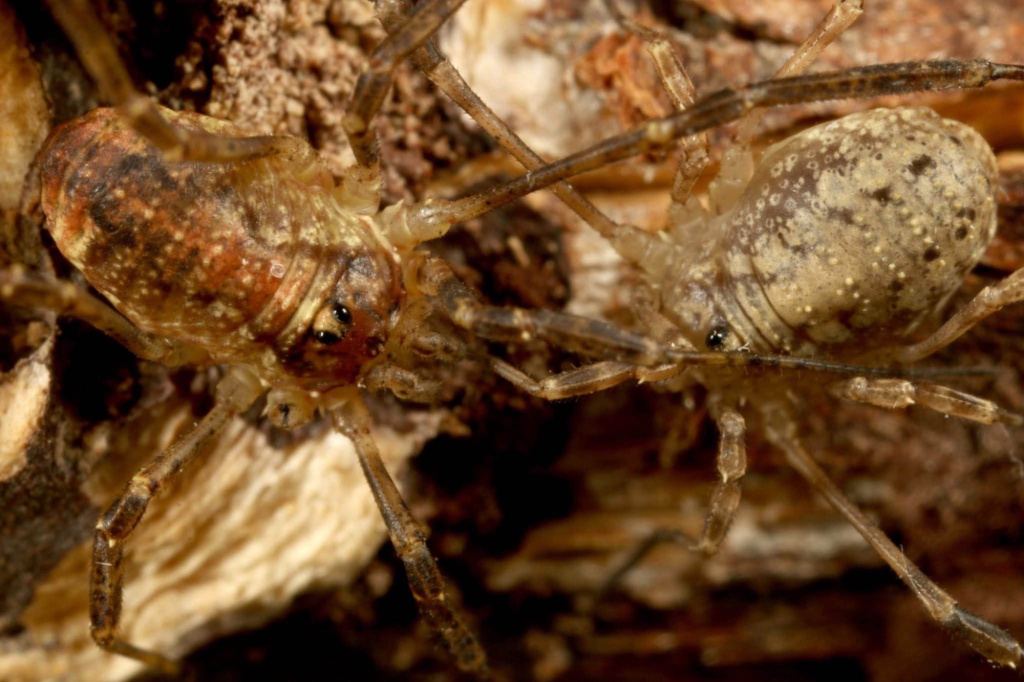
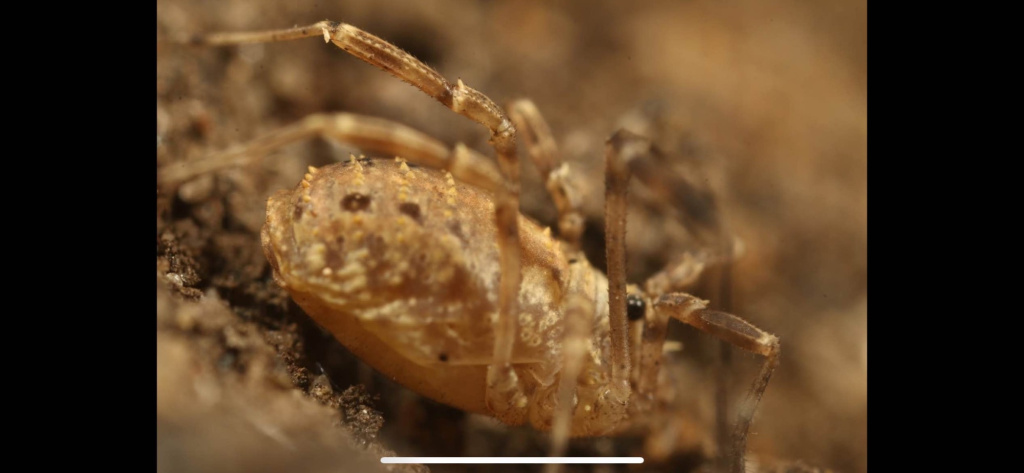
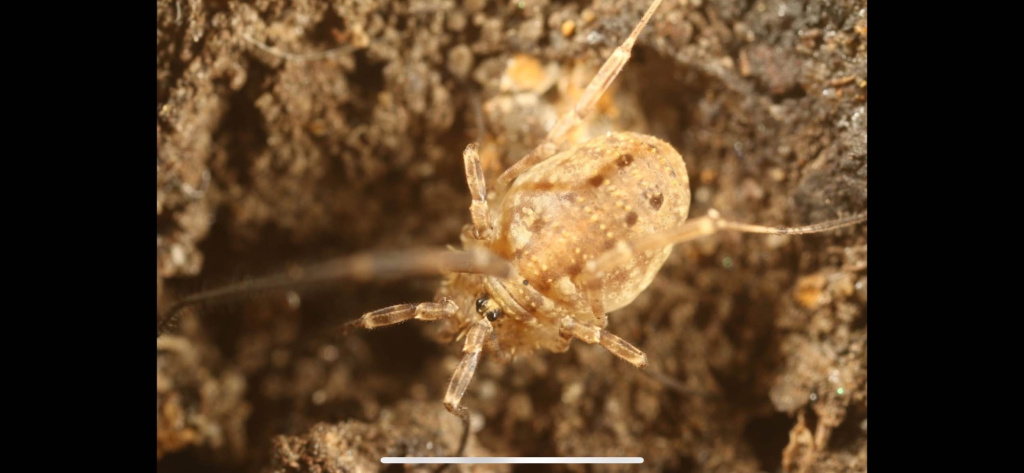
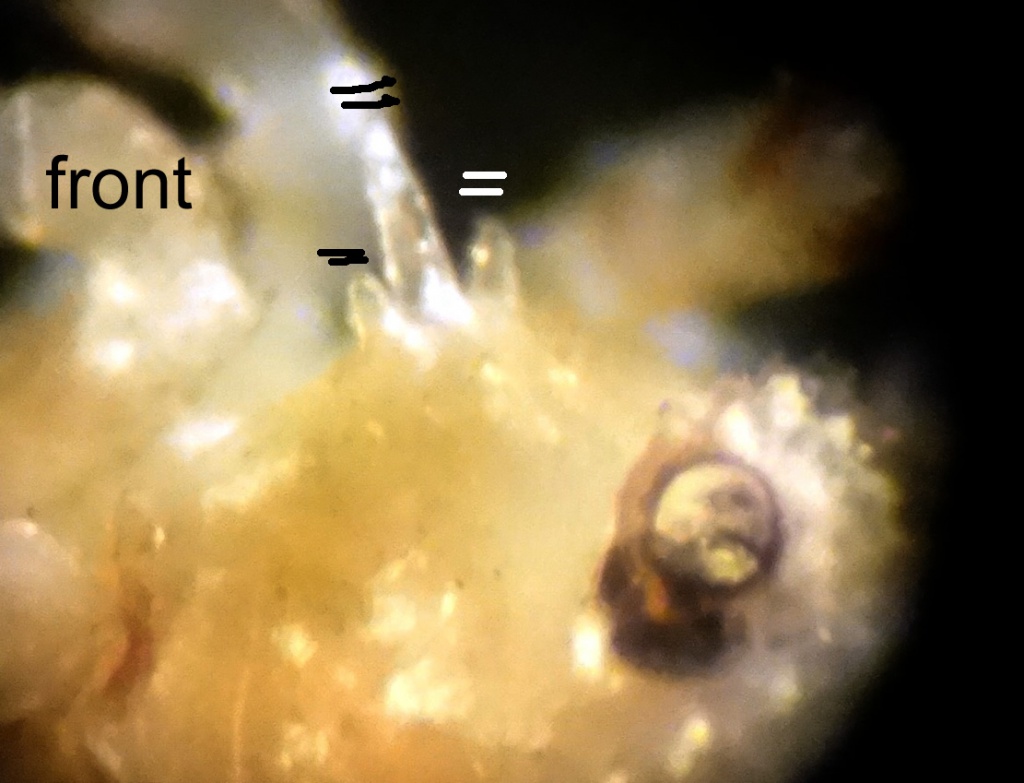
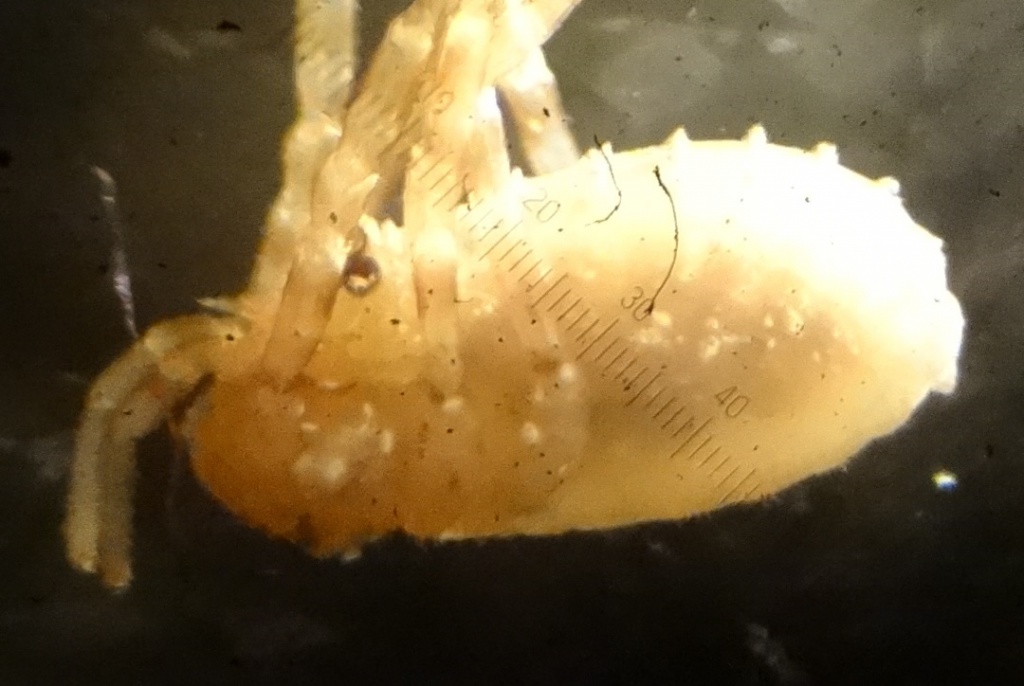
Note on Identification: The potential misidentification of juvenile oligolophines as P. meadii has been highlighted above. It should also be noted that a key character for separating the sub-families Oligolophinae and Phalangiinae is misapplied in Hillyard 2005. Paroligolophus meadii has a ventral spur on the basal segment of the chelicera (as in Mitopus morio) but this is not present in P. agrestis.
NOTE: The HRS Organiser would be pleased to examine recent and historic specimens, please get in touch at hrs@britishspiders.org.uk if you can provide specimens or photographs.
Status
Scarce.
Threats
Loss of habitat - dune/heath/chalk grassland - due to development, environmental change.
Management & Conservation
Resurvey of former sites.
Text based on: Hillyard, P. D. 2005. ### Harvestmen: keys and notes for the identification of British species. Synopses of the British Fauna 4 (3rd edn). Field Studies Council, Shrewsbury.
References
Martens, J. 1978. Spinnentiere, Arachnida: Weberknechte, Opiliones. Die Tierwelt Deutschlands ### 64: 1-464. Fischer Verlag, Jena.
Pickard-Cambridge, O. 1890. Monograph of the British Phalangidea or harvestmen. Proceedings of the Dorset Natural History and Antiquarian Field Club, Sherborne/Dorchester ### 11: 163-216
Stats
- First recorded
- 2025
- Last recorded
- 2025
- Total records
- 1
- Total visits
- 1
Photos and media
Spatial distribution - hectad map
Click on one of the date ranges in the key to highlight that particular range. Click anywhere else on the map to go back to all three date ranges.
Thresholds:
Move mouse cursor over dot for info
Rejected records are excluded from this map. Unverified records are included.
Temporal distribution - records by year
Records that span more than one year are not included in this chart.
Temporal distribution - records by week
__