
Species Details
- Species name
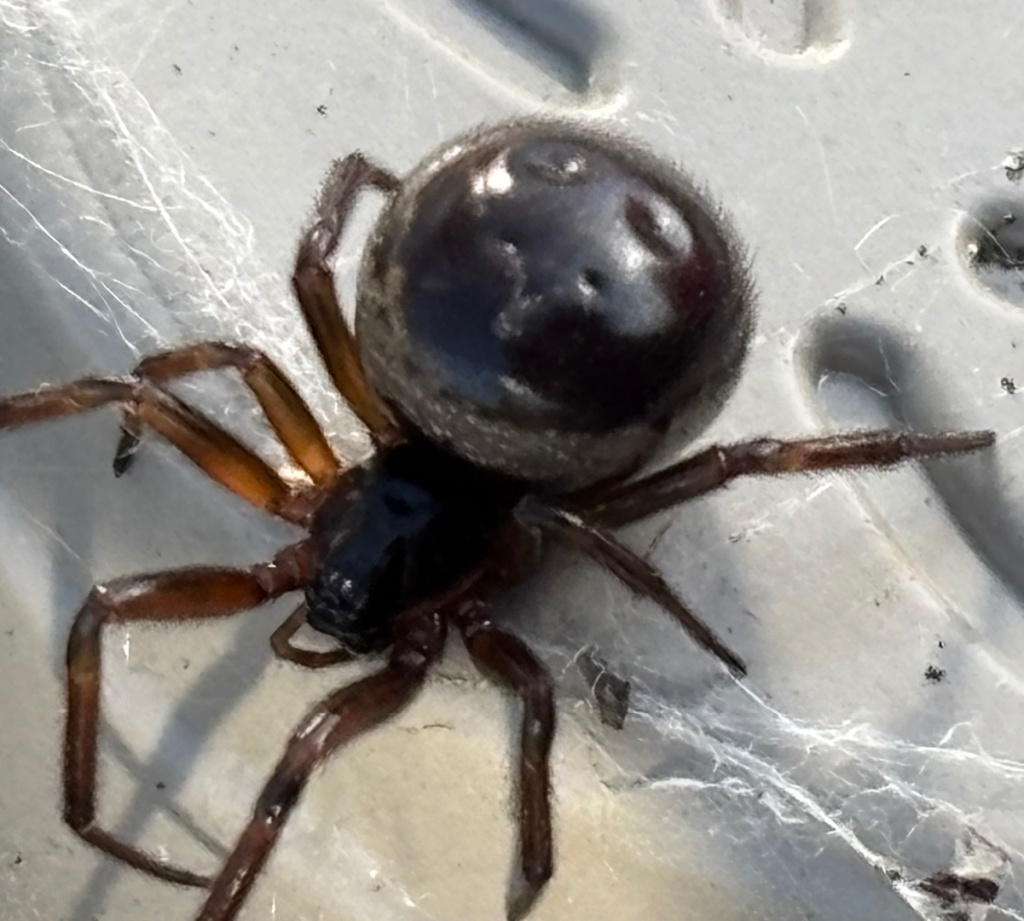
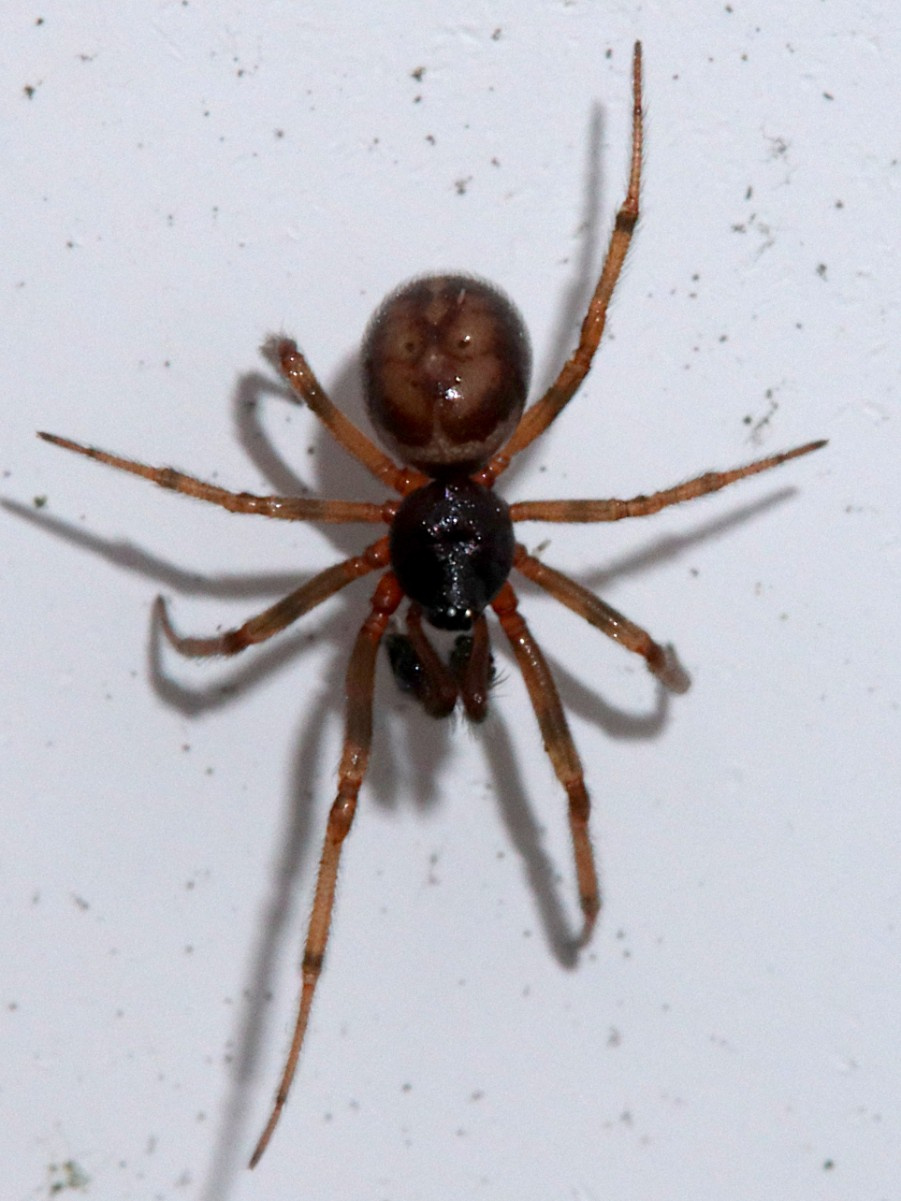
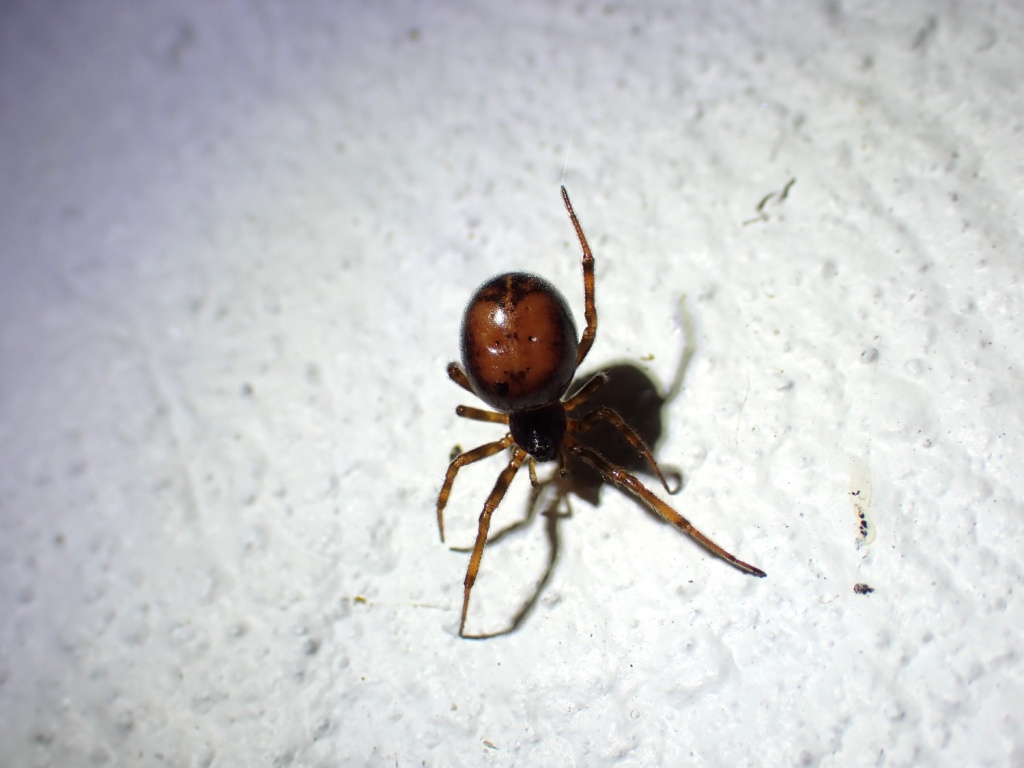
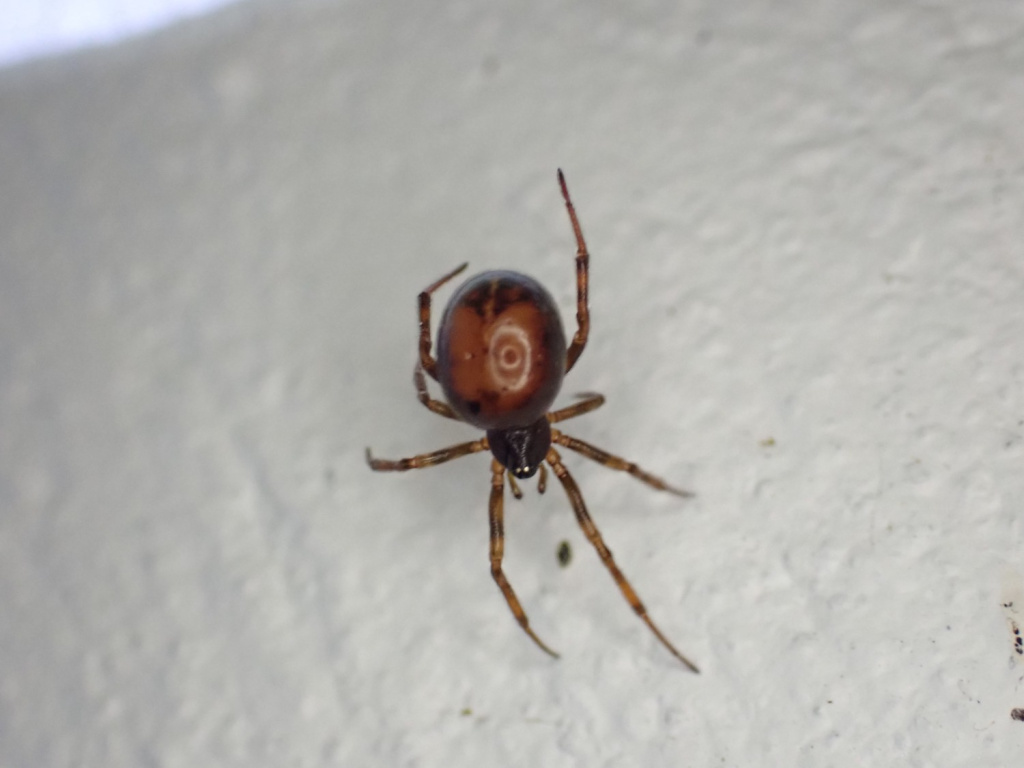
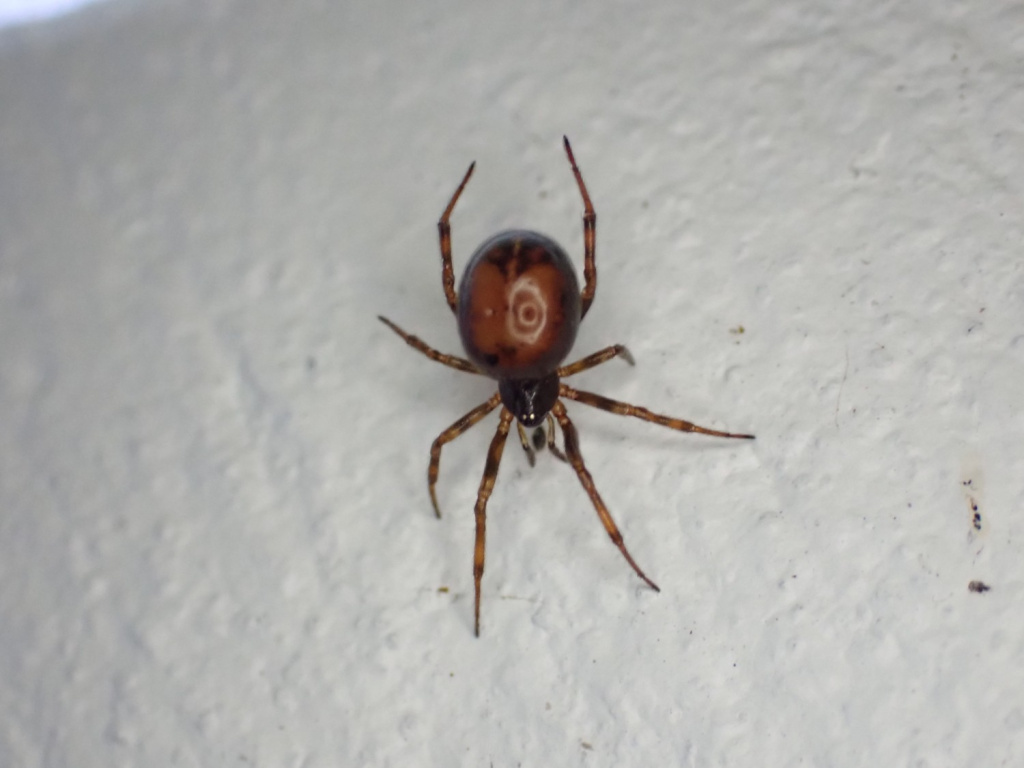
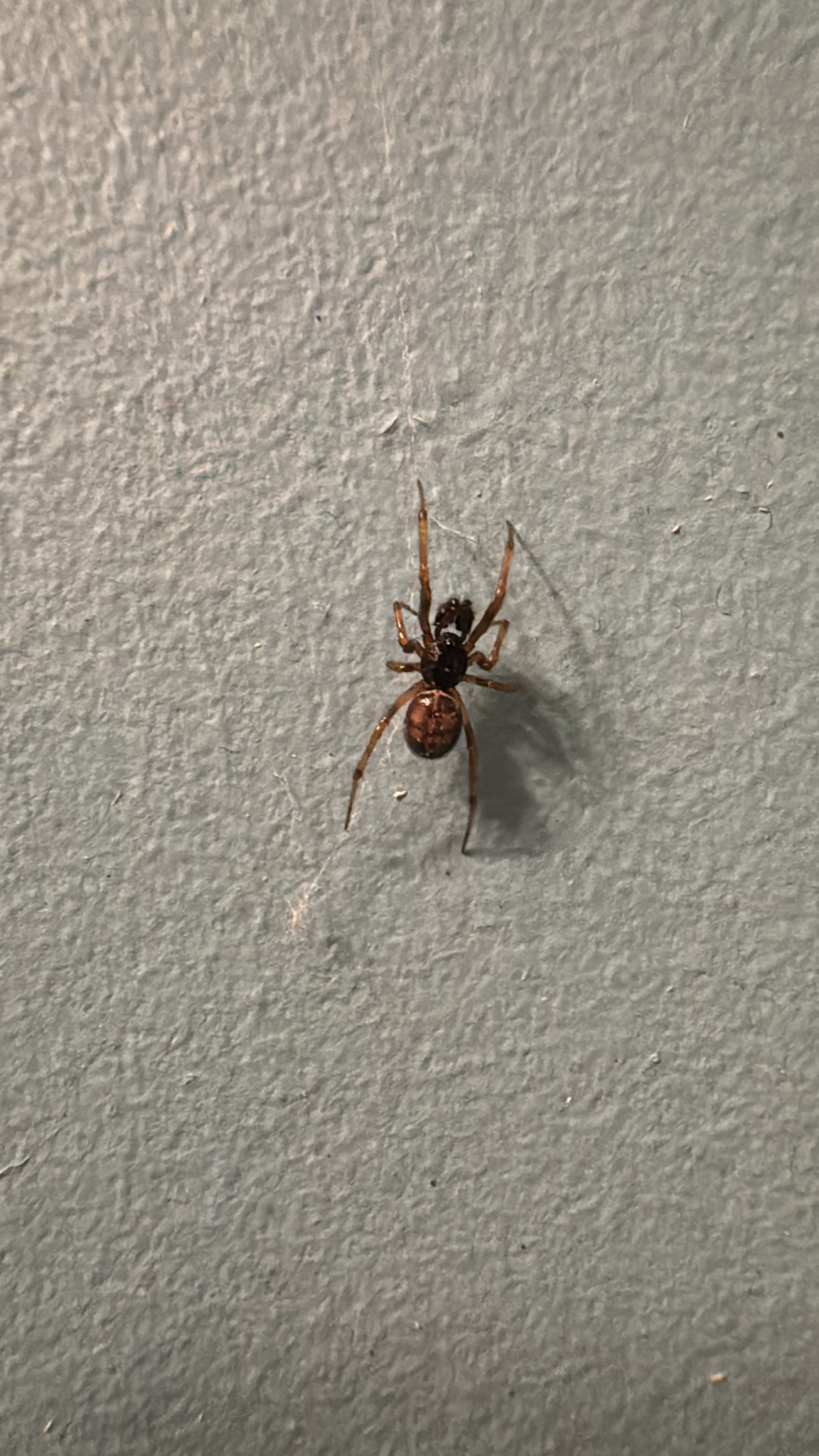
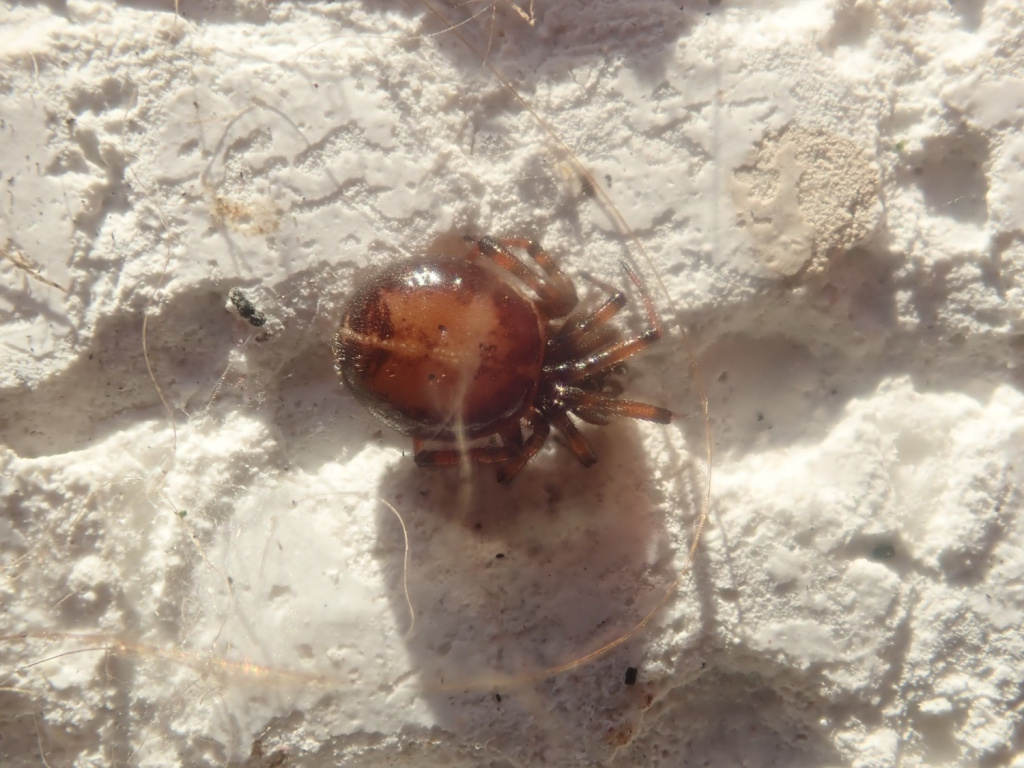
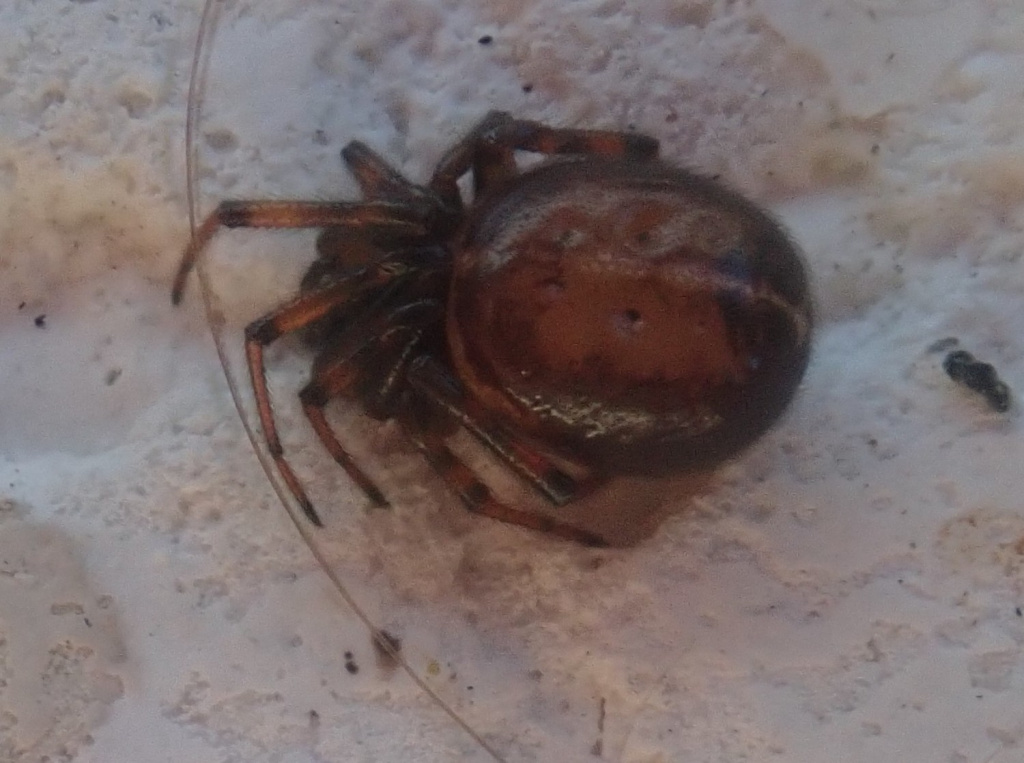
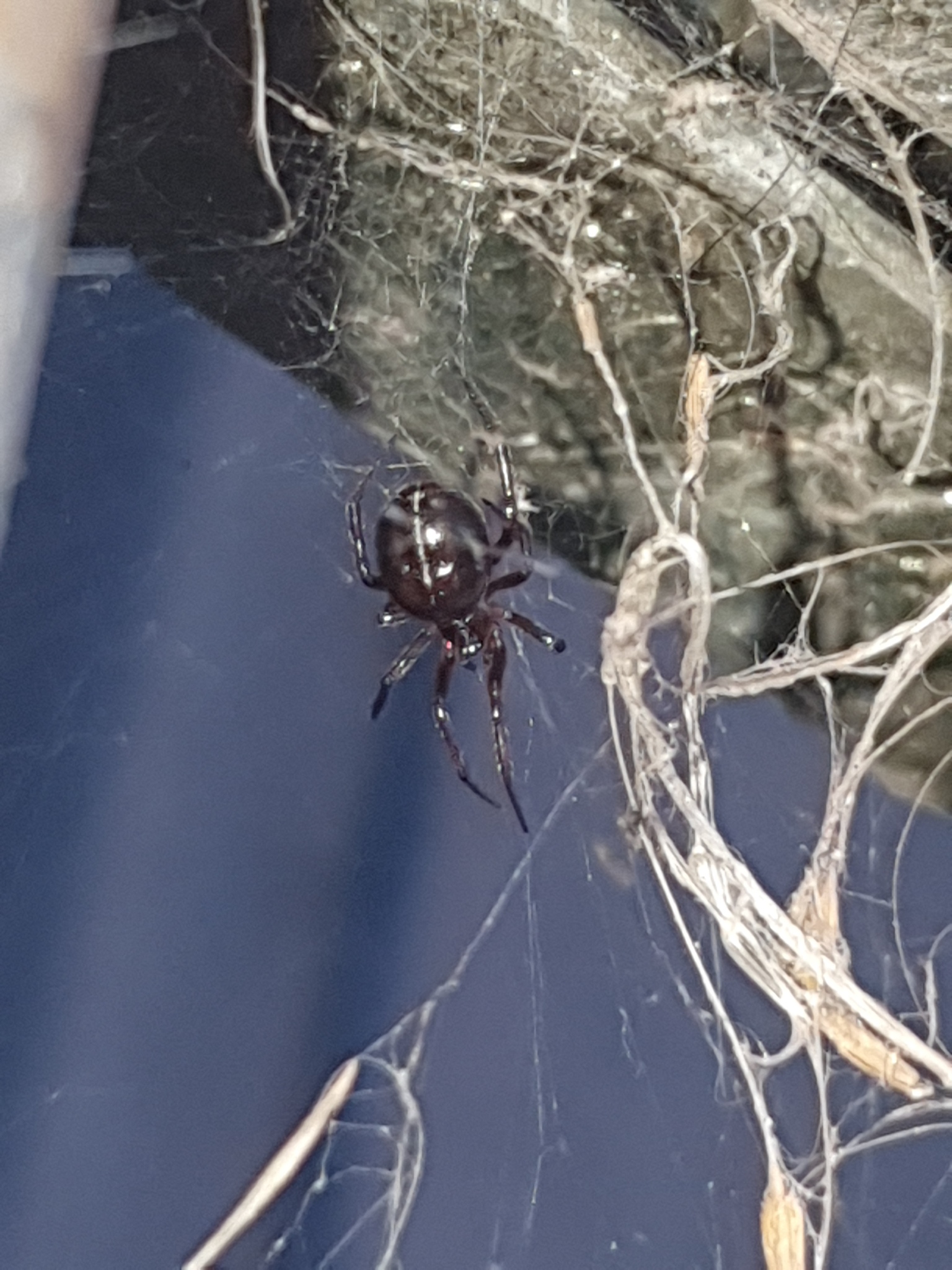
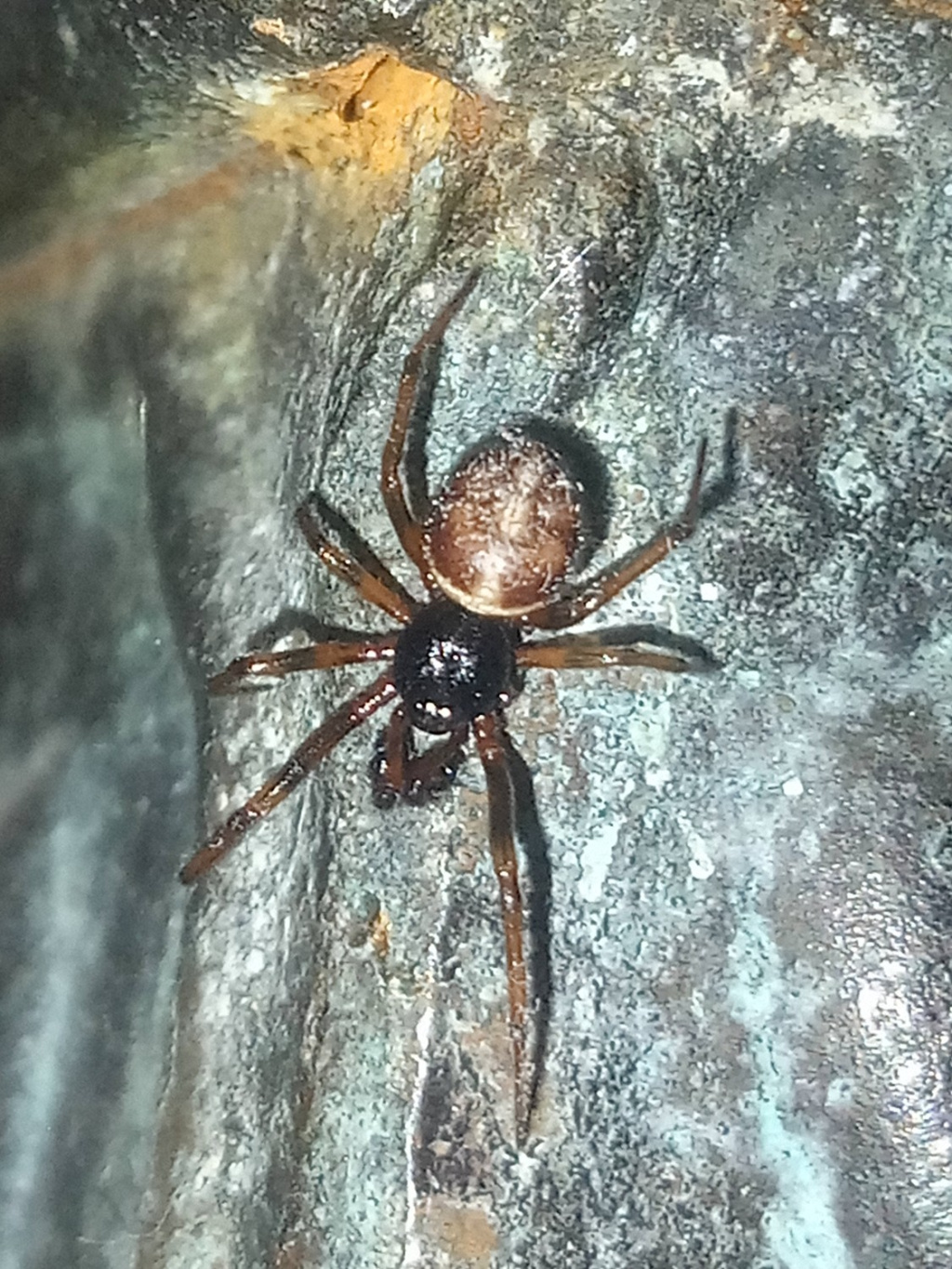
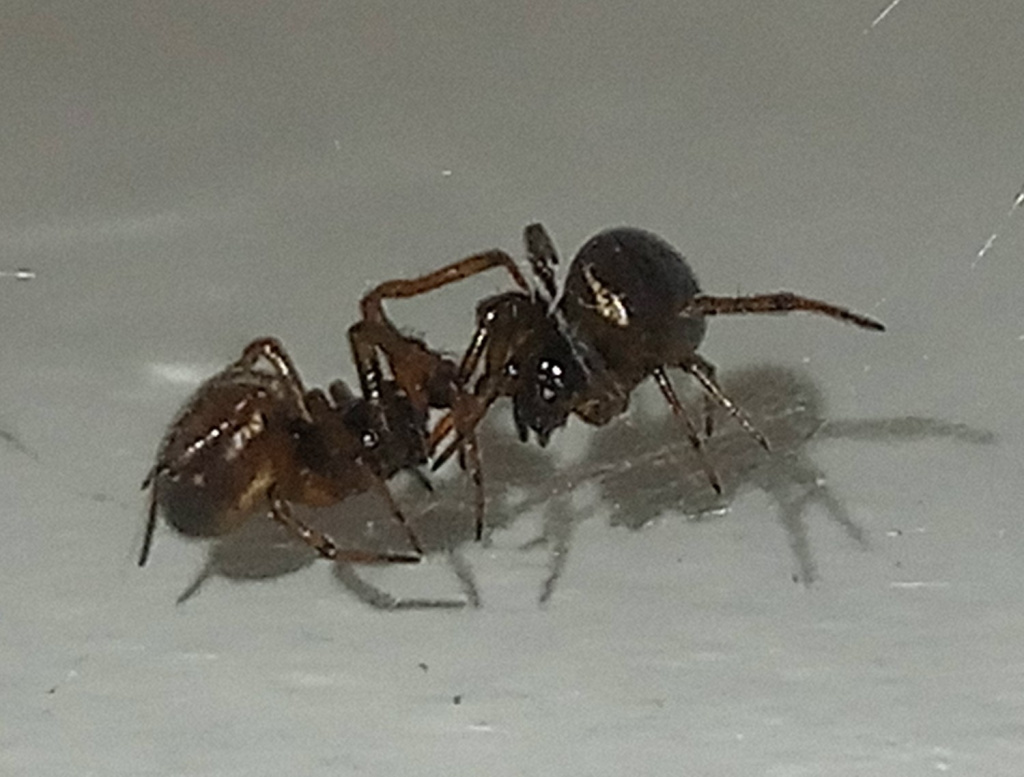
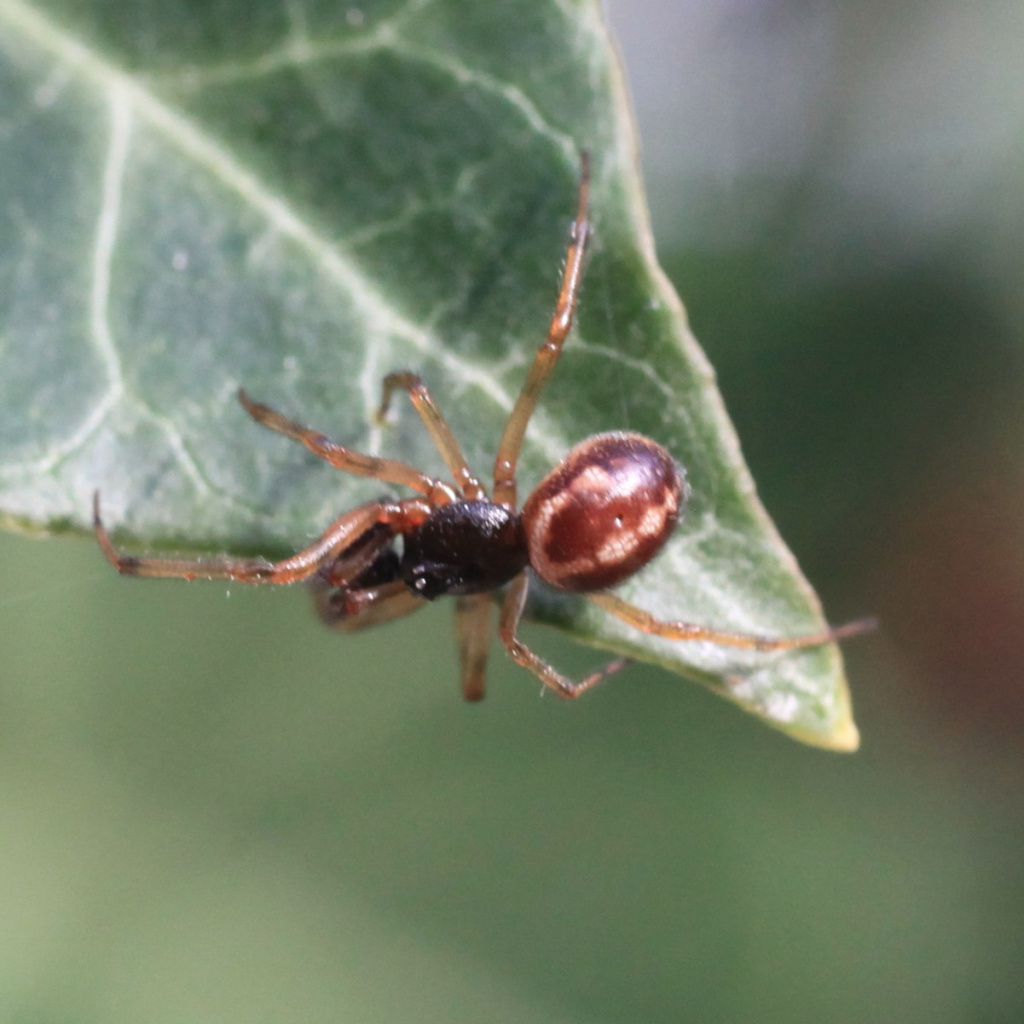
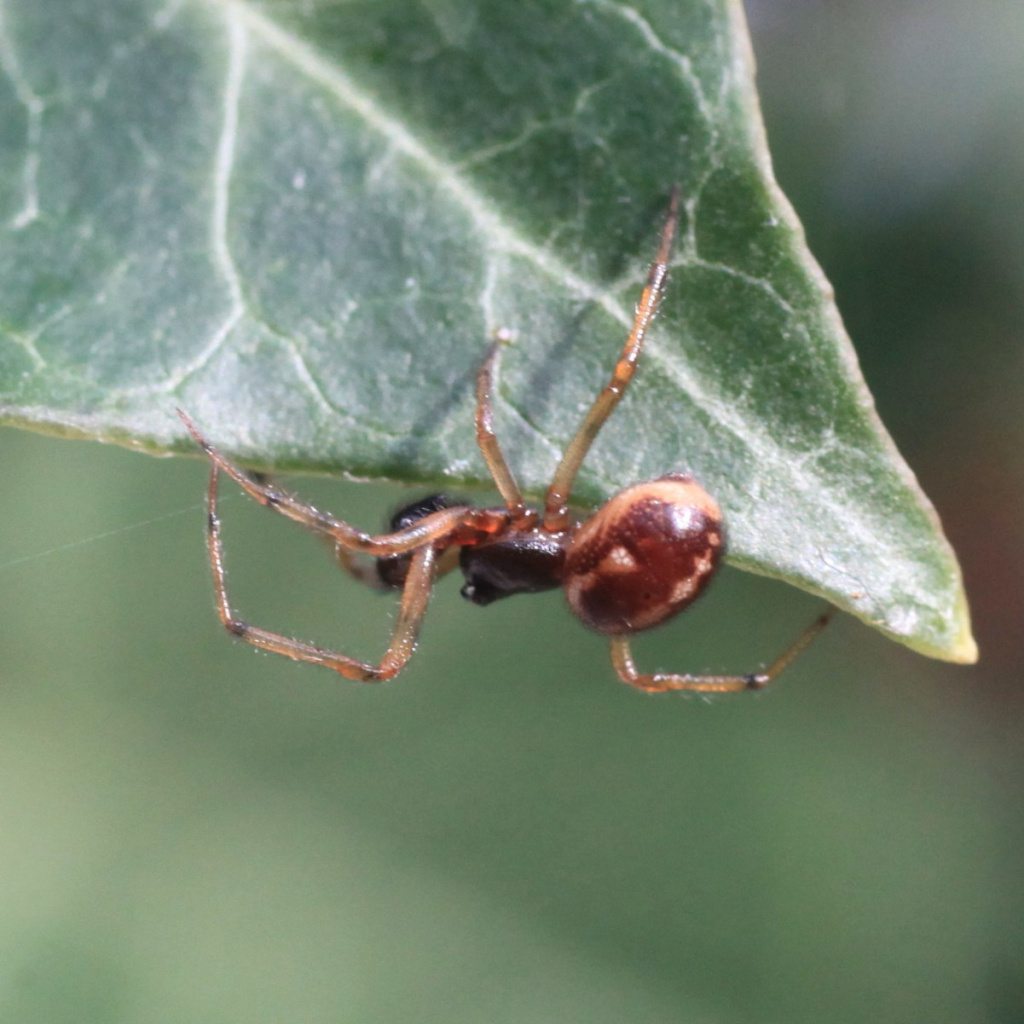
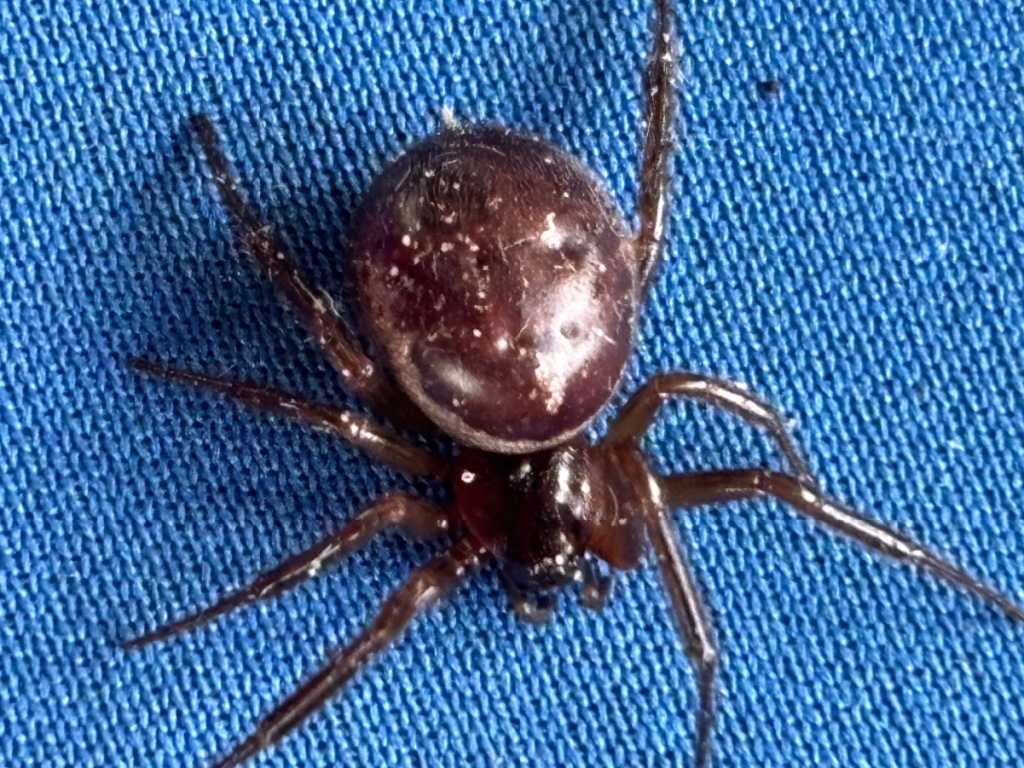
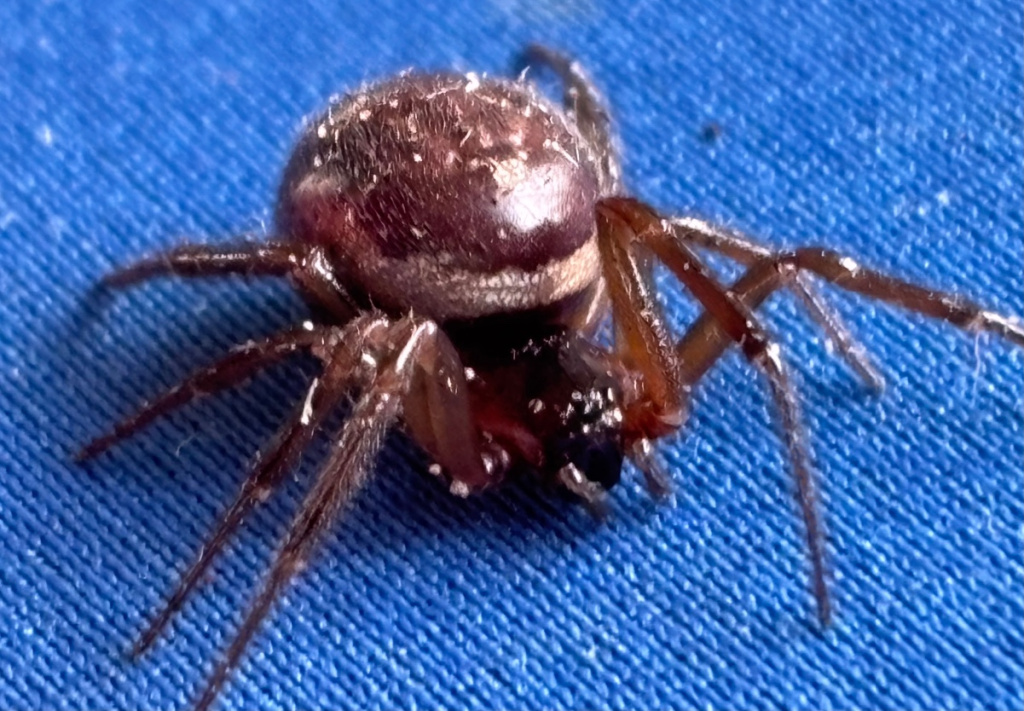
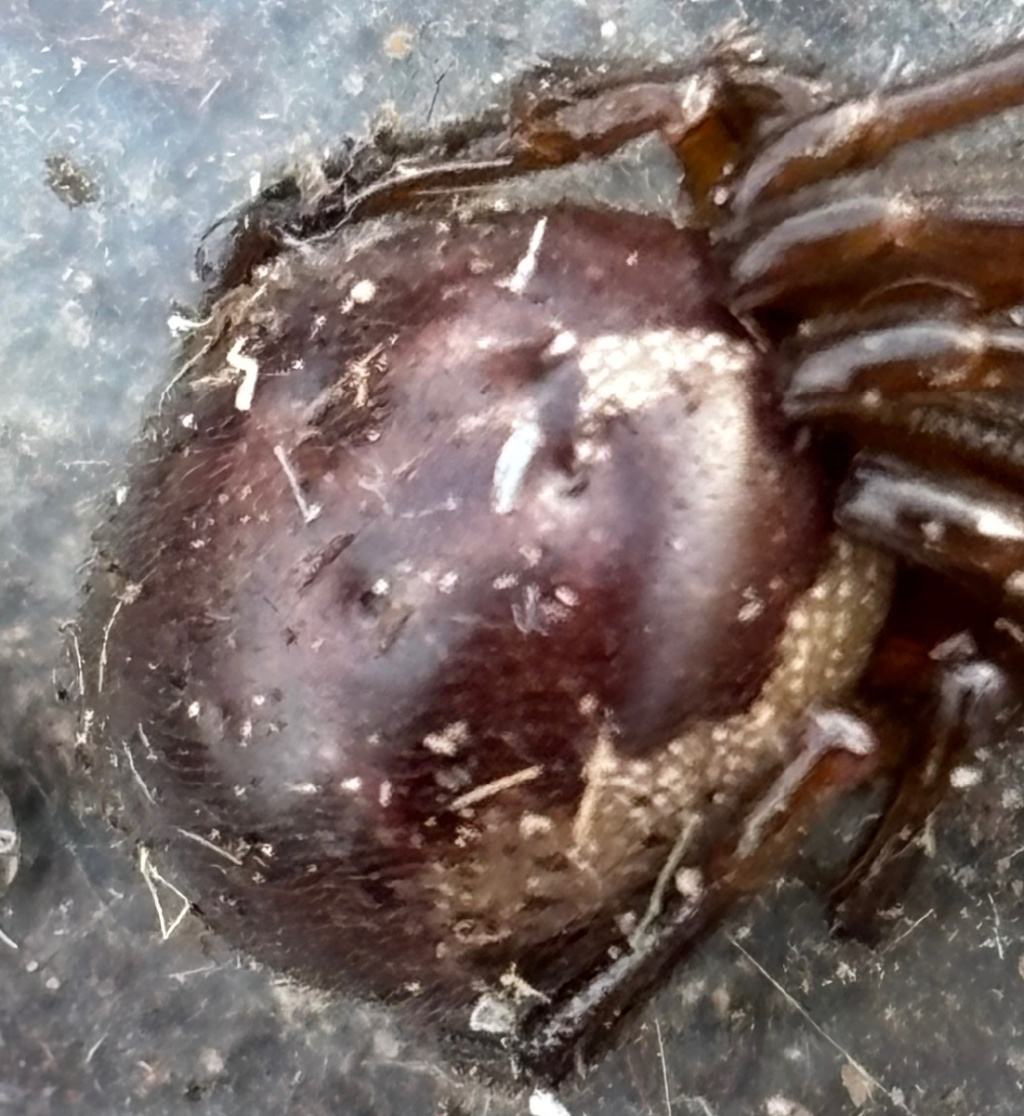
- Steatoda bipunctata (Linnaeus, 1758)
- Synonyms
- Steatoda quadripunctata, Steatoda quadripunctatum Walckenaer, 1802
- Taxonomy
- Animalia :: Araneae :: Theridiidae
- decaying wood
Distribution
The species is widespread throughout Britain, more scattered in the north. It is widespread in western and central Europe.Habitat and ecology
This spider is mainly found in and around buildings but also occurs on old and dead trees where it lives under bark and in the dry litter collected in rot holes and other cavities. In common with others of the genus it preys on crawling invertebrates. The typical scaffold webs include viscid lines that are attached to the substrate under tension. The struggles of the captured insect break the attachment of these lines thus lifting the unfortunate captive into the air and leaving it suspended ready for the spider to deal with. Both sexes are mature throughout the year and females may survive for several years.Status
Generally common. Original author of profile: P. Lee Text based on Harvey, P.R., Nellist, D.R. & Telfer, M.G. (eds) 2002. Provisional atlas of British spiders (Arachnida, Araneae), Volumes 1 & 2. Huntingdon: Biological Records Centre.Stats
- First recorded
- 1875
- Last recorded
- 2025
- Total records
- 3,029
- Total visits
- 2,996
Conservation status
Steatoda bipunctata
| Source | Reporting category | Designation | Date designated | Comments |
|---|---|---|---|---|
| A Review of the scarce and threatened spiders (Araneae) of Great Britain: Species Status No. 22 (Sep 2017) | Red listing based on 2001 IUCN guidelines | Least concern | 42979 |
Photos and media




Spatial distribution - hectad map
Click on one of the date ranges in the key to highlight that particular range. Click anywhere else on the map to go back to all three date ranges.
Thresholds:
Move mouse cursor over dot for info
Rejected records are excluded from this map. Unverified records are included.
Temporal distribution - records by year
Records that span more than one year are not included in this chart.
Temporal distribution - records by week
__