
Species Details
- Species name
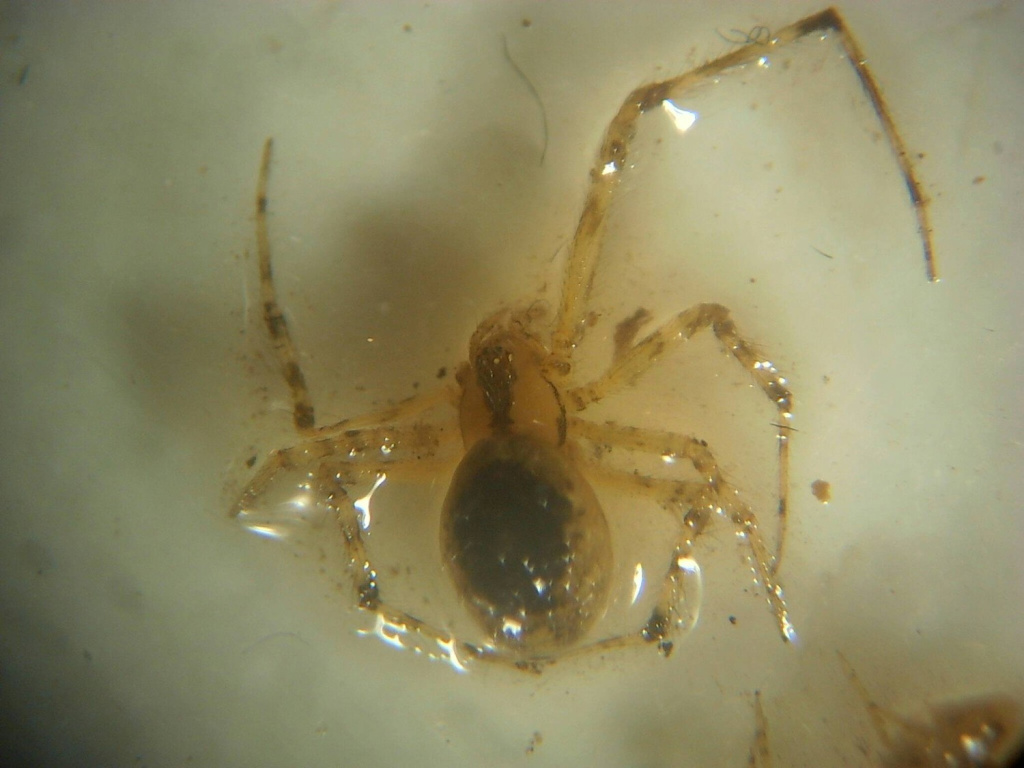
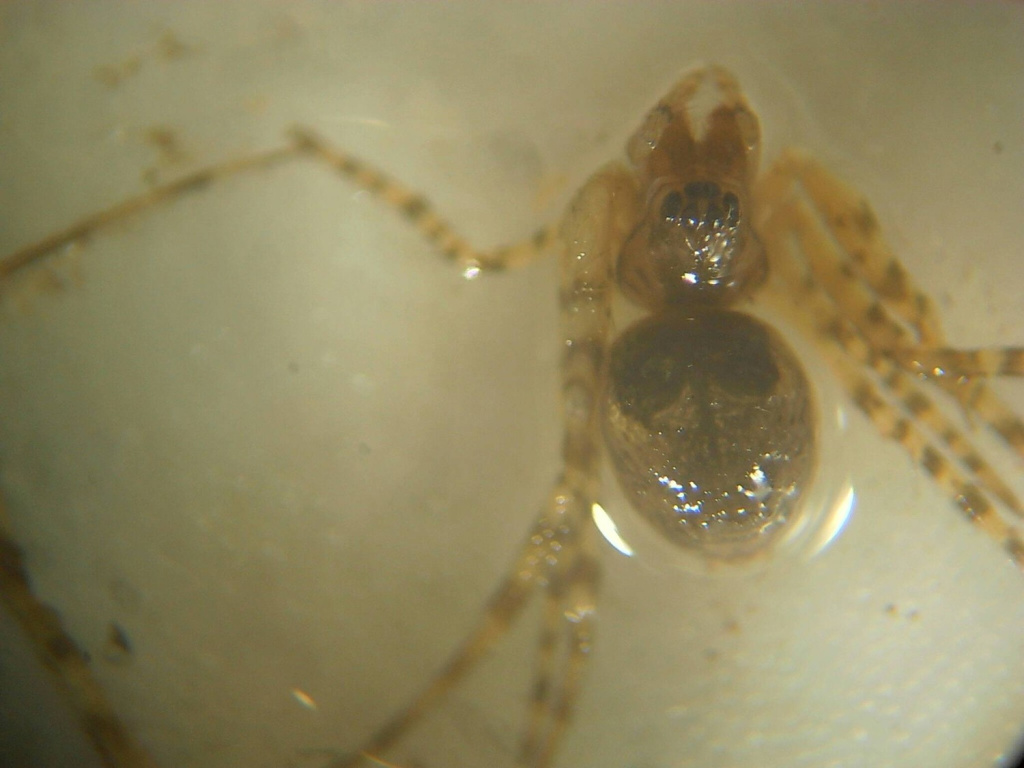
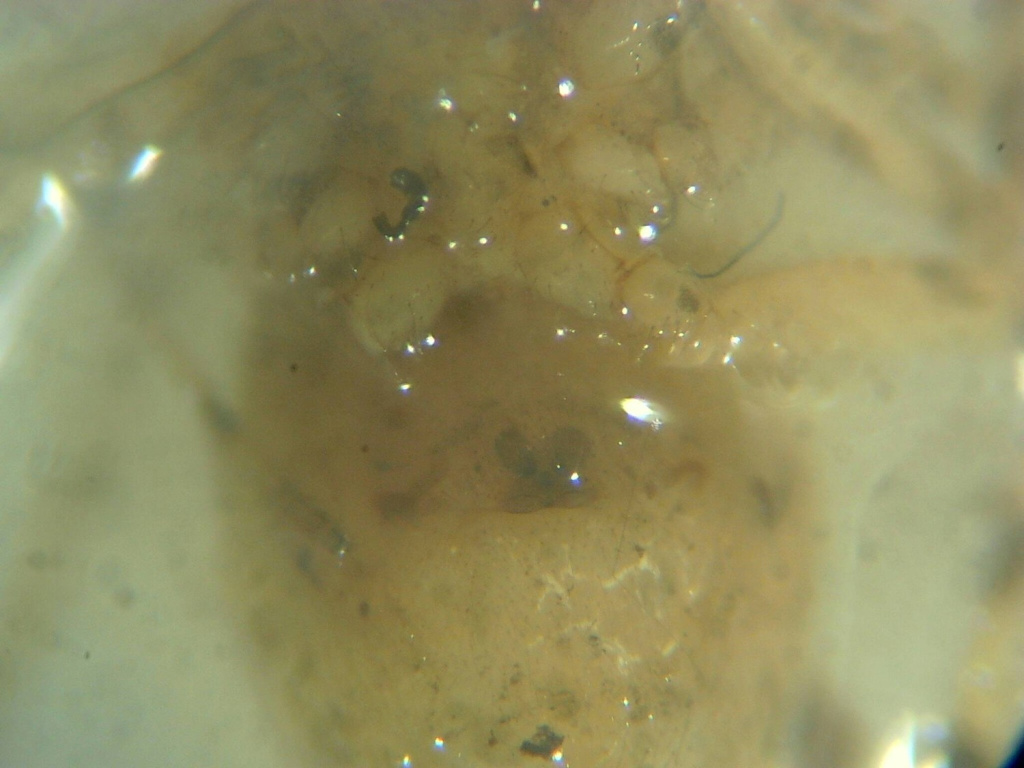
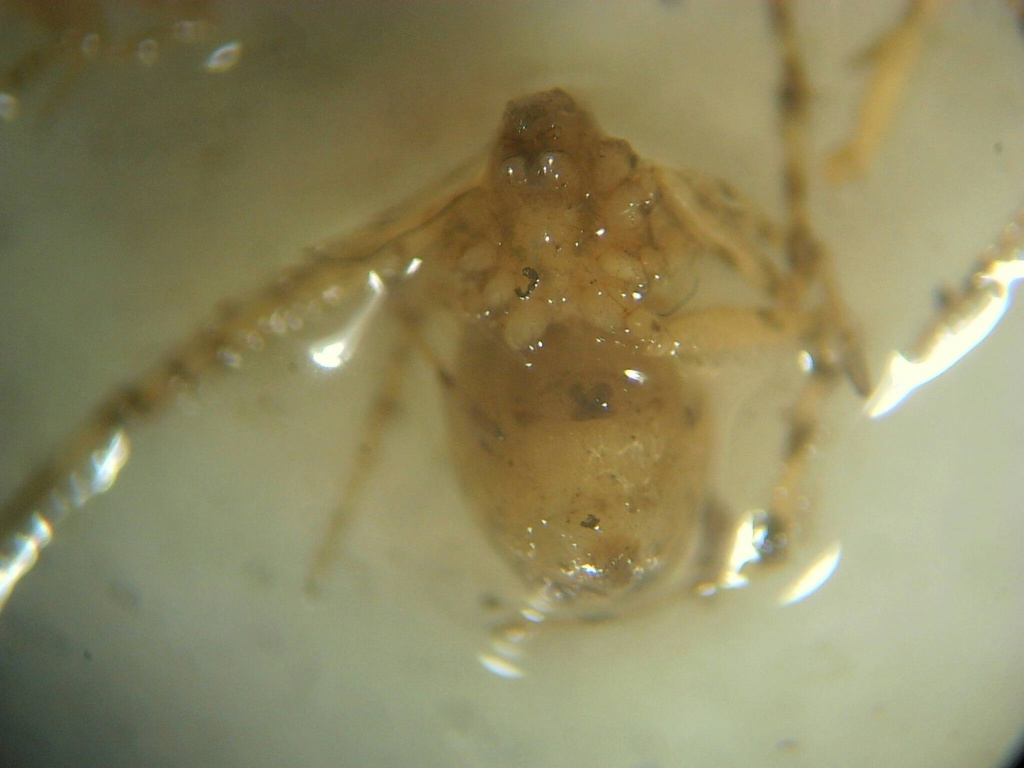
- Theridion hemerobium Simon, 1914
- Synonyms
- Theridion hemerobium Walckenaer, 1802, Theridion hemerobius Walckenaer, 1802
- Taxonomy
- Animalia :: Araneae :: Theridiidae
- acid & sedge peats
Distribution
This spider was first recorded in Britain from four female specimens collected in 1982 by Dick Jones near Petworth in West Sussex. Subsequently the species has been found in Leicestershire in 1996, Hertfordshire, Middlesex, Worcestershire and most recently in Huntingdonshire. It has been recorded from Sweden, and is fairly widespread in the rest of north-western and central Europe.Habitat and ecology
The original specimens were collected from a wooden fence bordering a lake and French specimens have been taken in low vegetation on marshes or bushes near water (Jones 1994). All further British records have the same association with water. In Leicestershire a female was collected at night from a fence separating a cattle-grazed field from the rough grassland and scrub of a fishing complex in part of the River Soar flood plain where marsh, wet woodland and lakes have developed in former gravel pits (Daws 1997a). In Middlesex and Hertfordshire, one male and five females were collected in wetland vegetation close to the River Colne and adjacent lake developed in old gravel excavations (Marriott 1998). The Worcestershire female was swept from vegetation on an island in the River Avon (Partridge 1999). In Huntingdonshire four males, one female and one immature were shaken from a dead sedge/grass clump standing at the edge of the water. The site is very sheltered between scrub and damp grassland in the north-west corner of an old gravel pit in the flood plain of the River Great Ouse (I. Dawson). Adult females have been collected in June, July and early September, males in April and June.Status
Although apparently rare, the species has now been found in widely distributed localities in England and may have been overlooked in the past. It should certainly be looked for in suitable habitat in England and Wales.Threats
Most flood plains in England have suffered extensive drainage for agriculture. Housing, retail and industrial development is increasingly threatening the habitats that remain, either directly or through unsustainable water abstraction. However the spider's occurrence near lakes and flooded gravel pits suggests that it may be able to move into suitable habitat.Management and conservation
The retention of extensive marginal vegetation and marsh to rivers and lakes should be encouraged, and public access controlled to avoid damage to these habitats. Rough grassland should not be cut regularly but managed on a rotational basis to control scrub invasion. Excessive management of lake margins and adjacent grassland and scrub at fishing and amenity sites should be discouraged. Text based on Dawson, I.K., Harvey, P.R., Merrett, P. & Russell-Smith, A.R. (in prep.).Stats
- First recorded
- 1992
- Last recorded
- 2024
- Total records
- 184
- Total visits
- 181
Conservation status
Theridion hemerobium
| Source | Reporting category | Designation | Date designated | Comments |
|---|---|---|---|---|
| A Review of the scarce and threatened spiders (Araneae) of Great Britain: Species Status No. 22 (Sep 2017) | Rare and scarce species (not based on IUCN criteria) | Nationally Scarce. Excludes Red Listed taxa | 42979 | |
| A Review of the scarce and threatened spiders (Araneae) of Great Britain: Species Status No. 22 (Sep 2017) | Red listing based on 2001 IUCN guidelines | Not Evaluated | 42979 | Threats: Most flood plains in England have suffered extensive drainage for agriculture. Housing, retail and industrial development is increasingly threatening the habitats that remain, either directly or through unsustainable water abstraction. However the spider's occurrence near lakes and flooded gravel pits suggests that it may be able to move into suitable habitat. |
Photos and media
Spatial distribution - hectad map
Click on one of the date ranges in the key to highlight that particular range. Click anywhere else on the map to go back to all three date ranges.
Thresholds:
Move mouse cursor over dot for info
Rejected records are excluded from this map. Unverified records are included.
Temporal distribution - records by year
Records that span more than one year are not included in this chart.
Temporal distribution - records by week
__